12 days left to save £200 on WTSFest London 💙 £399 now → £599 when speakers announced
12 days left to save £200 on WTSFest London 💙 £399 now → £599 when speakers announced
Author: WTS Team
Last updated: 25/06/2026
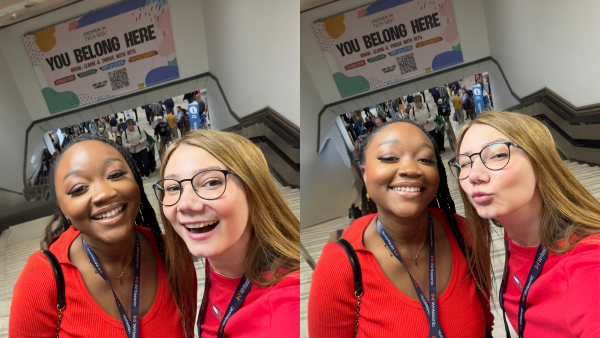
Laura Iancu, and Susan Adeoye took part in the Spring 2026 cohort of the WTSMentorship programme, an initiative designed to empower members of the community by matching mentors and mentees to support career growth, and the development of skills such as communication, leadership, and confidence.
In this article they reflect on their experiences as mentor (Laura) and mentee (Susan): what they learned, the conversations they had, and the career myths they unpacked together along the way.
Mentor: I’m Laura Iancu (that’s an I, not an L), an independent search consultant, mentor, and educator specialising in international SEO and the ethical use of search. I am the founder of Searchpedia, which began as a simple glossary designed to cut through industry noise and has since grown into my daily business. Alongside this, I proudly lead SEO initiatives at Octopus Energy. My work sits at the intersection of technical SEO, representation, culture, and creating more human-centred search experiences.
Mentee: I’m Susan Adeoye. I’m a Brand and Omnichannel content strategist, and also a registered nurse (yes, really). I have five years of experience across a range of industries, with a particular focus on purposeful marketing in highly regulated fields including MedTech, Health, and Pharma. I currently lead content strategy and social media at The Blackwell Clinic, a private GP, where my work sits at the intersection of clinical credibility, omnichannel content strategy, and brand building that actually converts.
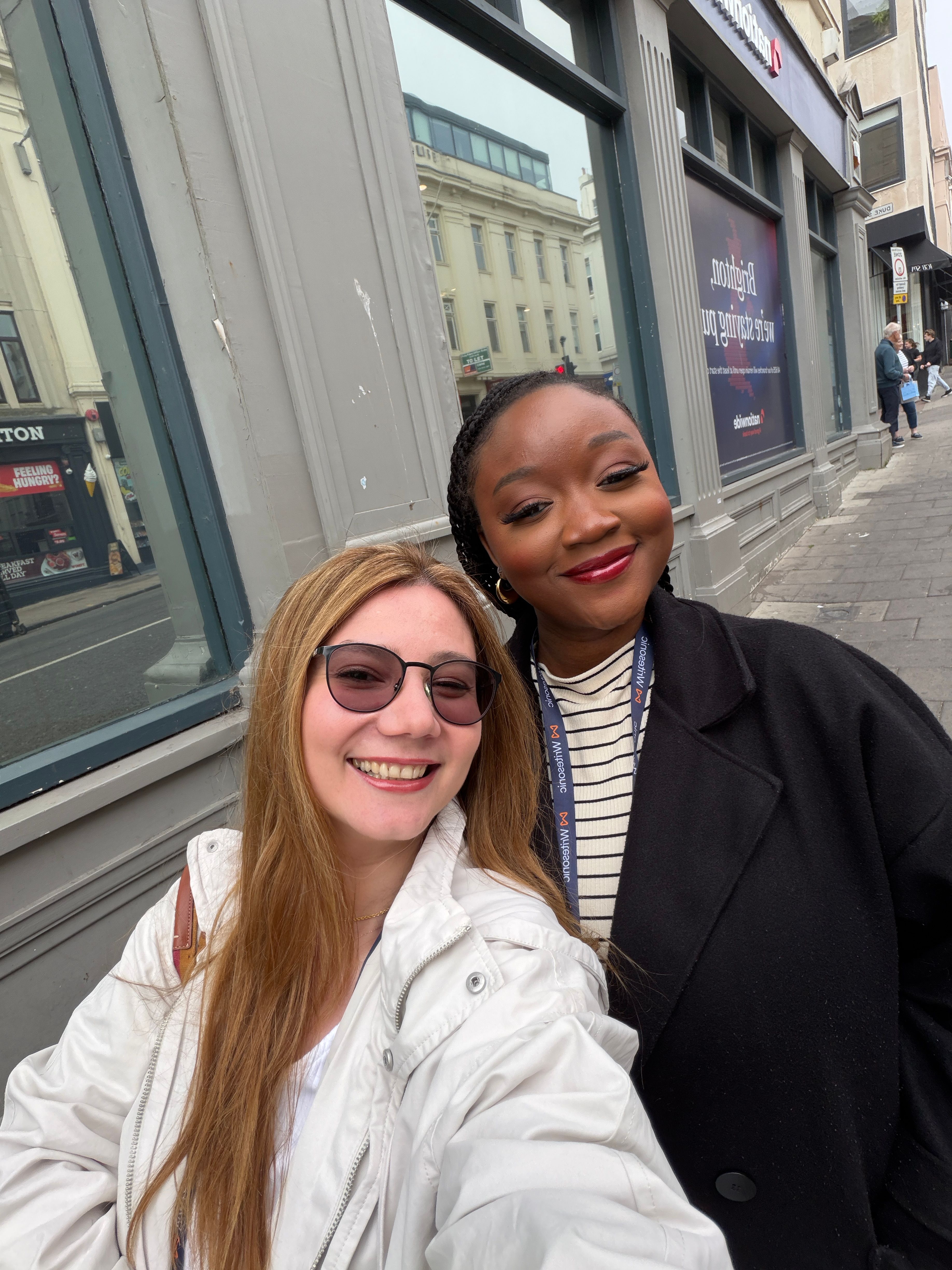
Laura Iancu (left), and Susan Adeoye (right) at brightonSEO.
Laura (Mentor): This was my second time joining the WTSMentorship programme as a mentor. It may sound cheesy, but I just wanted to give back to the community, share the things I wish I’d known earlier in my career, and help someone feel a little less alone navigating this industry.
Susan (Mentee): For me, I really wanted to find a mentor who could help me figure out how to find my niche, and identify industries I would particularly enjoy working in. It was important to have someone who could help me navigate job interviews, work on my CV, and lean into my strengths in the best way possible.
Susan (Mentee): When I came into this mentorship, I had a lot of questions about what my career could realistically look like and what it would take to get from where I was to where I wanted to be.
I knew the direction I was heading, but the path felt blurry. Part of that was because I have always felt like I could do a lot of things, and for a while I thought that was an advantage. But being able to do many things does not mean you need to do all of them, and I had to sit down, do an honest SWOT analysis on myself, and identify where my real strengths lie.
Susan (Mentee): Laura and I covered a lot of ground together. We mapped out what career progression could look like for someone with my background, and worked on tailoring my CV for the kinds of roles where I would thrive (rather than just roles I thought I should be going for).
We got into the practical stuff too: networking, interview preparation, LinkedIn and portfolio development, setting realistic goals, and building out my SEO and digital marketing knowledge. But honestly, a lot of the most valuable work happened in the conversations around confidence and how I was showing up (or not showing up!) for myself.
Susan (Mentee): I am definitely more confident than I was when we started, and I finally have a clear sense of my strengths and the kinds of roles I would genuinely enjoy. Future Susan's career is starting to look a lot less blurry.
Laura (Mentor): One of the biggest changes I noticed was confidence. Over time, Susan became more certain about her strengths, more comfortable advocating for herself, and clearer on the direction she wanted to explore.
It was rewarding to see her start trusting her own instincts more and recognising the value she already brings. As for myself, without projecting, I think I gained a bit more insight into my past, and understood why I took certain decisions.
Laura (Mentor): One of the biggest things we discussed was that careers rarely follow a perfectly planned path. Most people evolve into roles over time through experience, curiosity, and trying different things. Susan is what we call a “T-shaped” marketer (a professional with broad foundational knowledge across multiple marketing disciplines, and deep, expert-level expertise in one or two specific areas), so it was only natural she wanted to excel at everything! Looking back to our first sessions, it’s almost funny how much things have changed since she found “her thing”.
Susan (Mentee): I have come to realise that chasing the perfect title isn’t always the best way to go. For a long time I was so focused on finding the role that sounded right that I was not asking whether it actually was right, for my strengths, my interests, or the kind of work I'd enjoy. Now, with the help of Laura, I know it's important to lean into your strengths, identify opportunities within them, and figure out what you’ll enjoy versus what you won’t.
Practical takeaway:
Focus less on finding the “perfect” title and more on understanding your strengths, interests, and the type of work that energises you.
Laura (Mentor): The more experience you gain, the more you realise that even senior people are still learning, adapting, and sometimes winging it a little. Confidence often comes from trusting yourself to see things through to the end, not from having all the answers.
Susan (Mentee): Sometimes when you see people on LinkedIn with years of experience, you naturally think, "this person definitely has it figured out." But I've come to realise a lot of people don't. It's okay to take each day as it comes. What's mostly important are the steps you take to get where you want to be.
Practical takeaway:
Don’t compare your beginning to someone else’s middle. Career growth is rarely linear, and uncertainty is completely normal.
Laura (Mentor): Networking doesn’t have to be transactional. Some of the best professional relationships come from genuine conversations, shared experiences, and simply showing up consistently. We were extremely lucky to have the chance to meet up in-person, at brightonSEO. I think that was an amazing opportunity for both of us to hone our networking skills.
Susan (Mentee): Honestly, I used to dread networking events. They felt like an interview for a job nobody had posted yet, and everyone else seemed to be performing their best professional personas at full volume; but I have genuinely become so much more comfortable with it. What changed for me was realising I did not need to work the entire room. Going in with confidence, staying open to where conversations naturally go, and focusing on making a few meaningful connections rather than collecting contacts is a much more enjoyable way to do it, and honestly, a much more effective one too.
Practical takeaway:
Approach networking with curiosity instead of pressure. You don’t need to impress everyone, you just need to connect authentically with the right people.
Laura (Mentor): If you start from this premise, you won’t get what you want from a mentorship programme. A mentor’s role isn’t to guide you step-by-step, or provide a blueprint for your career. Instead, they should help you build confidence, challenge your thinking, and support you while you figure things out yourself.
Susan (Mentee): The best thing about this mentorship was that Laura never just handed me the answers. She asked the questions that pushed me to find them myself, and that is where the real value was. A good mentor does not tell you what to do, they help you figure out what you actually think, challenge the assumptions you did not even know you were making, and create enough space for you to be honest about where you are and where you want to go.
Practical takeaway:
The most valuable mentoring relationships are collaborative, they create space for reflection, growth, and honest conversations.
Prepare for your sessions: Have a general idea or goal of what you want from each session. If you feel like you want to rant or just need someone to talk to, that's also okay but having an idea of what you want to gain from the experience is really important.
Ask questions: Don’t be afraid of asking questions. There's no such thing as a silly question, you’re curious and genuinely want to learn, and your mentor will understand that. This is a safe space, so ask your questions :)
When thinking about your goals: Ask yourself why you want something. Goal-setting becomes easier when you understand why you're doing it in the first place. It's also important to be realistic about what you can and can't achieve within a given time frame.
Follow through: Set deadlines for yourself and reflect on them. If they don't seem attainable or aren't working, it's okay to try a different strategy. It’s also a good idea to discuss your progress with your mentor, they can help you identify better approaches and ensure you follow through.
Guide without overwhelming: Focus on small, actionable steps instead of trying to solve everything at once. Offering reassurance and clarity is more valuable than having all the answers.
Create space for honest conversations: Creating a comfortable, judgement-free environment makes a huge difference. Some of the most valuable conversations came from simply allowing space for uncertainty, worries, and “I have no idea what I’m doing” moments.
Support practical next steps: Breaking larger career goals into realistic, manageable actions helps make progress feel less intimidating, whether that’s improving a CV, preparing for interviews, or building confidence in networking.
Encourage confidence and independence: The goal should never be to provide all the answers, but to help build confidence in making decisions independently.
Taking part in the WTSMentorship programme has been one of the best decisions I’ve made this year. Having someone who has been where I was, who understands, and listens has truly been invaluable.
I've learned that it's okay to not have it all figured out. As long as you're taking steps (even baby steps!) towards where you want to be, you'll get there.
The right conversations make you realise that your career might not be as linear as you'd like. The goalposts might move a couple of times, and that's okay too. What those conversations do is help you navigate what your future might look like, so you end up doing something you genuinely enjoy.
Cohort Sponsor
4M Digital Consulting is a UK-based paid media consultancy run by Meriem Nacer, who has over 15 years of experience. She works with global brands to improve their paid campaigns—offering audits, training, and full management.
Meriem also runs a free global community for paid media marketers - Don't Panic PPC.
We pay our authors, speakers & team to bring you helpful content like this.
We aim to always keep our content and community free and accessible.
If you've found value in WTS, please consider supporting us through our Buy Me a Coffee initiative.