🌲 WTSFest Portland - May 2026 | 🥨 WTSFest Philadelphia - Oct 2026 | 🎥 On-Demand Video Hub - 2026
🌲 WTSFest Portland - May 2026 | 🥨 WTSFest Philadelphia - Oct 2026 | 🎥 On-Demand Video Hub - 2026
Welcome to a new WTSInterview edition, where we interview brilliant SEOs in our industry and share their stories with the world! WTS members are welcome to share their story by simply filling out this form; we encourage folks from all walks of life in our industry to do so.
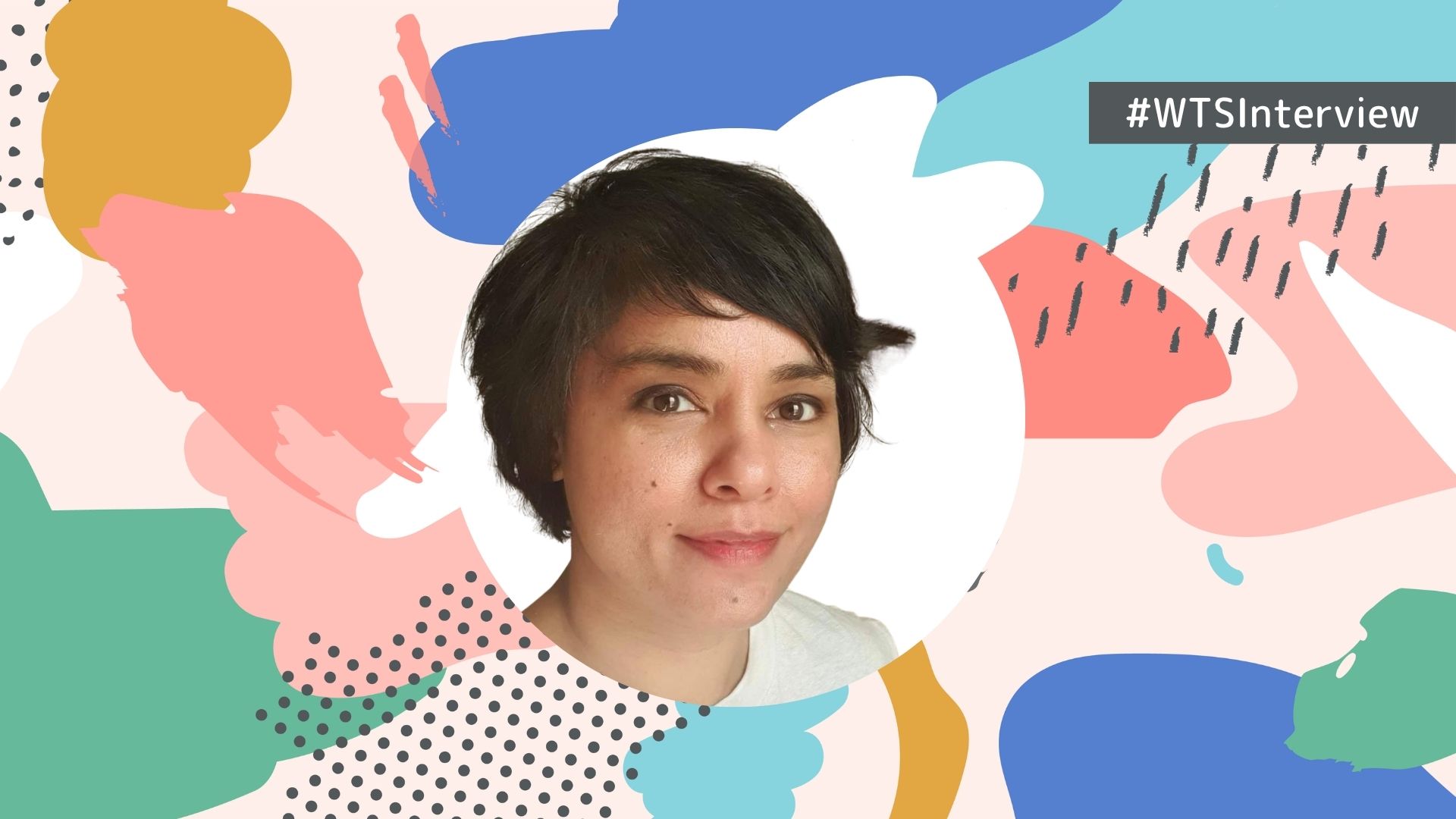
Introducing Sasha Gusain! Sasha Gusain is Head of Logged Out Experience at Canva, where she leads the teams responsible for how millions of people discover Canva - through SEO, content, and the experiences that shape a user’s very first impression of the brand or new products.
With over a decade in SEO and growth, Sasha has helped turn Canva’s organic presence into one of the largest in the world, blending creativity, data, and technical systems thinking to drive sustainable organic growth at scale. Before Canva, she led SEO for hipages and Houzz APAC, and worked with several global startups to build their organic growth engines from the ground up.
Outside work, Sasha lives between Sydney and the NSW South Coast with her partner Prashant, dog Waldo, and cat Salsa. She loves reading, hiking, and cooking new vegan recipes - and is always up for new collaborators on her passion project, Waldo’s Friends, or a chat with founders and investors about fresh organic growth ideas for startups.
I began my career in broadcasting — producing feature shows for CNBC and later at Channel V, back when digital was just starting to take shape. What drew me in wasn’t the medium itself, but the question behind it: what makes people stop, watch, and connect?
At Channel V, I started experimenting with new formats — short-form video, early social platforms, and online communities — trying to understand what kinds of stories people actively sought out. Every experiment was about intent: what someone was looking for, why they engaged, and what kept them coming back.
That curiosity eventually evolved into Healthy Living India, a health and wellness website I built with my partner while living in India. It grew organically — tens of thousands of readers, all through word of mouth and search. That project led to HealthMeUp with Times Internet, where I built and ran a large-scale editorial platform from scratch, reaching millions of readers globally. It was there that everything clicked for me. I realised that writing to be found was about more than smart distribution — it was a way of thinking. When you align what you create with what people are already searching for, you stop shouting into the void and start having a conversation.
That’s how I found my way to SEO — through the logic of connection. Since then, I’ve led large SEO and organic growth teams across hipages, Houzz, and now Canva, where I head Logged Out Experience — the part of Canva that helps millions of people discover every product, feature, and piece of content before they ever sign up or log in. SEO sits at the heart of all of it.
At its core, my work continues to be about the same thing that first drew me in two decades ago in broadcasting: helping people find what they’re looking for — and making sure what they find is genuinely worth their time.
My favourite part of SEO is that moment of discovery, when you’re exploring a new idea or product and start uncovering how people actually search for it. I love diving into the data, the queries, the strange little trails of language people use to find what they need. Somewhere in that chaos, patterns start to emerge - clusters of intent that reveal how an entire market thinks and searches.
When you spot those patterns, you’re essentially seeing human behaviour at scale. You can almost map out a website’s structure or a content system directly from those insights - the modifiers people use, the types of results they expect, the quality they respond to. It all tells you how to design an experience that doesn’t just get found, but genuinely helps.
That’s what I find so fascinating - SEO, at its best, isn’t about traffic or rankings. It’s about understanding what people are really asking for, building solutions that meet that intent, and knowing when your product naturally fits, or when it doesn’t. That process of decoding how people think and turning it into something useful never stops being rewarding.
My go-to tool is Ahrefs. I really value how it’s designed for SEOs who think editorially - not just in terms of publishing, but in terms of understanding intent, content, and how different features or products solve real user needs. Every update they make ties back to that idea of excellence - the ability to connect a keyword, a link, or a search folder back to the moment of discovery you’re trying to create.
I also use a mix of AI tools like Claude, Perplexity, and ChatGPT for fast clustering and pattern recognition, and of course, spreadsheets - the one constant every SEO lives in.
But if I’m honest, one of my most underrated tools is Reddit. It’s an incredible window into how people ask questions, share experiences, and continue conversations long after the “search” ends. When you combine that with Ahrefs data, you get both sides of the story - the quantitative map of what people are searching for, and the qualitative texture of why they’re searching. That’s what helps you build pages, and experiences, that feel alive.
One of my earliest “aha” moments in SEO was realising how simple the best strategies really are. The highest-performing work I’ve seen - across companies, categories, and years - has never been about complex models or layers of validation. It’s about solving for the greatest common good.
At Canva, we talk a lot about launching for the greatest common good - creating something that benefits as many people as possible. The same idea applies beautifully to SEO. It’s easy to get caught up chasing edge cases or optimising for micro-niches, but SEO is ultimately a numbers game. The real impact comes from identifying the broad, high-intent patterns that consistently drive search momentum, and building the clearest, most seamless path from discovery to product experience.
That mindset - simplicity over complexity, clarity over cleverness - has stayed with me in every role since. When you serve the largest set of users with the best possible experience for their intent, everything else compounds naturally.
One of my proudest achievements isn’t tied to a single campaign or ranking milestone - it’s the culture of SEO I’ve built across every team I’ve worked with. Over the years, I’ve had the privilege of leading SEOs, writers, designers, engineers, data specialists, and product managers from all over the world, and what I’m proudest of is how aligned we’ve become around a shared philosophy: SEO should always start with the user.
The teams I’ve built, and especially the one at Canva today - don’t chase algorithms or hacks. We care deeply about relevance, about helping people find exactly what they need, and about ensuring Canva only shows up where it truly belongs. Every page we launch is designed to be genuinely useful, both to the user and to the product.
That mindset has scaled across markets and languages, from Japan to India to Germany, and seeing hundreds of people across disciplines work with that level of care and intent is something I’m incredibly proud of. Building a team that moves fast, stays collaborative, and holds itself to that standard of integrity is, for me, the real achievement.
My biggest advice for anyone starting out in SEO is to look beyond search data and really understand the product you’re building for. Early in my career, I made the mistake of focusing too narrowly on keywords, queries, and site structure - the tactical layer of SEO that connects research to outcomes. It took me a while to realise that none of it matters if it isn’t aligned with the company’s or the product’s aspirations.
You need to know what your product teams and founders care about - are they trying to reach everyone at scale, or are they focused on solving a specific problem deeply and well? SEO is often this vast landscape of opportunity, but not all opportunities make sense for the product you’re working on. If your roadmap doesn’t match the product’s trajectory, you’ll always feel blocked - like the person in the room talking about search volumes while everyone else is talking about user needs.
The best SEOs learn to speak the same language as their cross-functional partners. They bring empathy to both sides - the user’s intent and the company’s goals — and they move in step with both. That’s when strategies land, teams trust you, and you hit that incredibly rare but rewarding lock step pace that wins.
I’ve been really lucky to work with some incredible people over the years. Of course, right at the top of that list is Melanie Perkins, Canva’s founder - she’s an ongoing source of inspiration. If you’ve ever read her interviews, especially on the tougher days, they’re a reminder of what clarity, courage, and persistence can look like in real life.
Early in my career, I also worked with Tracy Richardson, my CMO at hipages. She had this incredible ability to uplift and amplify the women around her, and that kind of leadership leaves a lasting mark.
And at Canva, I learned something powerful from Sylvia, who was our Head of Content and Discovery at the time. One of her mantras was: if you sound different, or don’t quite fit the majority - lean into it. That idea has stayed with me. As a brown woman from India working across global teams, there have been plenty of moments where I’ve had to find my own voice in the room, and that perspective reminds me that difference isn’t something to minimise; it’s a strength to use.
What empowers me most are good people - well-intentioned people who show up for others, amplify others, and make space for every voice in the room.
Looking back, the SEO industry has changed a lot. In the early days, women were often seen as the “soft skills” people - the writers, the editors, while technical roles were largely male-dominated. Thankfully, that’s evolved, in large part because of communities like Women in Tech SEO and the many allies who’ve helped drive that change forward.
I also make it a point to work in environments that value empathy as much as brilliance. That’s why I feel so empowered working at places like Canva, where integrity and kindness aren’t optional - they’re expected norms.
Ultimately, what keeps me grounded and inspired are the people around me - the colleagues who collaborate with generosity, the communities that keep lifting others up, and my partner, who supports me every single day. When you surround yourself with good people, it’s hard not to show up as your best self.
I absolutely love the Women in Tech SEO community. I’ve been more of an observer so far, but I’m really looking forward to getting more involved - mentoring, connecting with others, and hopefully helping to organise a few things along the way.
What Areej and the team have built is truly special. They’ve created a space where women from all over the world can be mentored by industry leaders, share their experiences, and have their voices heard. That kind of platform changes careers, and I have so much love and respect for what this community continues to make possible.
----
Thanks, Sasha, for a truly insightful interview!
You can follow and/or connect with Sasha on her Linkedin or view her website!
Check out our Interviews page for more interviews. If you've enjoyed reading this, we'd love for YOU to share your story with the world! Simply fill this form here, we welcome brilliant SEOs from all walks of life! 🙌🏽
We pay our authors, speakers & team to bring you helpful content like this.
We aim to always keep our content and community free and accessible.
If you've found value in WTS, please consider supporting us through our Buy Me a Coffee initiative.