10 days left to save £200 on WTSFest London 💙 £399 now → £599 when speakers announced
10 days left to save £200 on WTSFest London 💙 £399 now → £599 when speakers announced

Author: Kelly Stanze
Last updated: 18/05/2026
15 years ago, I double-checked the hours tracked in my invoice, and sent it off via email. I was a broke college student, building my career by the billable hour as a budding freelancer. I’d finished my digital marketing internship, but the small-town company I’d been working for still needed additional support after I’d headed back to school. I cut my teeth in the SEO space optimizing blog posts from the campus coffee shop between classes.
Since then, I’ve been able to explore the industry from just about every angle.
I’ve worked at small agencies (between 10-30 employees), large agencies (300+ employees), in-house for small and medium-sized businesses, and I’ve even enjoyed the perks, privileges, and pressures of being the only in-house SEO for a multi-billion dollar corporation.
My longest career tenure was 5 years spent self-employed as a freelancer and consultant, working around the schedule of my young son.
After he started school full-time, I went back to the agency world for a year. Now, I’m back out on my own because I found the flexibility suited our family better.
This means I have had the distinct pleasure of an incredibly deep and broad background as a search engine optimization professional. In this article I want to share some of that with you, so you can gain a clearer understanding of the range of career options that are open to you.
In this article, I’ll mostly refer to our niche as SEO. However, this advice also applies if you’re considering your career through a more AI-focused lens. For instance, my most recent agency position was referred to as Discoverability. My daily functions were evenly split between AI/LLM visibility and traditional SEO – i.e. discoverability covers both.
If you’re on the hunt for a job in AI search, be sure you’re looking for job roles which include all the various initialisms of our trade: SEO, AEO, AIO, GEO, etc; plus terms like Search, Discoverability, and so on.Also, keep in mind that these types of opportunities exist within all of the career pathways I’ll cover.
While there’s nuance in all things, these days there are generally three ways in which an SEO professional can make income:
Each of these situations offers unique benefits and risks, and all of them have the potential to be exciting and engaging. After all, we work in an industry where the answer to every question is, “It depends” – that tends to keep things interesting!
Incidentally, if you’re asking yourself, “Should I work in an agency, go in-house, or as a freelancer?” my answer is a resounding, “It depends” too. Read on for more information on each option.
Working agency-side offers more variety than many people think. Whether you prefer to work in a smaller organization, or you want to be one of hundreds of employees, there are agency options for you.
There are also agencies that cater to specific industries. I’ve worked at some of these agencies myself; one of them only worked with higher education clients, and I’ve also worked at or subcontracted for several in the agriculture industry. If there’s a specific niche which you’re passionate about, there’s probably an agency that specializes in that.
Regardless of whether you choose to work for an agency that specializes in a specific industry, or at an agency that services clients in an array of verticals, you’ll always have a certain level of variety in your work. Most folks juggle multiple clients in an agency setting, leading to diversity in the types of projects they work on. This means that things stay fresh and interesting.
Agencies – whether they’re full-service marketing and advertising agencies, or those that focus more specifically on digital marketing – also have the benefit of growth opportunities. Where in-house SEO is often more limited, agency-side SEOs generally have access to a more defined hierarchy of roles.
While there’s a lot of variation in how agencies structure their teams, here’s what SEO career progression at an agency might look like:
*Naming conventions may vary in agency settings; a Strategist at one agency might be called a Channel Manager at another.
In addition to the benefits, there are of course drawbacks to agency life too. With the higher level of variety, you often see faster-paced working environments with more conflicting priorities. Agencies can be great environments in which to learn a lot, very quickly – but they can also be a bit much for people who prefer to focus on single projects.
Agencies often seek to invest in culture. Agency employees often enjoy social events, parties, fringe benefits, and other draws. One agency I worked for brought wagons full of candy and snacks around one day every week. We called it the Candy Cart, and it seemed like such a huge perk when I was 23. One of my favorite examples that I’ve enjoyed firsthand is dog-friendly agency offices. Few things brighten up an office as much as having an office dog hanging around in my opinion. (Of course if you’re not a dog-person you may not agree!)
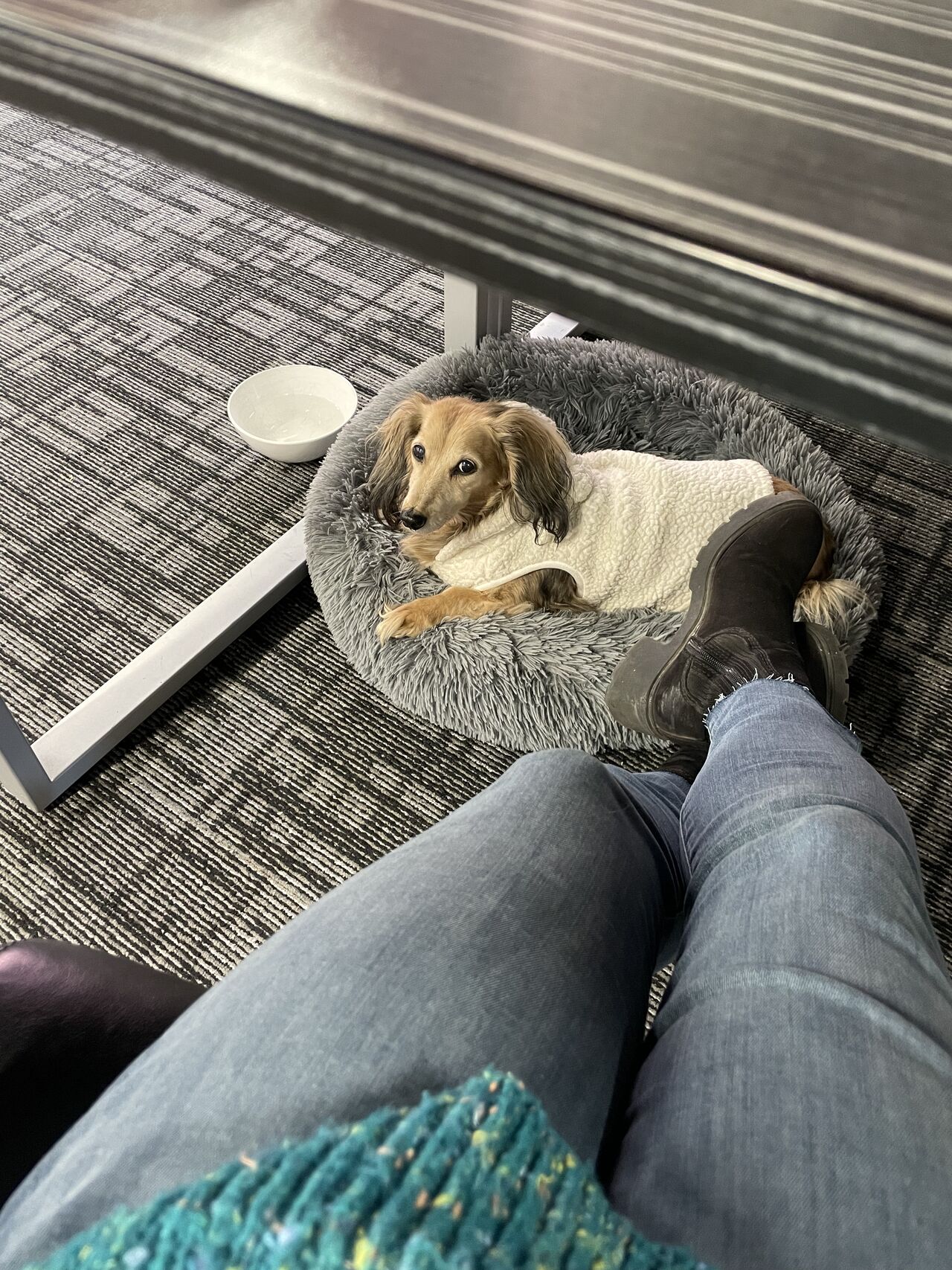
A dog sitting in a basket under a desk in an office. I’ve now worked at three advertising agencies with dog-friendly offices, which is definitely a perk for me.
While the social environment and fringe benefits often associated with agency life can be great, the lifestyle may not be for everyone. I’ve known many professionals who have spent their entire careers in the agency world and felt at home; but I’ve also known others that “did their time” in the agency space and then gladly moved on to a different environment.
Agencies also tend to have higher rates of staff turnover. There’s a theory that the best way to get a pay bump or promotion in the agency world is to jump to a new agency, which can feed into more movement – especially for those in the early stages of their careers.
In addition to willing staff turnover, agency staff also experience layoffs at a higher rate than in some other types of businesses. This is, unfortunately, a reality of the agency world – I know people who have been laid off multiple times in just a few years. However, I also know marketers who have worked in agencies their whole careers and have never been laid off.
I spent four years as an in-house SEO for a company that is a household name in the U.S. (and other countries). While you’d think that in-house SEO jobs are only available at these big companies, that’s changed over the years. In-house SEO/GEO/AIO/AEO roles are still less common than agency ones, but you see much more variety in the size and types of companies that are bringing their SEO strategy in-house.
The benefits and risks here vary depending on industry, company size, and the businesses’ priorities. A day in the life of an ecommerce SEO will look very different from that of a lead gen SEO, for instance.
Generally speaking, there tends to be more direct ownership when it’s “your” website. As an in-house SEO, I had immediate access to data, resources, and decision-makers relating to my work. I could walk to the desk of a developer, or a catalog manager, and get answers immediately. I didn’t have to request access to data or platforms. It just felt like it was “my” site in a way that client sites can’t.
On the flip-side, in-house SEOs absorb a lot more direct responsibility for the sites they touch. This comes with increased accountability when things go wrong, and the necessity of operating within “the system.” While this feels more relevant to larger companies with more layers of management and moving parts, it’s true to a certain extent in all companies. When it’s “your” site, the onus to fix what’s broken, prevent issues, and gain executive buy-in falls more directly onto you.
Depending on the company you work for, brand recognition in the industry can earn you clout. During my time at Hallmark, I got to reap the benefits of being the SEO for a well-known enterprise brand. While I like to think the speaking engagements and invitations to industry events were earned by my own merit, I’m realistic that having an impressive brand attached to my job title also likely contributed.
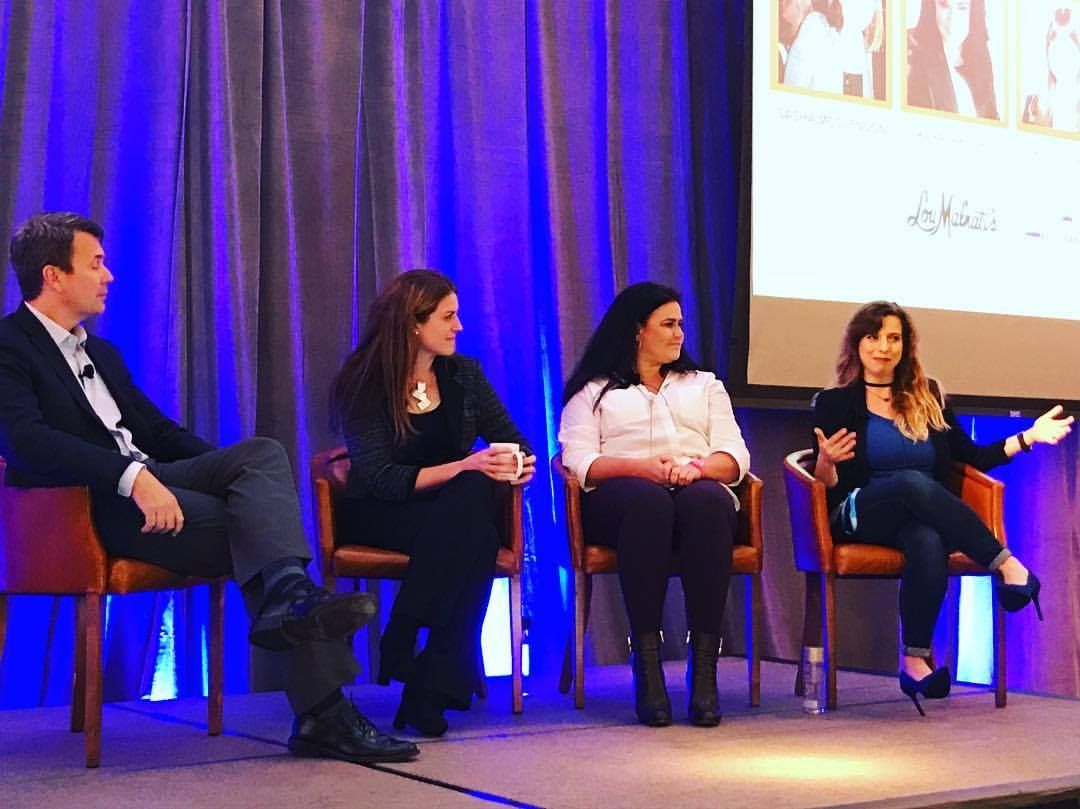
A photograph of Kelly Stanze speaking on a panel at a BrightEdge event.
Sometimes in-house SEO professionals get to be the client. This is another benefit that likely applies more to larger brands, but in-house SEOs tend to have more opportunities to get served as a client by vendors and partners. In my different stints as a client-side SEO, I was the point of contact for advertising agencies and multiple SaaS vendors. I still have some of the swag – and memories of the most expensive steak dinner I’ve ever eaten.
This is a challenge for many in-house/client-side SEOs. Companies where SEO is not a primary focus, generally don’t have clear career progression paths. (One of my in-house roles didn’t even have an SEO-specific title. I was a Marketing Manager, hired mostly for my SEO and content background, but I was responsible for a variety of other things as well).
That said, some companies with larger SEO teams may have opportunities for upward mobility within the specialty, but that’s generally pretty rare. Unless it’s a large company with a growing SEO function, folks may find themselves capped in terms of growth. In these cases, the options are to switch specializations, go to a more generalized management role, or leave for a situation that offers SEO growth opportunities.
More than one third of my career has been spent as a full-time freelancer, and I’ve juggled freelancing alongside full-time jobs too. I wouldn’t trade the experience for anything, because it affords me a flexibility, freedom, and variety that no traditional job has offered. That said, it is also a precarious balancing act that comes with a heavy cognitive load on top of the enjoyable parts.
It’s incredibly empowering to be able to call the shots on your own career, and the ability to do that as a self-employed SEO is unmatched. I’ve spent several years choosing my work with this philosophy: “If it’s not a hell yes, it’s a no.” This has meant that I’ve been able to work with clients that aligned closely with my interests, values, and budgetary expectations. I’ve also been able to collaborate on projects with some of my dearest friends, work with clients in really interesting niches (like tabletop RPGs!) and really prioritize work that resonates with me.
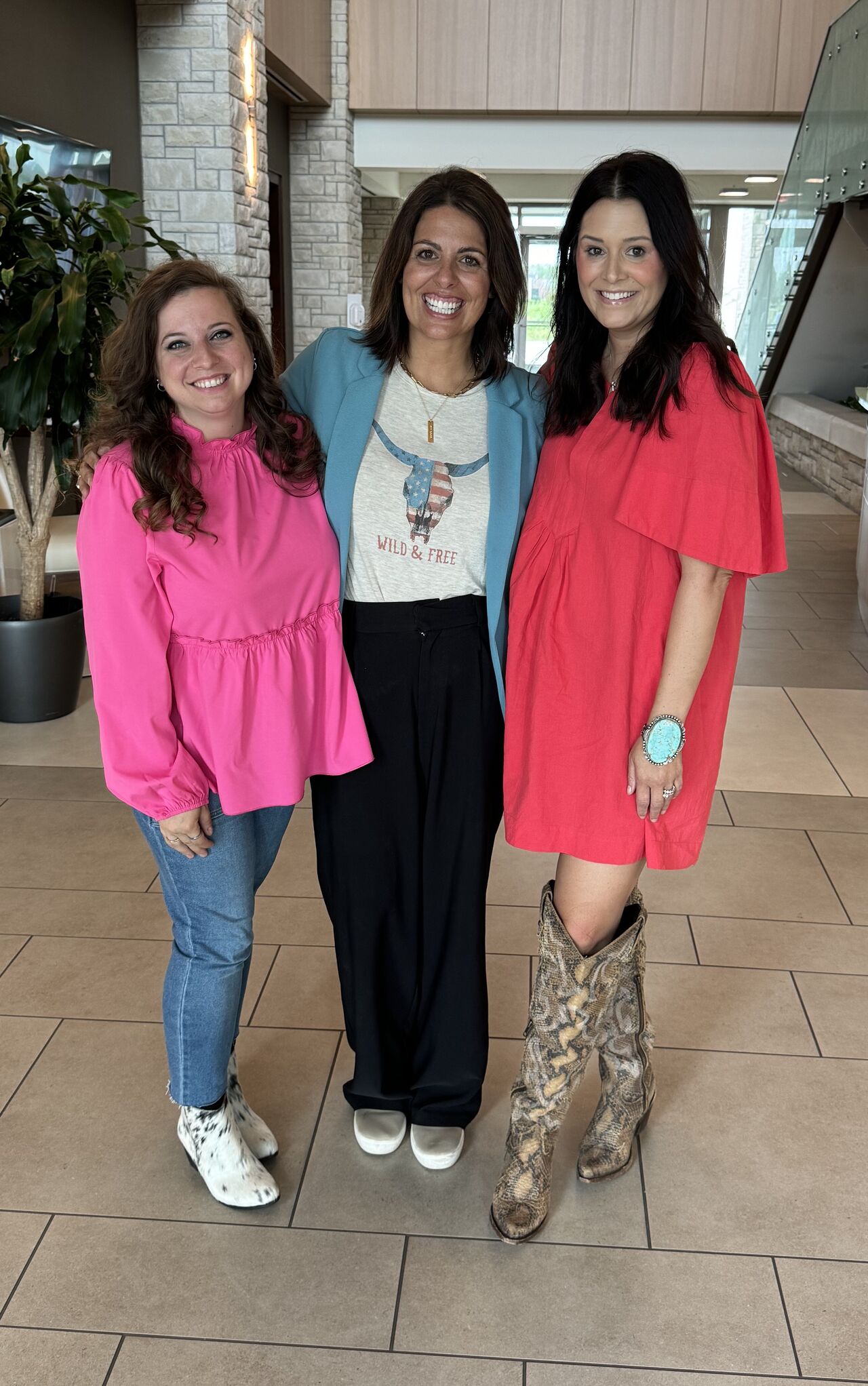
While freelancing, Kelly had the joy of teaching women farmers in Kansas about AI – in this photo she is collaborating with close friends to deliver this training.
Freelance SEO Benefit: Flexibility
I got to build my business around my young child’s schedule. He was just over a year old when Covid-19 pushed us to pull him from daycare, which was my motivation for becoming self-employed. By the time he started school full-time, we’d had nearly 5 years of precious time we’d otherwise never have had together.
Freelancing has let me do work that is fulfilling to me, prevent gaps in my work history, AND make memories with my kid. I am forever grateful for the extra time we’ve had together while he’s still young – and I’ve done it on my terms, without sacrificing my career. Even though he’s no longer home with me full-time, I still use my flexible schedule to volunteer at his school and plan extra fun for us during breaks.
Do I absolutely adore building my own schedule? Yes. BUT there is a price. This was especially true before my son started school. While I did some work during the day, I had trouble maintaining a regular schedule with a young child at home. There were stretches where I was basically a stay-at-home mom (the hardest and most rewarding job I’ve ever had) during the day, and would then need to somehow fit a full “day” of work in after he was in bed. I chose it, and I don’t regret it – but I basically spent half a decade completely exhausted and sleep-deprived. I don’t want other parents to read this and be put off, because it was rewarding and totally worth it, but also really HARD!
I’ll still be doing some of that during spring, summer, and winter breaks, but the shorter windows feel more sustainable.
You don’t realize how much stuff isn’t your problem when you work for other people. But when you work for yourself, it ALL becomes your problem. If you want to get paid, you have to invoice. If you want to work without legal risks, you have to understand the business laws of your city, region, and country, and preferably have an attorney as well. If you want to have access to premium tools, you have to choose the tools and figure out how you plan to pay for them. You’re also responsible for building your business, maintaining your own brand, networking, etc. while also doing the actual work that drives income. One grown-up thing that surprised me was setting prices. Nothing equips you for the pressure of deciding how much you’re worth. It gets easier with time and exposure, but it’s never been a comfortable task for me.
Freelancing comes with some risks that agency SEOs and in-house strategists often don’t have to think about. For instance, as a business owner, freelancers are at a higher risk for lawsuits than individual contributors that work within a business. Additionally, if you aren’t investing time into growing new business, you run the risk of business drying up. Finally, if something happens that means you are unable to work, you just don’t get paid. In short, freelancing doesn’t come with the safety nets of working for a business, like insurance, legal protection, paid time off, family leave, etc.
There is no single right way to build an SEO career. I’m a great example that the path doesn’t have to be linear. I’ve alternated between self-employment, agency roles, and in-house SEO roles, and have learned so much along the way. The reality is that what works for you now may not work for you in all chapters of your life. Whether it’s life circumstances, personal preferences, or a change in your priorities, there is nothing wrong with deciding it’s time to shift gears.
Here are the things I recommend considering when you feel like you’re at a crossroads:
The most important thing to keep in mind is that your career is YOURS. It’s totally acceptable for you to do what’s right for you, and there are no rules that stop you from switching paths to care for yourself and pursue your goals.
This is not by any means an exhaustive piece – I’m sure there are plenty of benefits, risks, and considerations that I’ve missed. That said, I hope that by reading this article, you’ve developed a stronger understanding of your options, and what might resonate with you most in your current chapter.

Kelly Stanze - Senior Discoverability Manager, Native Digital
Kelly is an SEO strategist with nearly 15 years of experience spanning agencies of all sizes, enterprise in-house, and self-employment as a freelancer & consultant. She's seen & done a bit of everything, in a variety of industries & verticals.
ZipSprout connects brands with local nonprofits and events to build sponsorship links that drive local SEO and community impact.
Since 2016, they’ve facilitated 25,381 placements with community organizations across the US, raising over $9.2M in sponsorships.

We pay our authors, speakers & team to bring you helpful content like this.
We aim to always keep our content and community free and accessible.
If you've found value in WTS, please consider supporting us through our Buy Me a Coffee initiative.