🌹 Join us in Rose City next month for WTSFest Portland - May 7th 2026
🌹 Join us in Rose City next month for WTSFest Portland - May 7th 2026

Author: Marie-Paule Kenmogne
Last updated: 13/04/2026
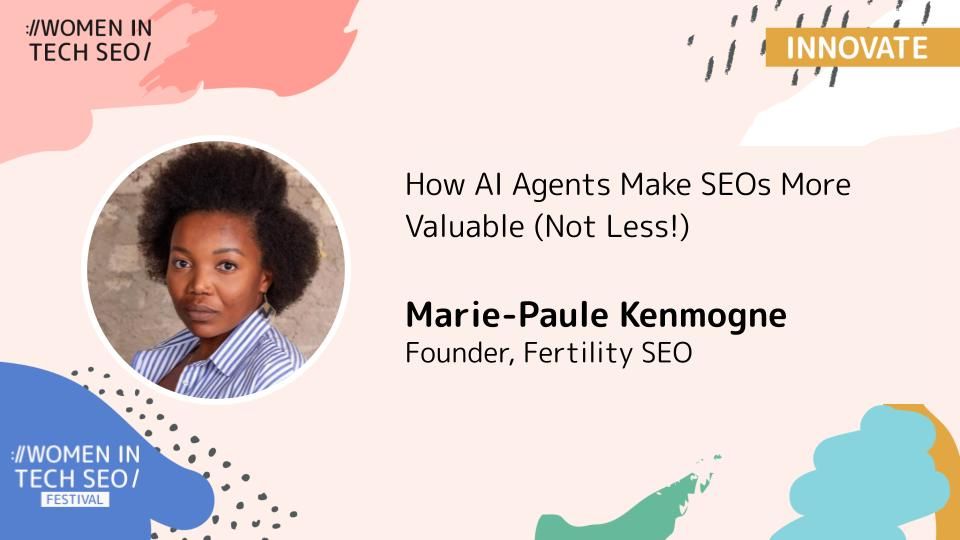
SEO tasks like keyword clustering used to take me hours. Now they take seconds with AI. Does that mean AI is replacing me?
I don’t believe so.
In this article I’ll be sharing why I believe AI agents make SEOs more valuable; and how the future of SEO belongs to those who design the systems, not just run the tools.

Illustration of a foodtruck
I love cooking. I really do. So when the internet started telling me that AI was coming for my job, a food truck suddenly seemed like a very reasonable career pivot. Stable, even! Nobody's automating handmade tacos yet.
If you spend any time online, you've seen the headlines. AI is replacing developers, writers, marketers, SEO managers, and more. According to the internet, most of us are already obsolete, we just haven't accepted it yet.
As someone who has spent 8+ years in SEO, I didn't watch this unfold from the sidelines. I felt it personally. When tools started generating content briefs instantly or analyzing SERPs at scale, the question wasn't abstract anymore. If AI can do in seconds what used to take me hours, what does that mean for my job?
And if I'm honest, for a brief moment, I panicked. But then I realized something: Loving cooking doesn't mean I can run a food business. And feeling threatened by AI doesn't mean SEO is disappearing. It means I need to understand what my job actually is, and where I offer real value.
From the outside, SEO looks like a long list of tactical tasks: keywords research, backlinks, internal links, site speed optimization etc.
In reality, it's structured around four pillars: technical SEO, on-page optimization, content strategy, and digital PR.
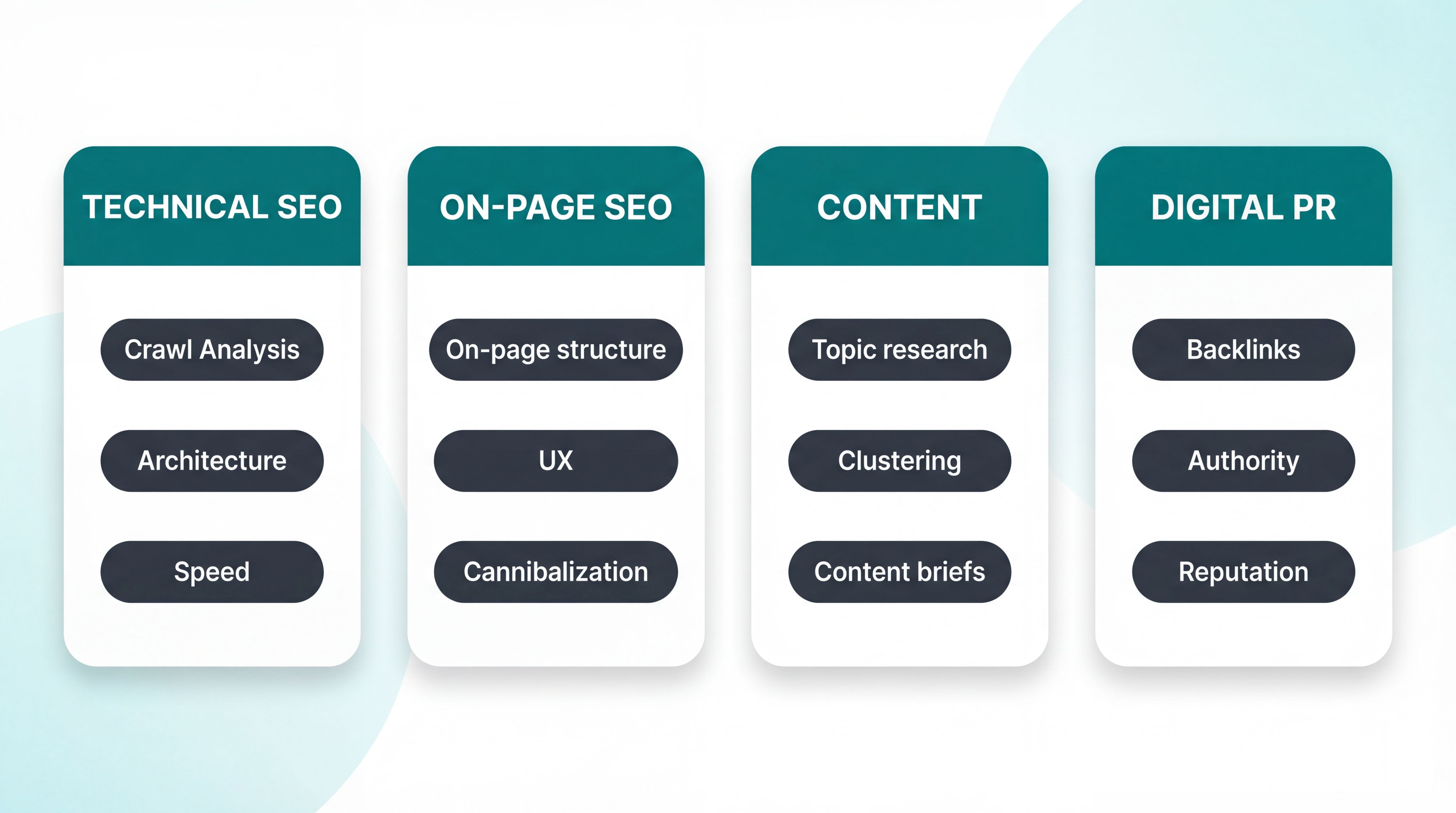
The four pillars of SEO
Most SEO managers don't work equally across all four pillars. They specialize, often going deep on one or two pillars depending on their experience and what their company needs.
As I became more senior, my goal evolved from "doing more tasks" to becoming more productive. I wanted to spend less time executing repetitive work and more time thinking, structuring, deciding.
And that's where the friction started.
Within the content pillar, one task kept surfacing again and again: keyword clustering. Not because it's complex, but because it's tedious. Manually grouping hundreds or thousands of terms, validating intent, maintaining consistency. It's work that simply doesn't scale with human attention.
However, it's also foundational. If keyword clustering is wrong, everything built on top of it (site structure, content strategy, internal linking) suffers.
That combination made the choice obvious. Instead of trying to automate "SEO", I'd start with one specific task inside one pillar and ask myself a much more practical question: what happens when I try to automate a real SEO task properly?
That's where the experiment began.
I didn't want theory. So I tried to automate one of SEO's most annoying tasks and see what happened.
It was ambitious. I loaded 900 keywords into a single AI agent, gave it instructions, and waited with high expectations.
The output? 205 clustered keywords.
The AI had confidently processed a fraction of my dataset, grouped them neatly, and then... silently ignored the rest. I realized that token limits are real: large language models don't magically handle large datasets just because we want them to.
Instead of blaming the model, I redesigned the approach entirely.
This time, I built a workflow instead of relying on a single agent. I split the keywords into batches, processed each batch independently, then used a second LLM to improve and clean the clusters. Structure, constraints and logic enforced by design rather than by magic.
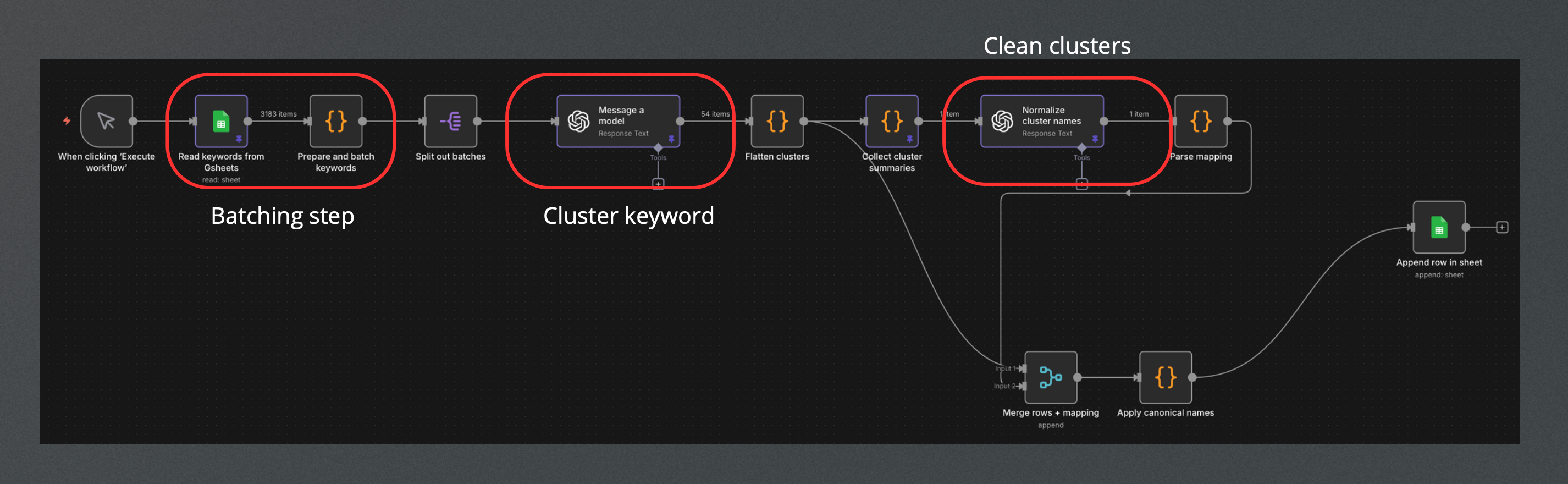
My workflow for V2
Three thousand keywords. One hundred percent clustered in roughly three seconds. Using two LLMs working together. With far better consistency than my first attempt.
For a moment, I thought: If AI can now do in seconds what used to take me four hours, what exactly is my value?
When I sat down and compared both versions side by side, the answer became obvious.The magic wasn't the model. The magic was the system around the model.
In version one, I'd dumped keywords into an agent, kept the logic in my head, and hoped the tool would figure it out. It behaved unpredictably because I'd given it unpredictable conditions.
In version two, the data was structured before it ever touched an LLM. The constraints were explicit. The logic was enforced by design. The AI didn't need to be smarter, it just needed to follow the system I'd built.
And that's when the anxiety lifted.
Keyword clustering isn't hard because of the mechanics. Any tool can group similar words together. It's hard because of the decisions behind it, for example:
AI can execute clustering. But it can't decide why a cluster should exist in the first place. That involves creativity, and judgment. And that's not going anywhere.
AI can't judge whether a task makes sense. It can't tell if an output is strategically useful. It has no idea what your real business goals are, what constraints you're operating under, or what context matters for this specific situation.
The most useful mental model I've found works like this: humans design the game, agents read the game, workflows play the game.
Think of it like football:
Workflows replace repetitive actions. Agents replace conditional logic. But only humans can answer the question that matters most: What are we actually trying to win?
This shift leads to something bigger than just "how to use AI tools". My job is no longer to execute tasks. My job is to design systems.
That means thinking about SEO as a product. Instead of scattered activities carried out in response to weekly pressing issues, SEO becomes a system with clear subsystems (technical, content, on-page, digital PR) and clear layers (design, interpret, execute, review).
Every subsystem follows the same logic. Humans define intent and goals. Agents interpret rules and conditions. Workflows execute at scale. Humans review and refine.
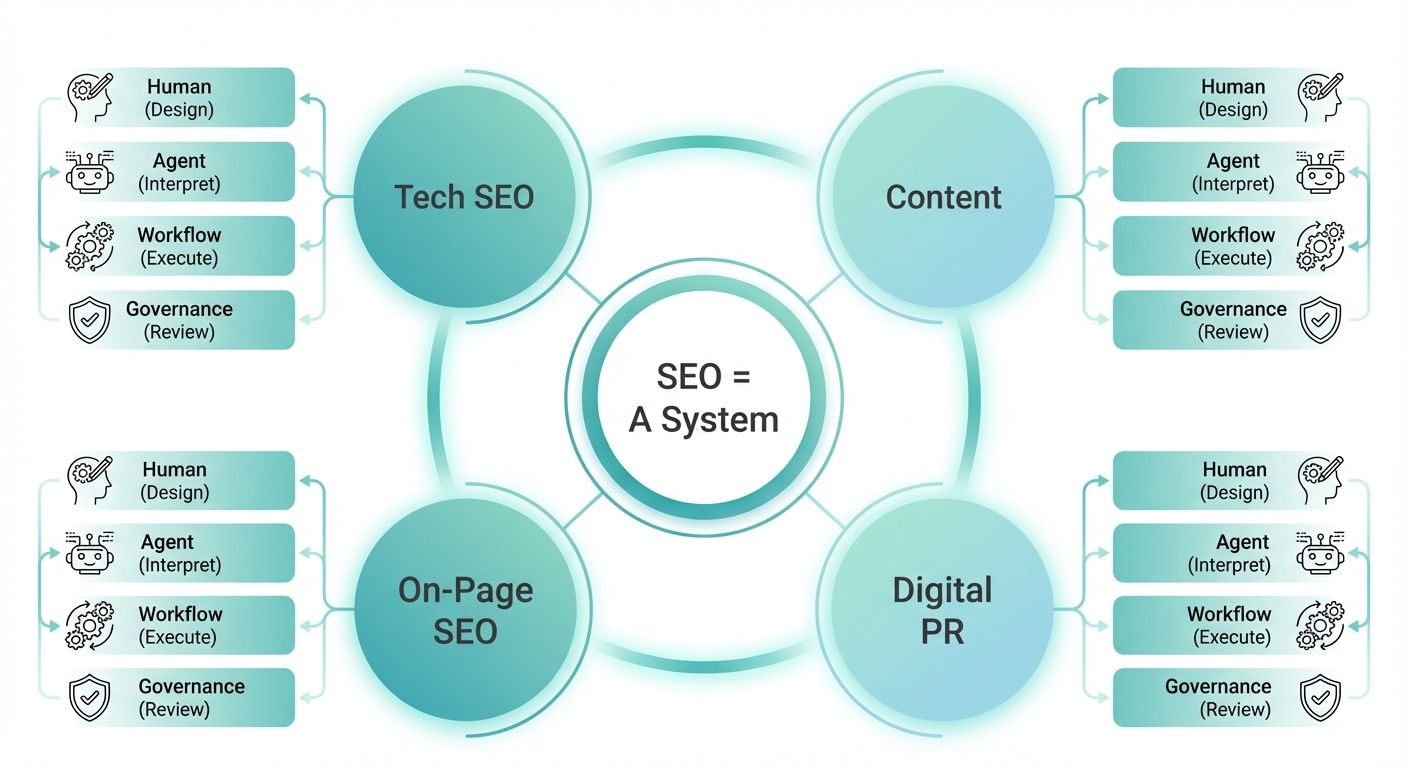
SEO as a System
When you structure it this way, SEO stops depending on whether one person remembers to do something this month. It becomes scalable, teachable, and (here's the part that matters for my career), designable.
Take the content pillar as an example. How do you productize it?
A modern content pillar system has:
This is about moving humans up the value chain. Less time in spreadsheets. More time on decisions that actually matter.
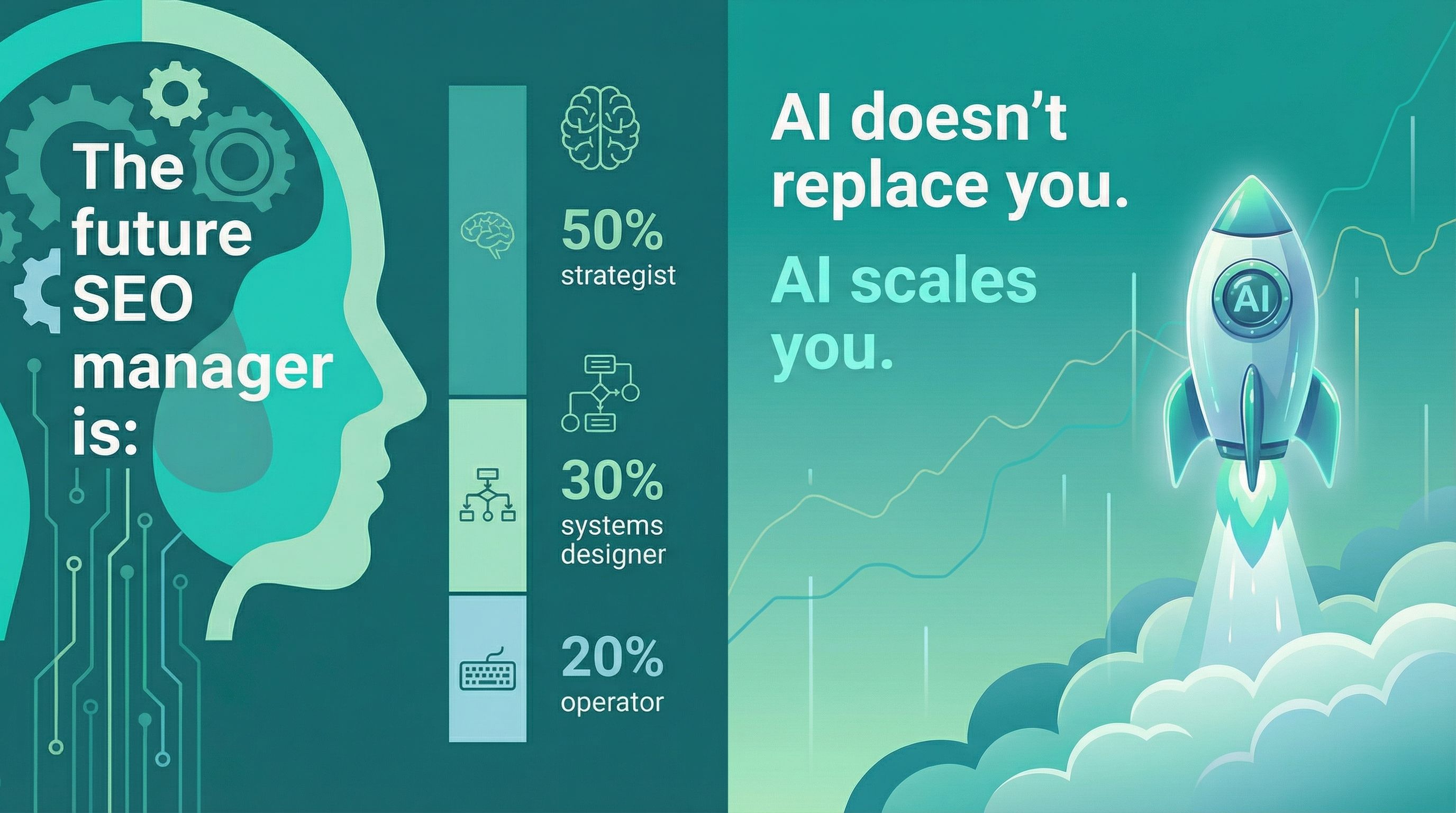
AI doesn’t replace SEOs, it allows them to scale.
The future SEO manager isn't a full-time executor. But they’re also not a full-time prompt engineer, or a full-time tool operator either.
The role is shifting toward something like 50% strategist, 30% systems designer, 20% operator. You still need to understand how the tools work. But the value you bring comes from designing what the tools do and why.
AI doesn't replace you. AI scales you. But only if you're building something worth scaling.
In 2026 and beyond, AI will handle more of the execution. Tools will get faster. Outputs will get cheaper. The barrier to producing something will keep dropping.
But the advantage won't belong to the best tool users. It will belong to the people who own the architecture, define the logic, design the system, and decide what "winning" actually means for their specific situation.
The future of SEO isn't automation…It's agency.
The ability to decide what matters, to design and build systems, and use every tool available, AI included, in service of the goals you actually chose.
You can access all 10 recordings of the wonderful talks at WTSFest London 2026, for just £99!
We pay our authors, speakers & team to bring you helpful content like this.
We aim to always keep our content and community free and accessible.
If you've found value in WTS, please consider supporting us through our Buy Me a Coffee initiative.