🌲 WTSFest Portland - May 2026 | 🥨 WTSFest Philadelphia - Oct 2026 | 🎥 On-Demand Video Hub - 2026
🌲 WTSFest Portland - May 2026 | 🥨 WTSFest Philadelphia - Oct 2026 | 🎥 On-Demand Video Hub - 2026

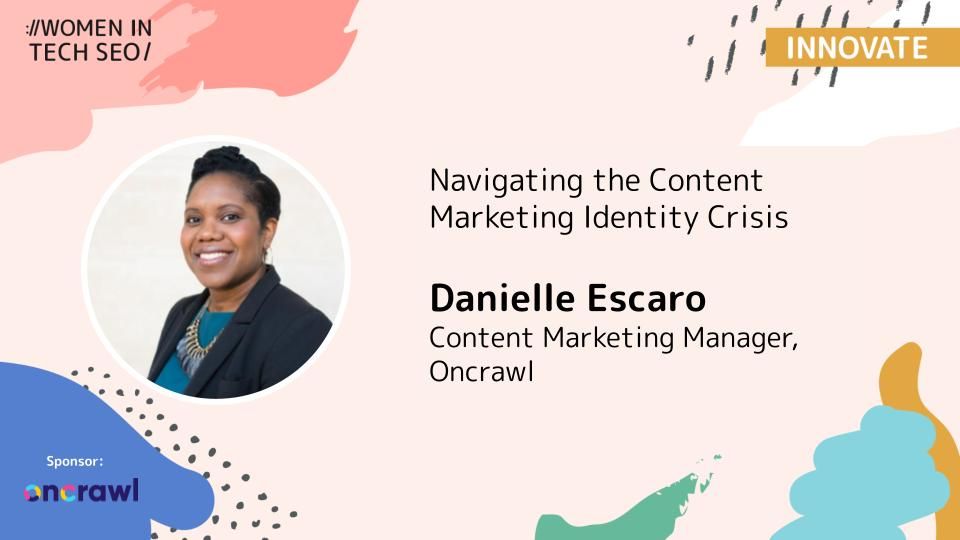
Author: Danielle Escaro
Last updated: 26/03/2026
Everyone keeps asking if blogging is dead; it’s a question that refuses to go away. Considering it’s what I do for a large portion of my day, I really hope not!
As a content marketer, I could just say no and draft a pretty convincing argument as to why. But, beyond my own personal interests, I think we need to look at this question from a different angle.
There seems to be a content marketing identity crisis, but I don’t think it’s about format; it's about the disconnect between content and audience. The real issue isn't whether blogging works, it's whether we're actually addressing the right audience.
Let's look at the Jaguar rebrand in 2024. Though it's not strictly a content marketing example, it illustrates my point well.
The iconic car brand, known for its heritage and high-end luxury, chose a rebranding strategy that completely departed from what customers knew. Their goal was to target younger generations with an innovative new design, but in doing so, they disregarded their core audience and the traditional values that created and retained loyal customers.
Needless to say, it was a massive flop.
In my own experience as an editor, I've seen this pattern play out repeatedly. I've worked on great articles with everything I thought the audience wanted: trending topics, thoughtful structure, clear insights. And yet, despite all of that, some simply landed with a thud. They had minimal engagement, few sessions, and barely any shares.
Let me be clear; I'll never say an article was a failure. Every piece of content represents time, energy, and expertise from multiple people. However, a great article placed in front of the wrong audience won't get the engagement it deserves.
What do I mean by this? We can sometimes find ourselves creating content for who we think our audience should be instead of who they actually are.
In fairness, sometimes it might be the case that you haven't forgotten your existing audience. Maybe you're trying to build content to reach a new one. But with so many resources and so much content already out there, that seems like a Herculean task – your energy may be better spent engaging with your current audience.
So, to answer the question that won’t go away: no, blogging isn’t dead. However, the blogs which are thriving, know exactly who they're talking to.
Sometimes our instinct is to go wide. Cast the biggest net to try to capture the largest possible audience. But if I've learned anything from managing content, it's that the old adage is absolutely true: if you're trying to talk to everyone, you'll end up talking to no one.
We need to focus on our niche because Google and AI search agents are rewarding topical authority and expertise. Therefore, it makes the most sense to identify your core audience and go deep. We should be concentrating on micro-communities over mass markets by building depth into our content strategies. By addressing a specific audience segment and creating content that genuinely serves them, it builds more than traffic, it builds loyalty.
At BrightonSEO in October 2025, something from Jack Chambers-Ward’s presentation really stuck with me. He spoke about his podcast, Sequelisers, which focuses on fixing bad movie sequels, and it’s a perfect example of micro-community building. He developed a genuinely unique concept that has found its people.
Rather than trying to appeal to everyone, he created something valuable for those who get it. The result? An audience that's engaged.
In content marketing, we can do the same. In my work specifically, this means making choices, for example: "this piece is for technical SEOs dealing with JavaScript rendering issues" rather than "this is about SEO and JavaScript in general." It means accepting that some people won't find it relevant, and that's okay because it wasn't for them.
The goal is to identify your core community and figure out how to serve them most effectively. This requires discipline, and means not falling into the trap of creating content that "could also be relevant for..." I know that it can be difficult to do, but that focus is exactly what transforms casual readers into a loyal audience that keeps coming back.
Whether your current audience matches your ideal persona or not, you may have been writing for them for a long time and grown attached to that idea. So a reality check can be scary. It could mean reworking and starting a whole new content strategy.
We assume we know our audience, but data often tells a different story. Start by looking at:
Don't make the mistake of focusing only on traffic. Look at real engagement metrics like time on page, return visits, and social shares. This helps you understand what type of content actually resonates with your readers.
Check LinkedIn, Twitter, industry forums, and newsletters. See who's amplifying your work and where those conversations are happening.
When looking for my core audience, I’m less interested in the article that got 10,000 views from a trending keyword and more interested in the one that got 500 views but generated ten LinkedIn conversations and five email inquiries. That second article found its audience.
What you're looking for are patterns. Not the content that performed well once because of luck, but the pieces that consistently resonate with a specific group.
Your actual audience might not be who you expected, but that's valuable information. It means you can stop wasting resources on content for non-existent readers and start serving the real community you've built.
The long game isn't about chasing every possible reader. It's about serving the right ones exceptionally well.

Danielle Escaro - Content Marketing Manager, Oncrawl
Danielle is the Content Marketing Manager at Oncrawl. She’s spent a large part of her career exploring how storytelling, curiosity, and good communication can make even the most complex topics approachable.
We pay our authors, speakers & team to bring you helpful content like this.
We aim to always keep our content and community free and accessible.
If you've found value in WTS, please consider supporting us through our Buy Me a Coffee initiative.