☕ Help us keep WTS free & accessible—buy us a coffee
☕ Help us keep WTS free & accessible—buy us a coffee

Author: Erin Simmons (they/them)
Last updated: 01/05/2026
At April 2026’s BrightonSEO, I shared this story about trust as the future of search - and why community marketing is how you earn it.
I wanted to be upfront about something: I was extremely nervous to be speaking at an SEO conference.
Because I had a secret - I'm not actually an SEO.
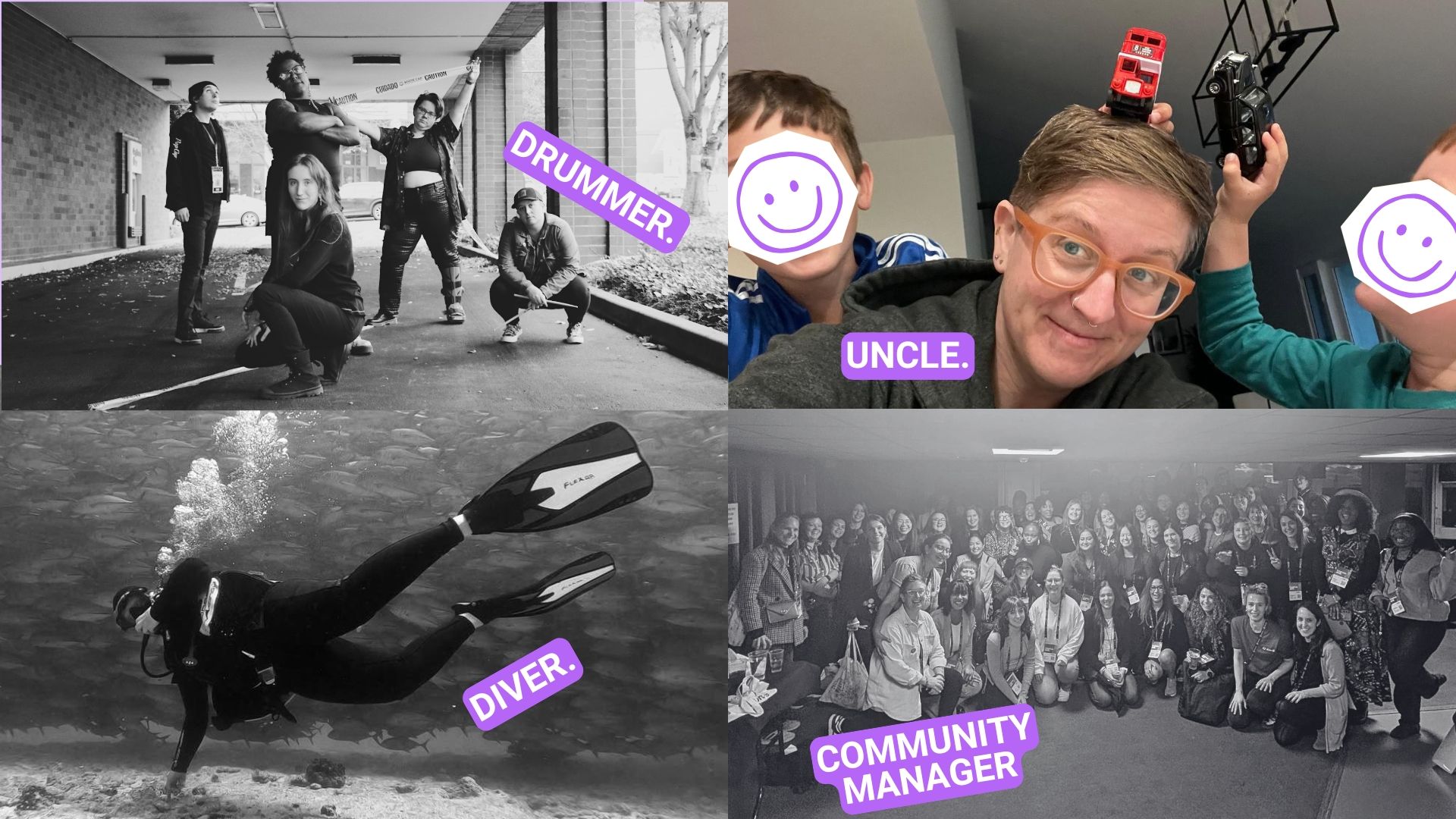
I'm a drummer. I'm an uncle. I'm a diver. I'm a community manager.
So why should folks at an SEO conference trust me?
Well, I wasn't really there to talk about SEO. I was there to talk about people and trust.
Every label I shared - drummer, uncle, diver, community manager - requires people to trust me.
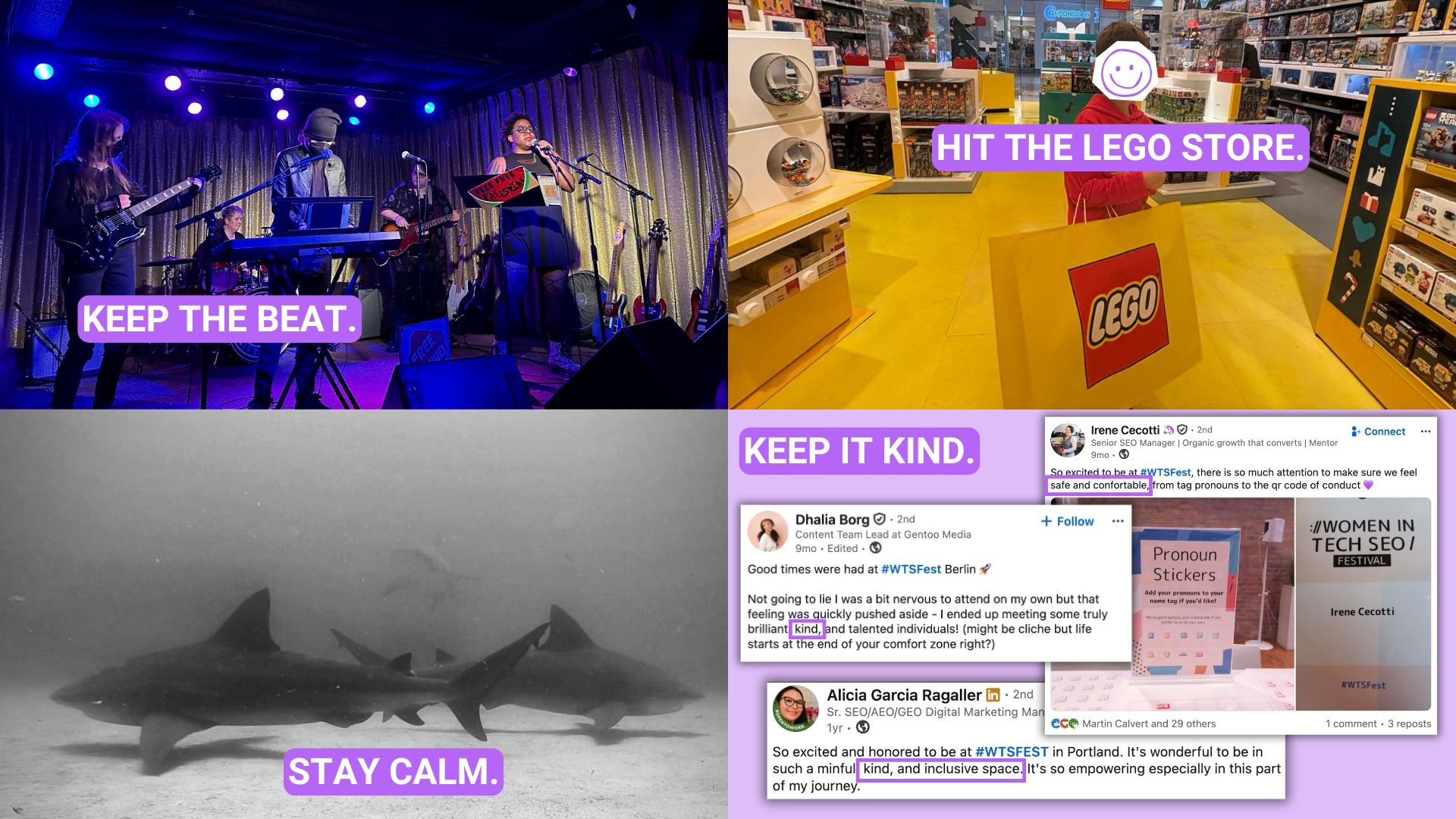
Trust me to always keep the beat.
Trust me to always take them to the lego store when I come to visit.
Trust me to stay calm and collected no matter what's happening underwater.
And trust me to maintain our kind, inclusive, and safe spaces that they can keep coming back to.
I gave this intro and told the audience - you decide if you trust me.
But the intro - it was more about me trusting myself to get up on stage.
And that self trust is a crucial reason why communities exist and why the people and brands who show up there to help other's grow that self trust are the ones who get remembered, recommended, and trusted.
So let's get into it below and you can also check out the full slide deck here too.
Brand visibility and brand trust are rising together.
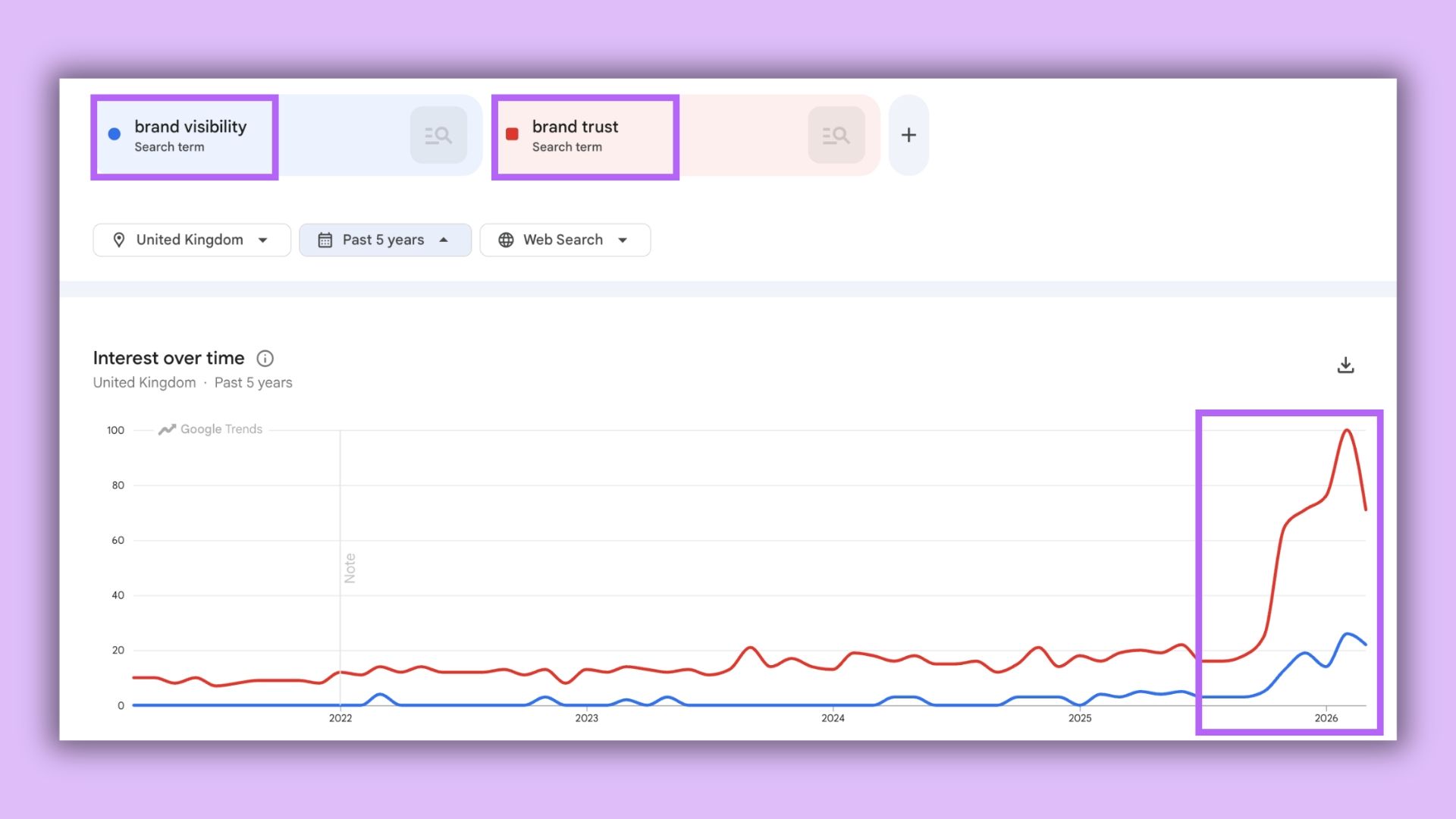
And when it comes to being visible through search - that makes a lot of sense. Because search is a trust behaviour. It's an exercise that shows us what someone trusts to help them understand and make a decision.
From the moment someone types a question into their search tool of choice to when they action off of what they've learned - trust is involved.
1. Self trust - I don't trust my own uncertainty on this topic. I need to go find more information.
For me - I didn't trust myself to get up on the brightonSEO stage and share my knowledge. I didn't trust that I could get up there and speak at all or, if I could, that it would necessarily be helpful for the audience.
2. Platform trust - Where I go to find more certainty.
For me - I went to Google, ChatGPT, Slack communities, WhatsApp groups, YouTube. I went searching on all these platforms to ease my uncertainty.
3. Source trust - Who or what information I trust to act on.
The sources I trusted were people who had gotten on that stage before, articles about speaking on the WTS website, Ted Talks, people in a WhatsApp group that I met at the brightonSEO speaker training.
Search is a trust experience from start to finish.
Down my Ted Talk rabbit hole, I came across trust expert, Rachel Botsman, and her over 5MM views on YouTube. Seemed trustworthy to start.
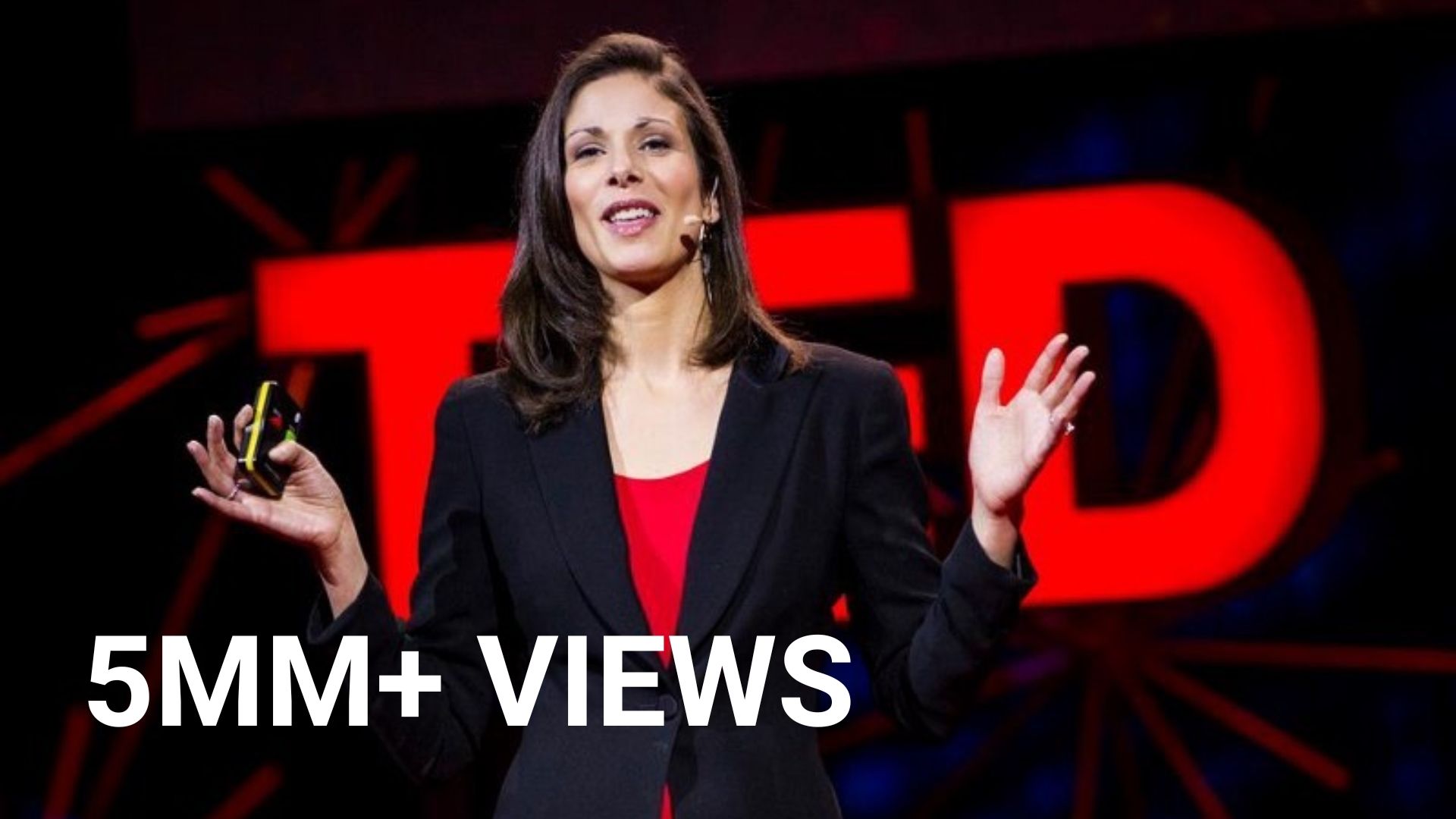
Digging deeper, my trust in Botsman grew -
Pretty trustworthy track record.
Then her definition of trust made so many things click for me:
"Trust is a confident relationship with the unknown"
- Rachel Botsman
In her book, Who Can You Trust? How Technology Brought Us Together and Why It Might Drive Us Apart, she talks about trust leaps.
When making a decision, there's what you know and the the unknown - where you want to get to. And there's often risks and uncertainty in getting to that unknown.
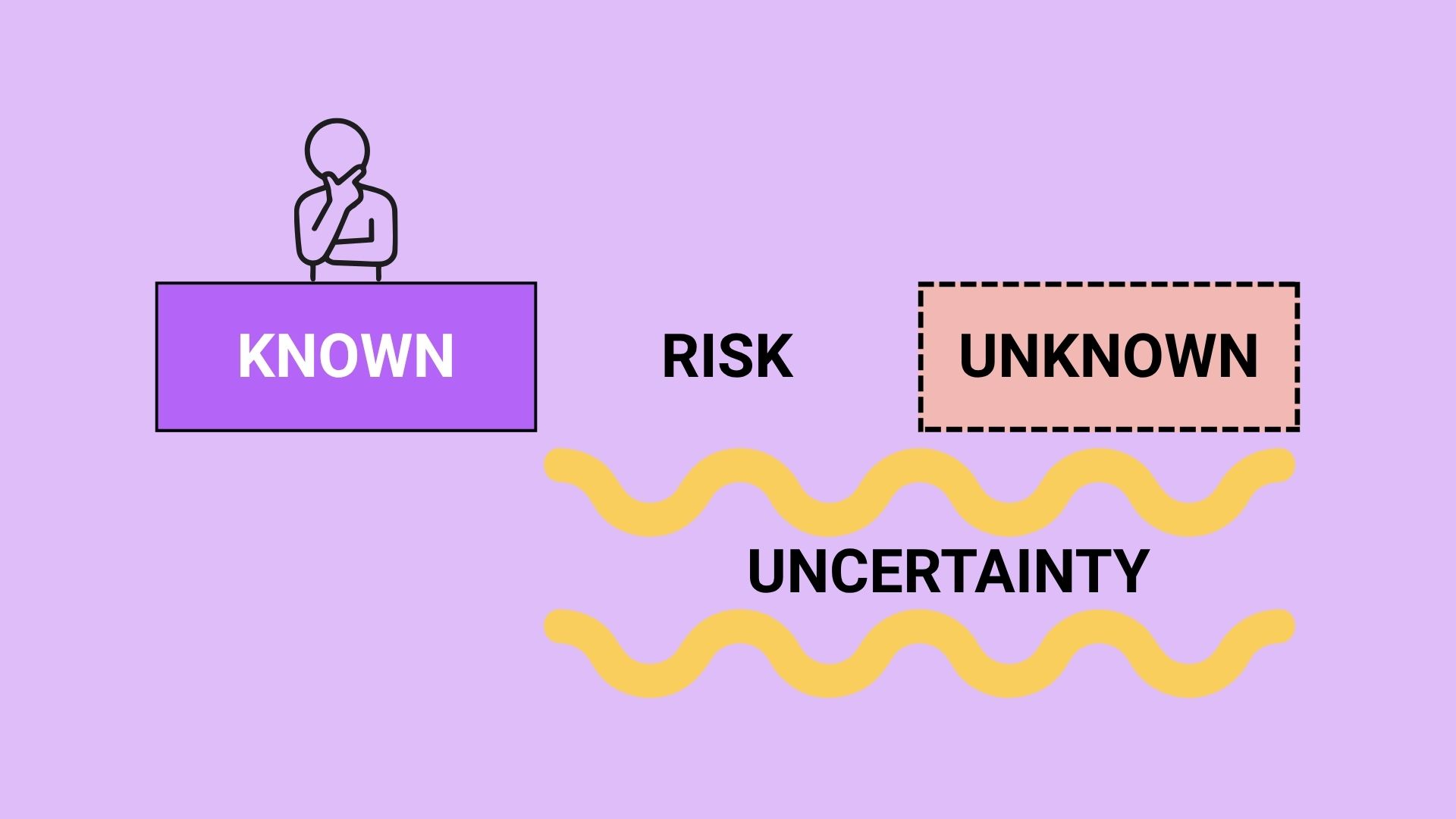
For my trust journey to getting on stage at brightonSEO - I knew I was good at my job, that I could help my colleagues, that I had knowledge to share. But my unknown was could I share my knowledge on stage and would it be helpful at a different scale?
A trust leap allows you to move towards that unknown, over the risk and uncertainty to see what actually lays on the other side.
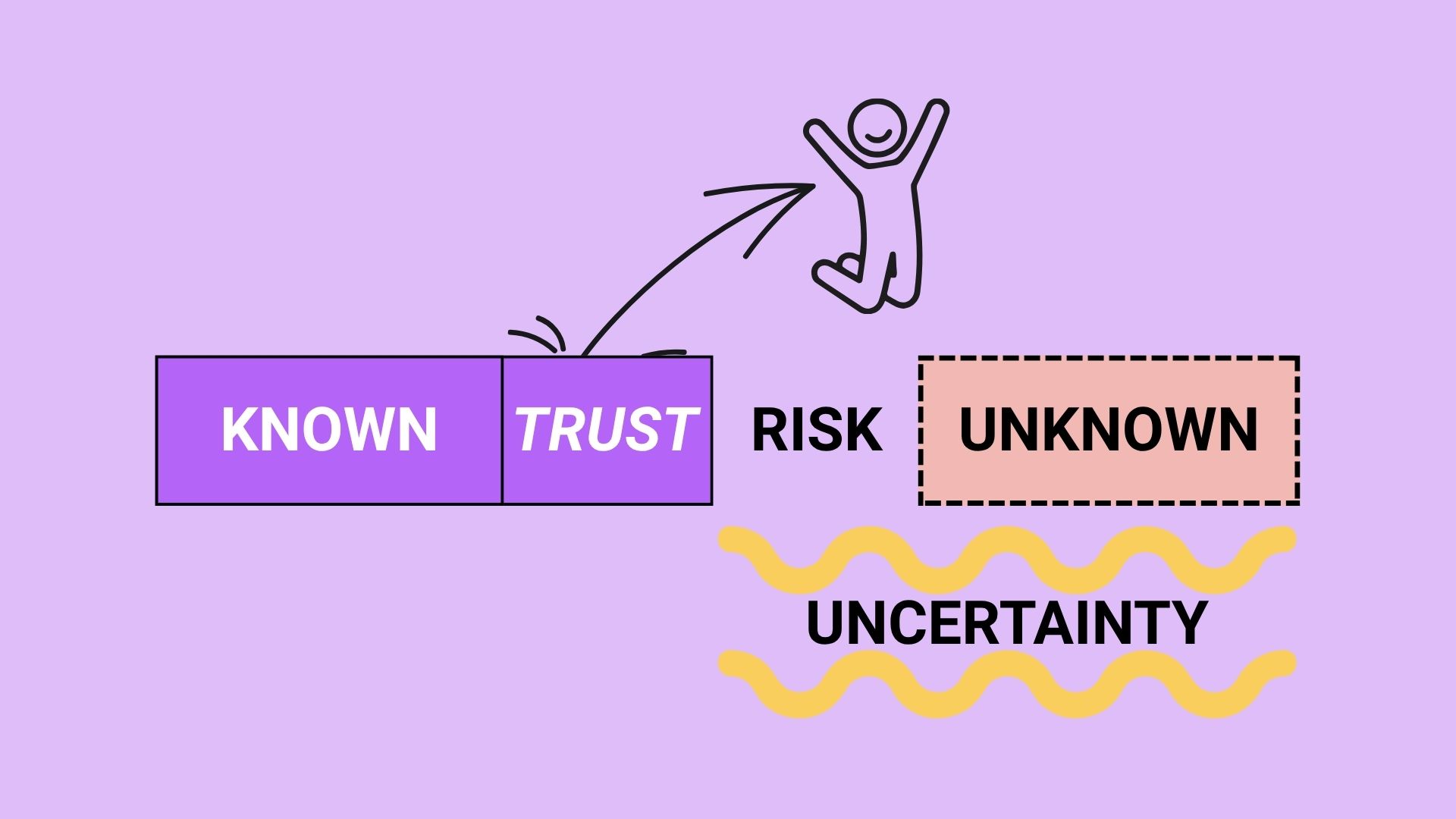
Through research and listening to people I trusted, I built a trust platform that gave me more confidence to take that leap and get up on that stage.
Trust leaps are easiest to take with other people.
Search actually shows us that.
According to Edelman’s Trust Barometer reports, the percentage of people who trust search engines steadily rose 12 percentage points from 2021 to 2024 after a sharp decline from an overall trust loss in media and information during COVID.
Then came a 5 point dip when AI search came on the scene.
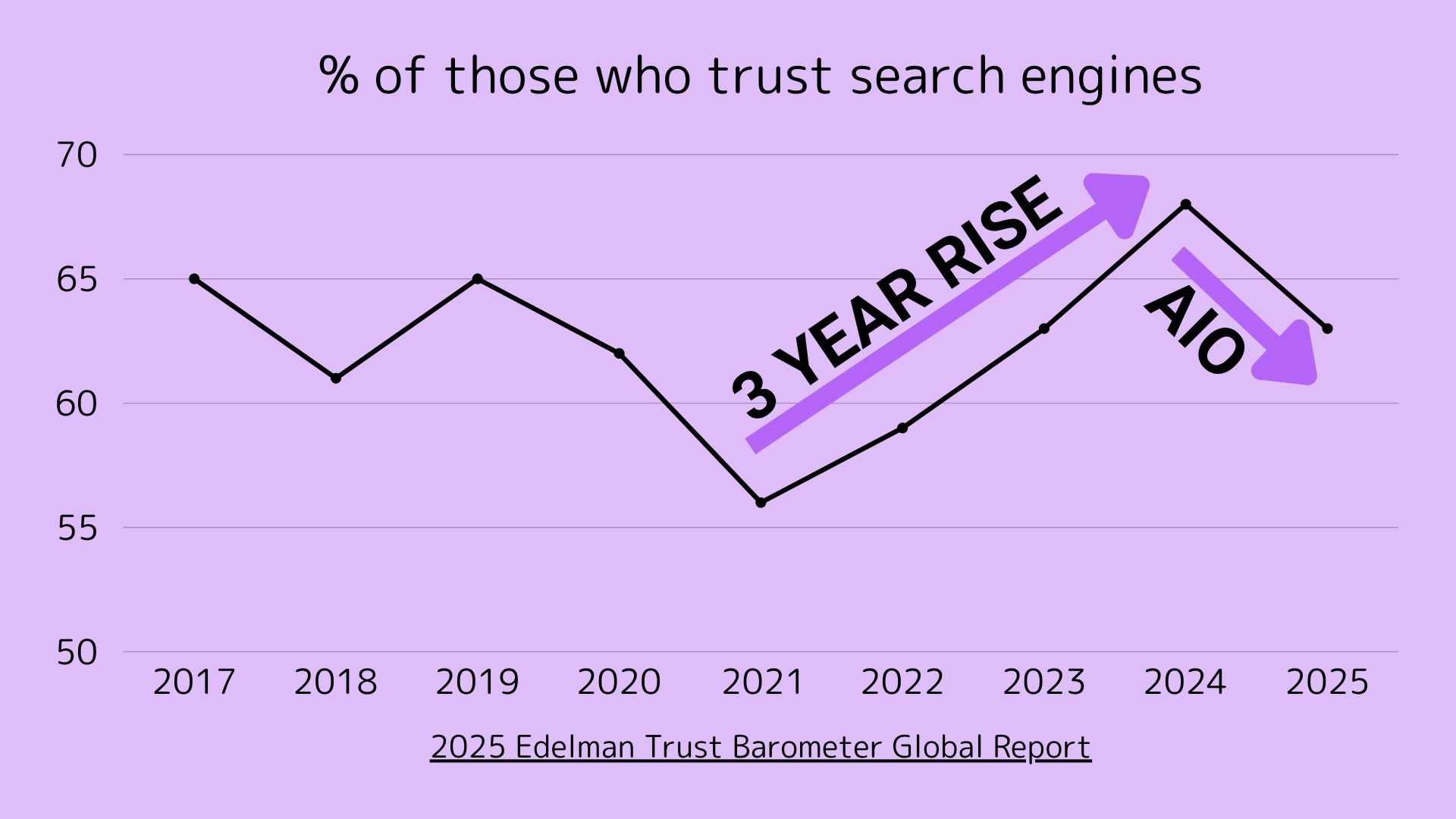
Trust in search engines rose steadily for three years - until AI Overviews disrupted how people perceive where information comes from.
Source: Edelman's Trust Barometer
That rise wasn't random. Search was prioritising people in their results during this time:
Then 2024 hit and trust in search engines dropped 5 percentage points. AI Overviews arrived - the AI summaries at the top of Google Search results.
Suddenly we weren't quite sure who's information we were seeing. And trust in search dipped accordingly.
So what did people do? They shifted their behaviour in response and went looking for people to trust.
GrowthMemo ran a UX study looking at where users click after a Google search.
They broke out community and video from the organic results.
When an AI summary was not present, 57% of people clicked through to organic results:
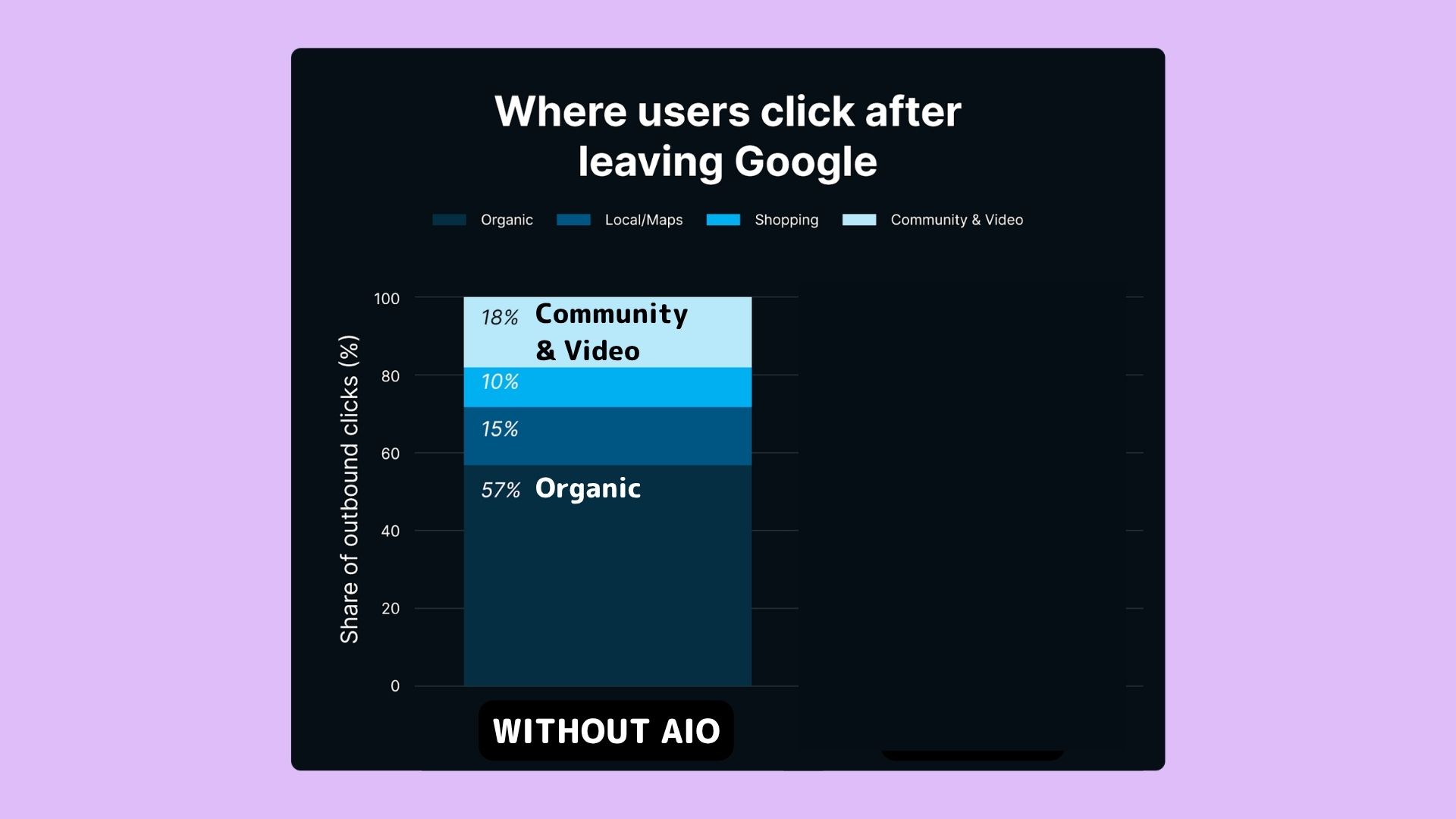
Without AI Overviews, most people click through to the organic results - showing strong trust in traditional search.
Source: GrowthMemo 2025 | UX Study of AIO
When the AI summary was present, that organic click number dropped to 40%:
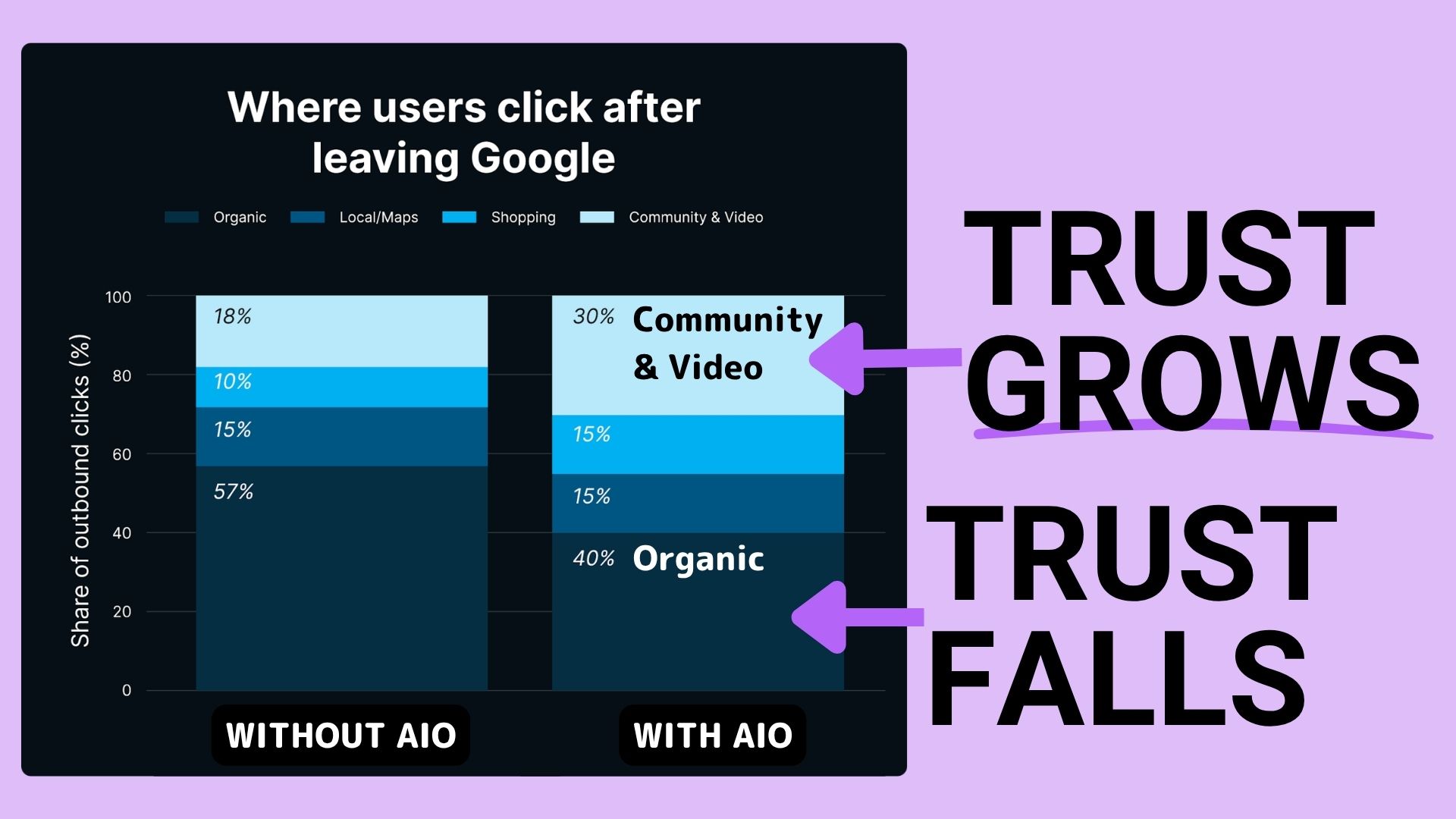
When AI Overviews appear, organic clicks drop and community or video clicks rise - indicating that when uncertainty in a platform rises, people turn to people.
Source: GrowthMemo 2025 | UX Study of AIO
The number of folks going to people-led sources of community and video rose from 18% to 30%.
When trust falls in tools, people turn to people.
And typically, they turn to people with track records.
A track record is repeated proof that you can be trusted. Proof that you (1) consistently show up as (2) yourself and provide (3) help.
That proof is what reduces the risk and uncertainty someone needs to take their trust leap.
These proof points that make up your trust track record are our trust building blocks.
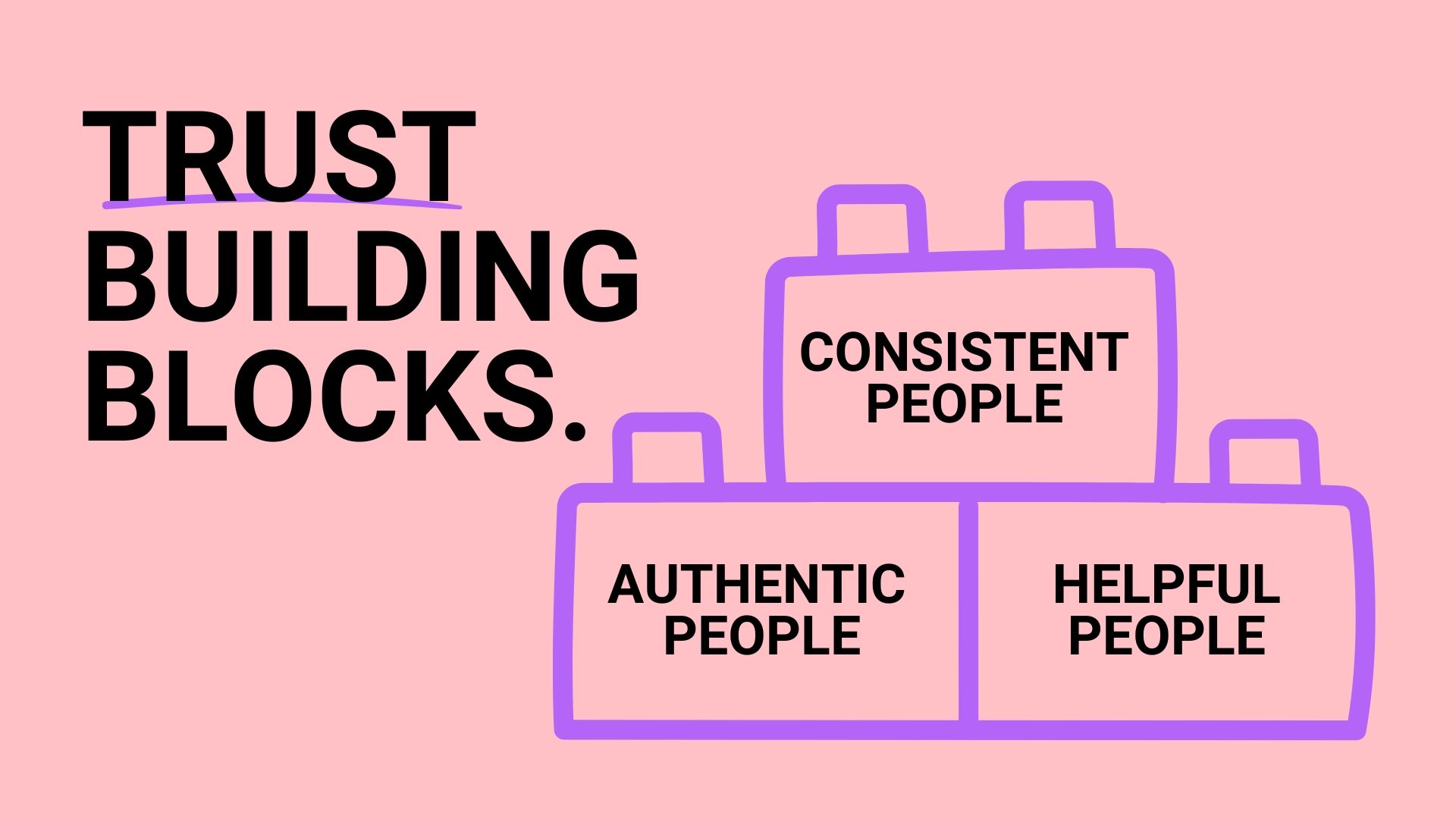
Not all spaces are built the same for trust building.
Community is the only space that naturally delivers on all three of the trust building blocks - authentic people showing up as themselves, helpfulness through conversations that can happen in real time, and consistent interactions.
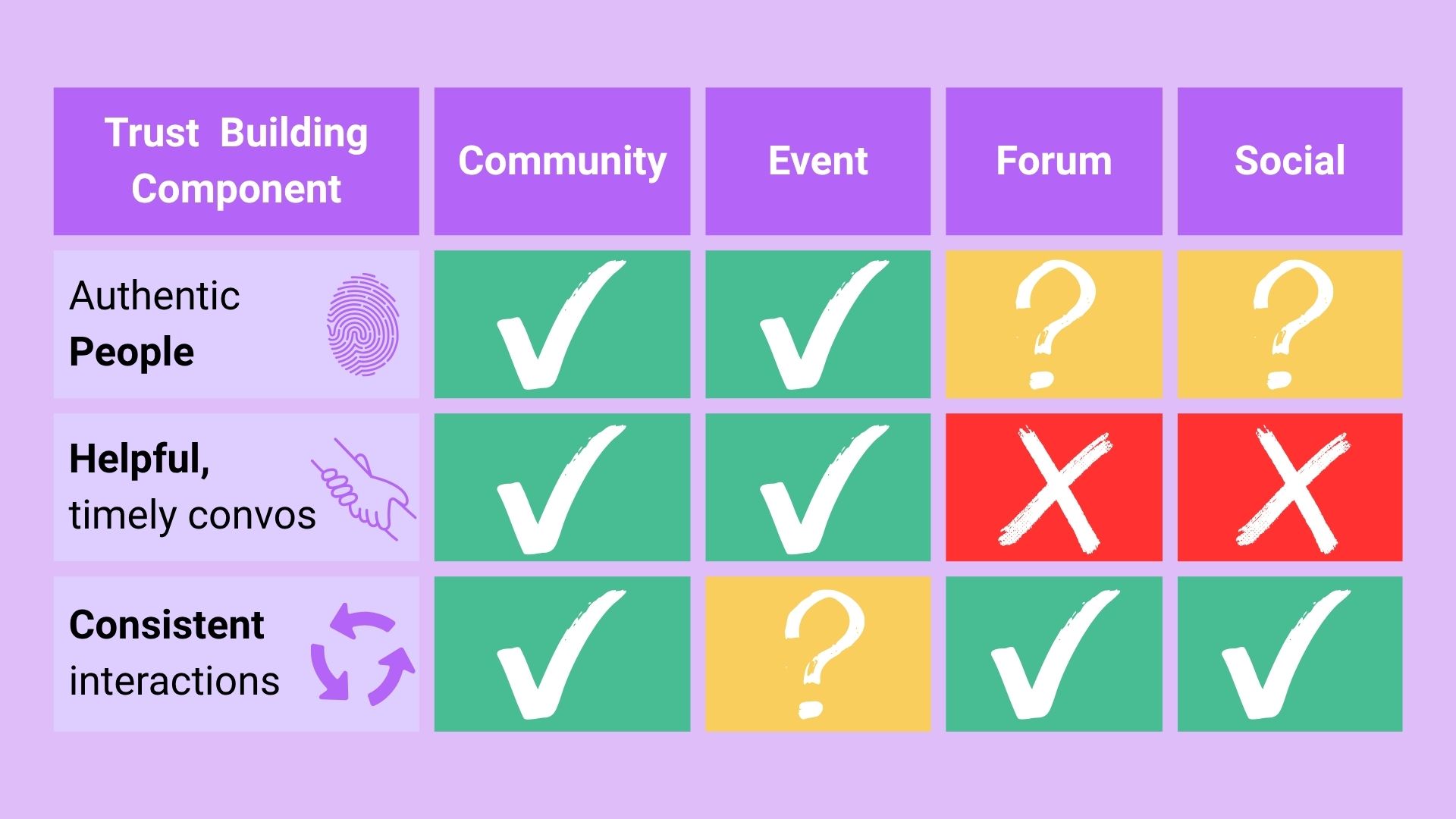
Community checks every box — authentic people, helpful timely conversations, consistent interactions. Events, forums, and social can get there too, but they need the right approach to close the gaps.
Events have the people and the conversations, but consistency is a question mark. But if an event has a strong recurring cadence like a monthly meet up - this can quickly turn into a community space.
Forums and social have consistency, but authenticity is questionable with the ability to stay anonymous in many forums or even with the digital personas that people often portray online. These platforms also aren't built to encourage real time conversations back and forth through commenting.
But again, like with events, if these platforms shift for more authenticity and timely conversations - they too can become a community.
For now, community itself checks all three by default.
This is where community marketing comes in.
Community marketing = participation that helps people succeed.
To do it well, brands need people to participate. And I think you can guess what type of people they need..
This requires brands putting the right people into community roles. These are folks who:
These people are likely client facing or in other revenue-tied roles. And yes, there's a risk and uncertainty in moving them.
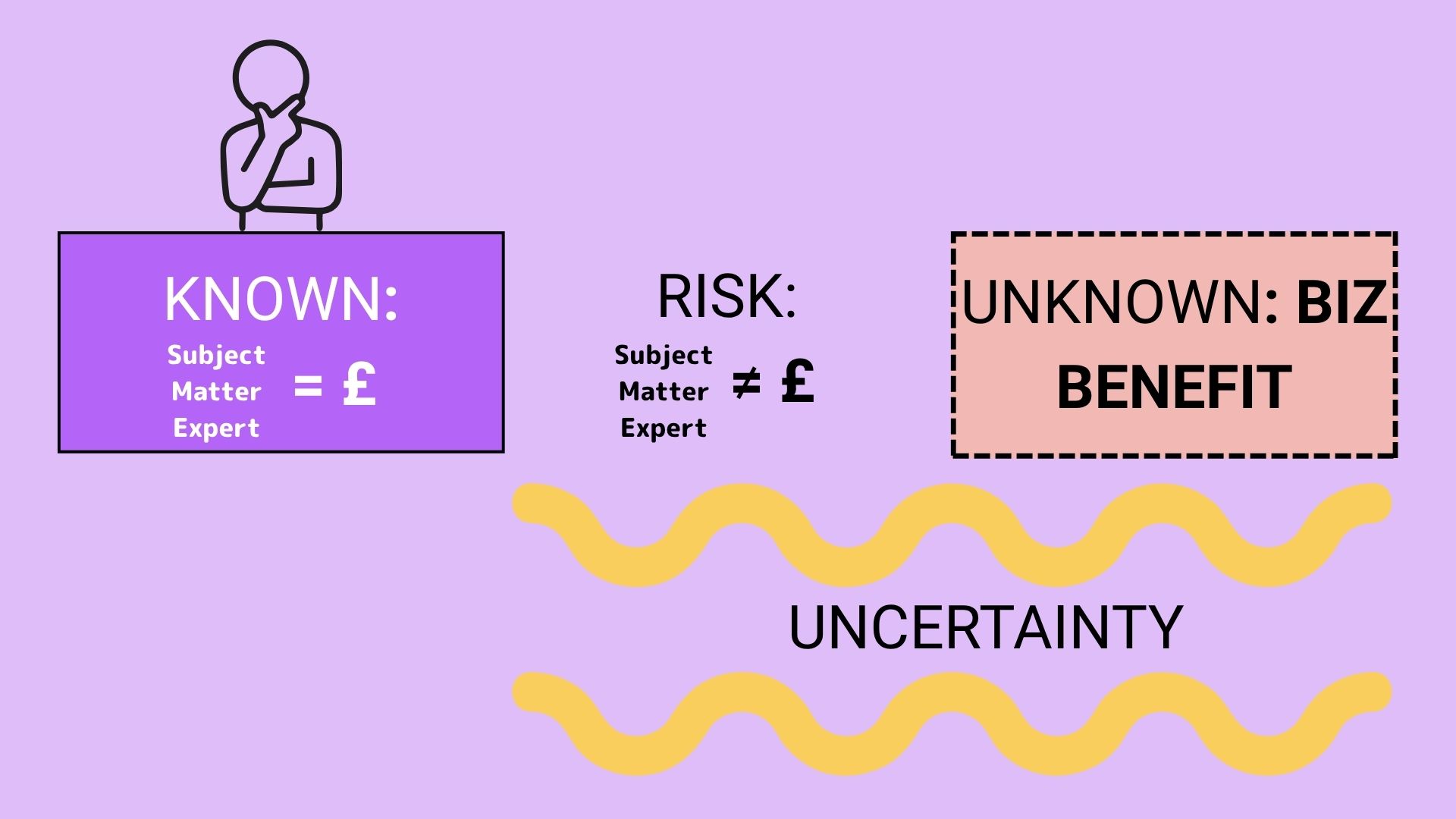
The known is: this person makes money. The unknown is: what could happen for the business if you did this well?
Think of it as your own trust leap. Learn as much as you can about how to help your brand succeed in community and make a plan that plots out the potential risks and how to mitigate them.
Then take the leap!
This requires brands to set the right goals for their community folks.
Your quick goals, leading indicators, whatever you choose to call them - they should not be things like emails captured, leads, pipeline.
They should be:
And your longer-term goals or lag indicators shouldn't be revenue or ROI (although, those do come). They should be:
The wrong goals will force people to show up as the brand. The right goals encourage people to show up as themselves.
This requires brand to invest in their community people.
You can't expect community to work for you if you're not fully backing the people doing it.
And when brands do this well, something powerful happens.
Building real trust in community will build your trust network.
Trust Network = people who talk about you positively
When you're not in the room, when they're not being paid, people proactively bring you up.
Your trust network is your key to modern visibility.
Here are 3 examples from different industries:
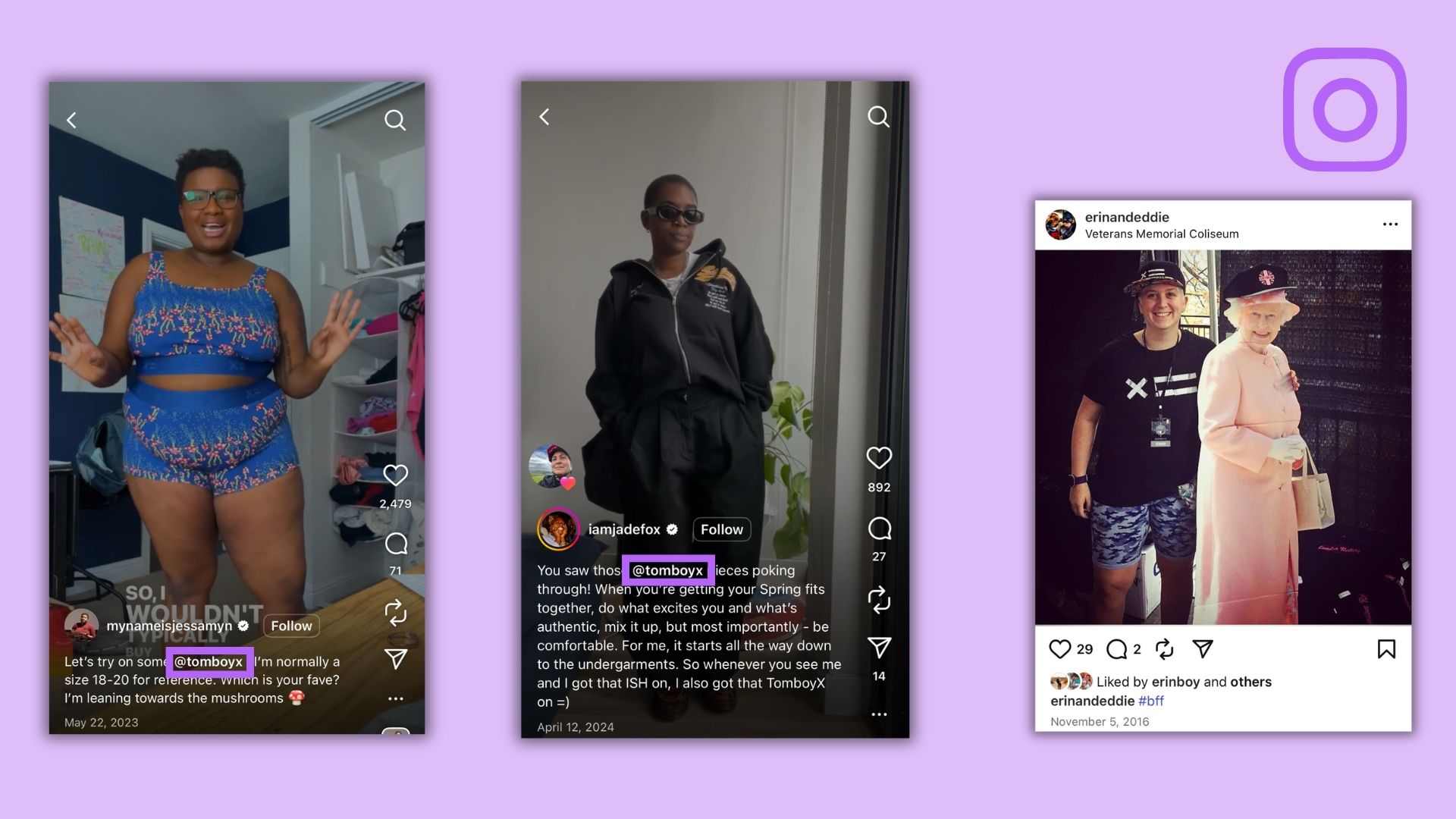
TomboyX makes the world's comfiest gender-neutral underwear. I used to work for them in Seattle.
On Instagram: customers tagging them unprompted, sharing their own photos.
On Reddit: people surfacing TomboyX as their go-to underwear choice and getting ahead of a consistent pain point right in their posts:
"Nice and soft, but pricey. Worth it imo."
"Despite it's price, I really enjoy TomboyX"
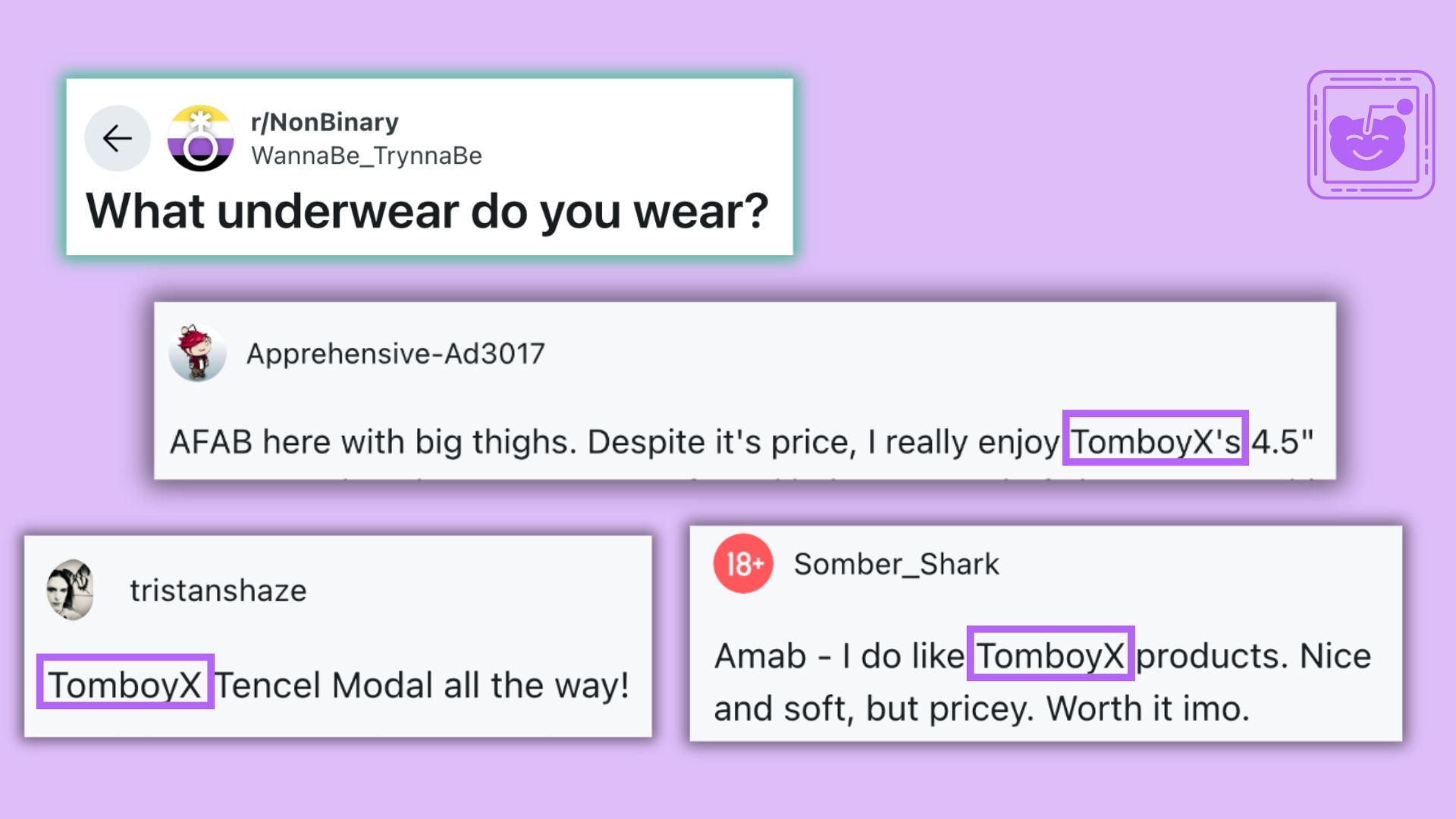
That's not brand messaging. That's trust in action.
And when we look to the platforms - TomboyX is showing up in Google's AI summary and organic results.
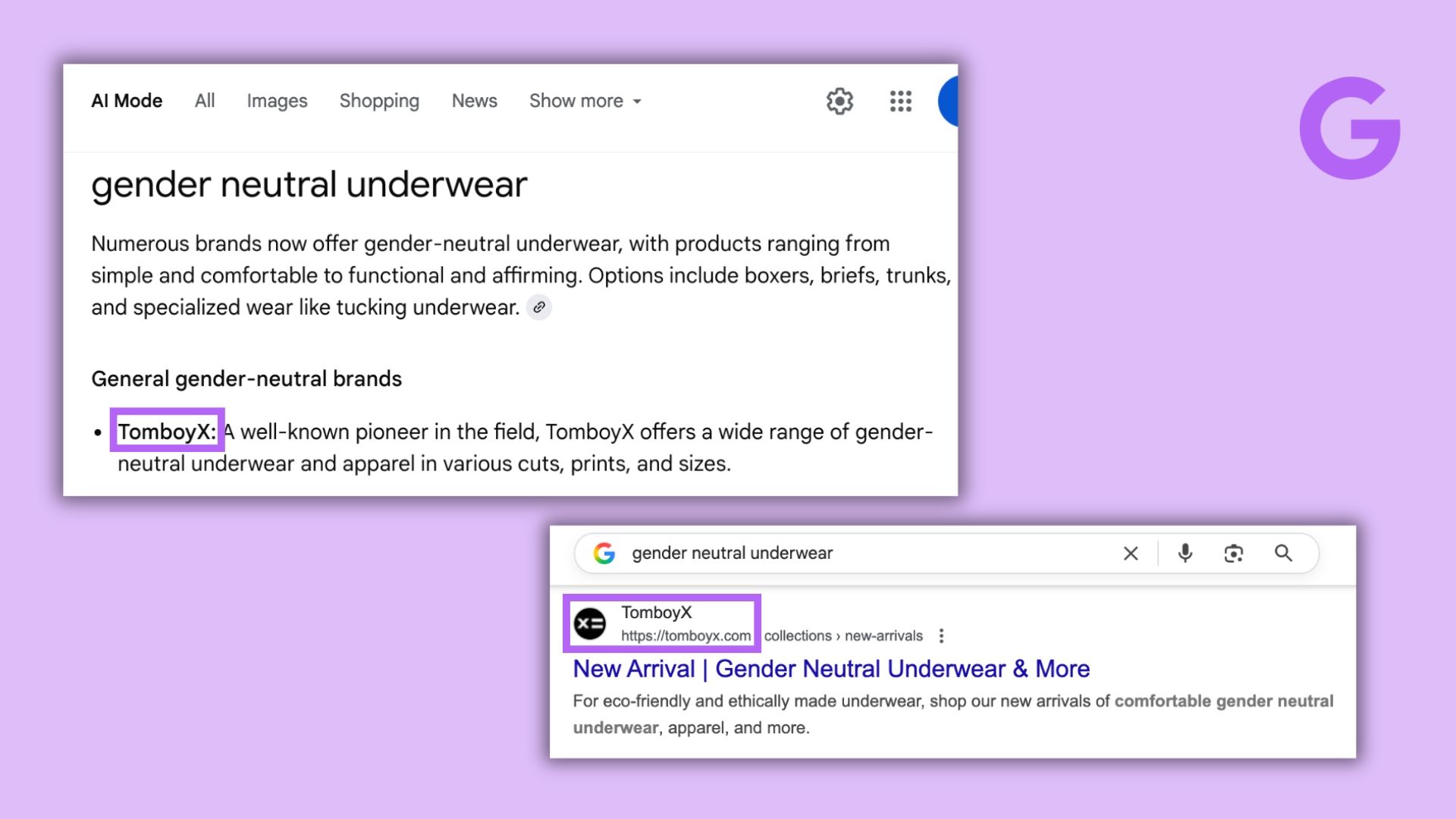
Because the algorithms are following where people have already placed their trust.
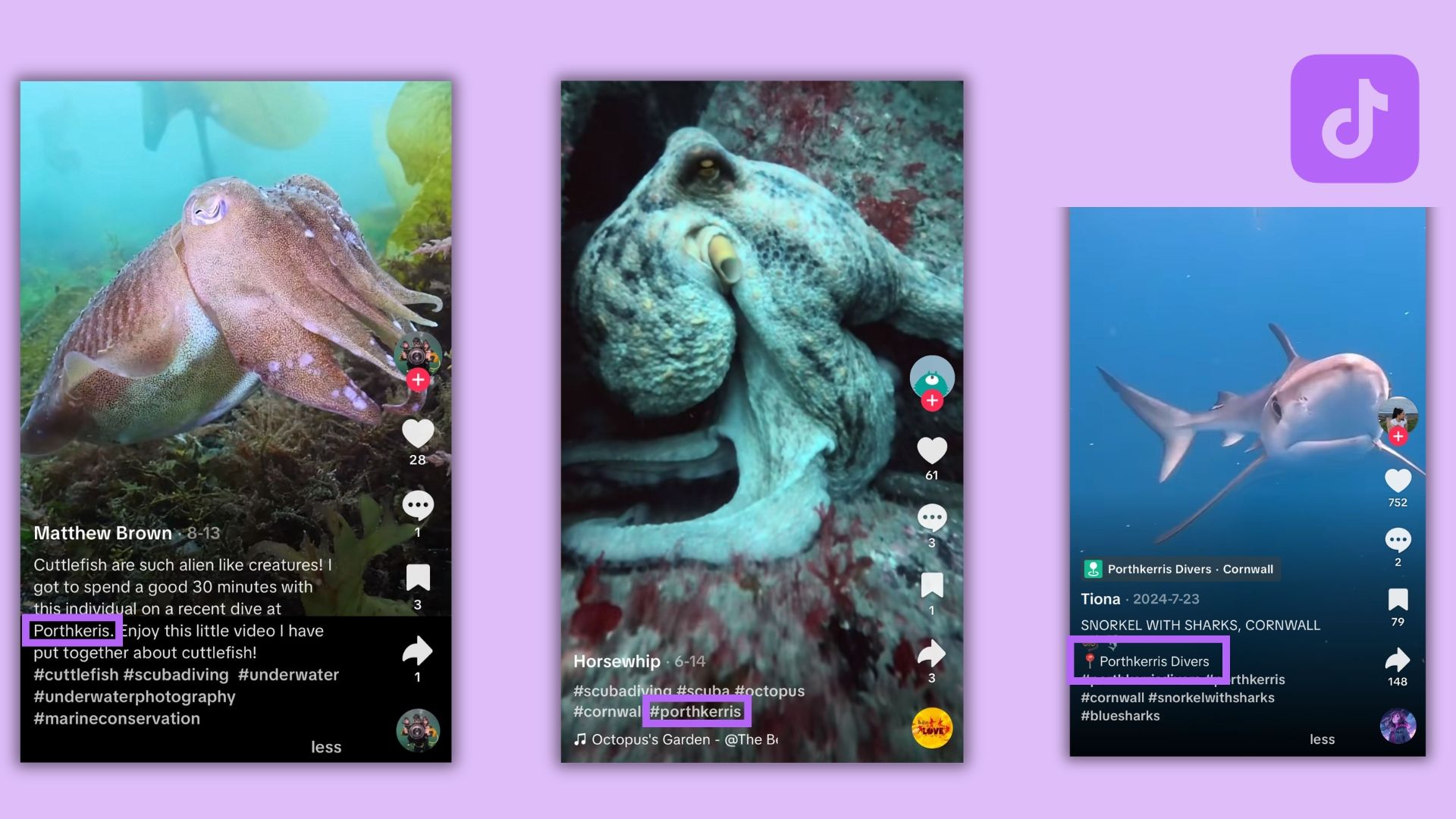
Porthkerris is a dive shop in Cornwall. When I first moved to the UK, they kept coming up while I was researching diving.
On TikTok: Porthkerris being dropped as location tags and hashtags with photos of people's dive experiences with them.
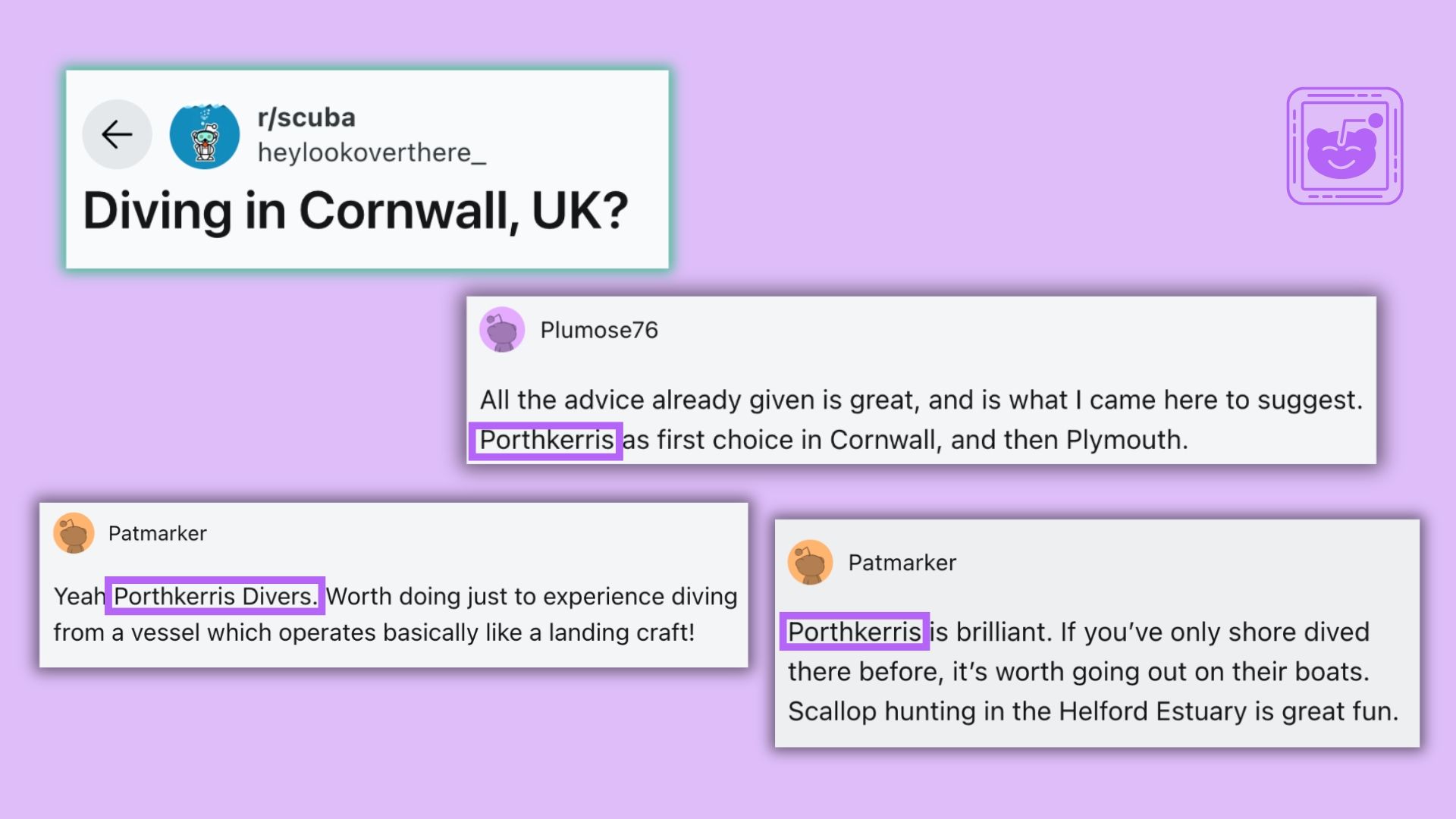
On Reddit: They're showing up as one of the top shops to dive with in Cornwall.
And back to the platforms, in ChatGPT when I ask for friendly dive shops in Cornwall - Porthkerris, again.
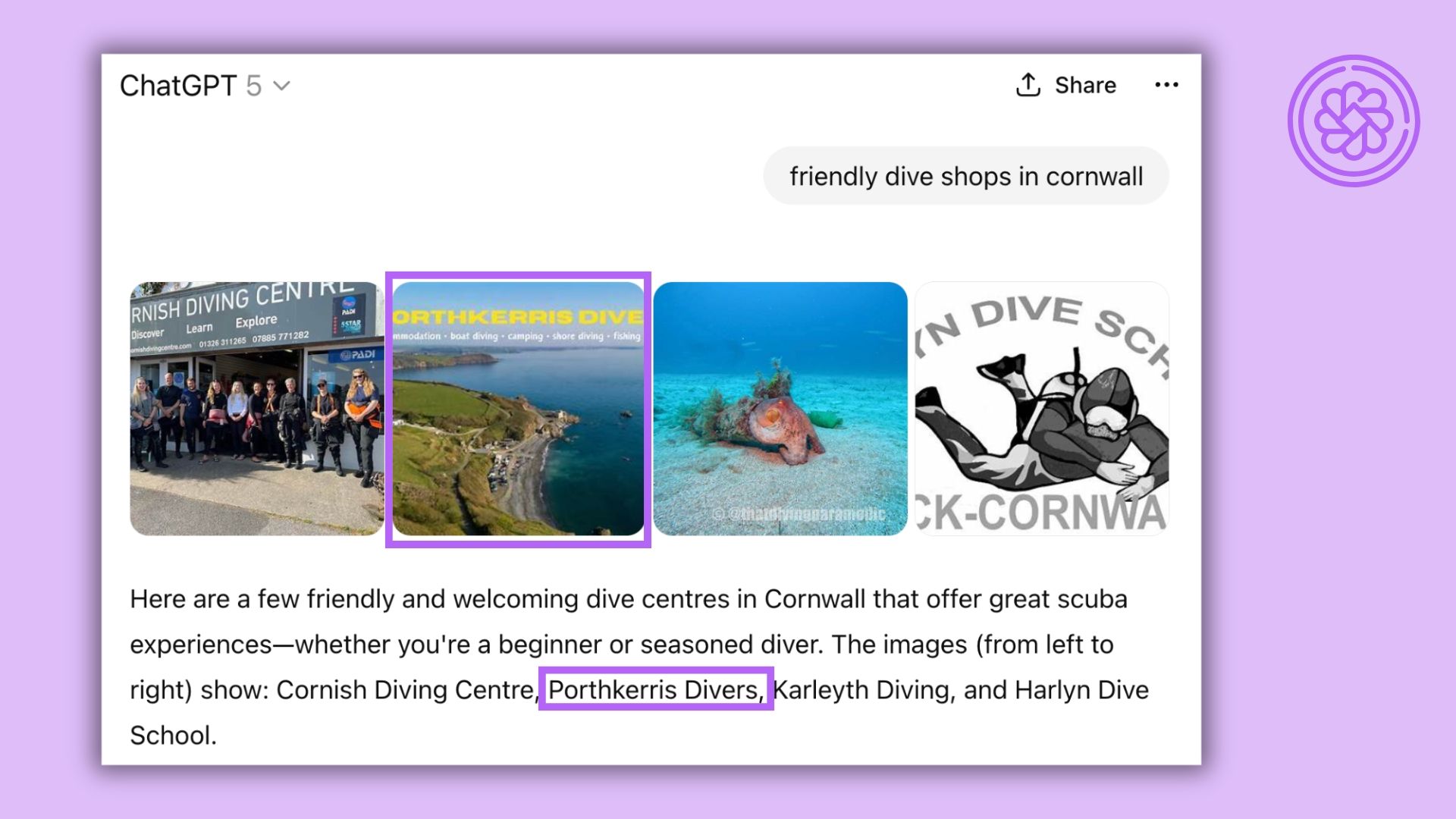
No big ad budget. No heavy SEO push. Just divers consistently sharing their experiences.
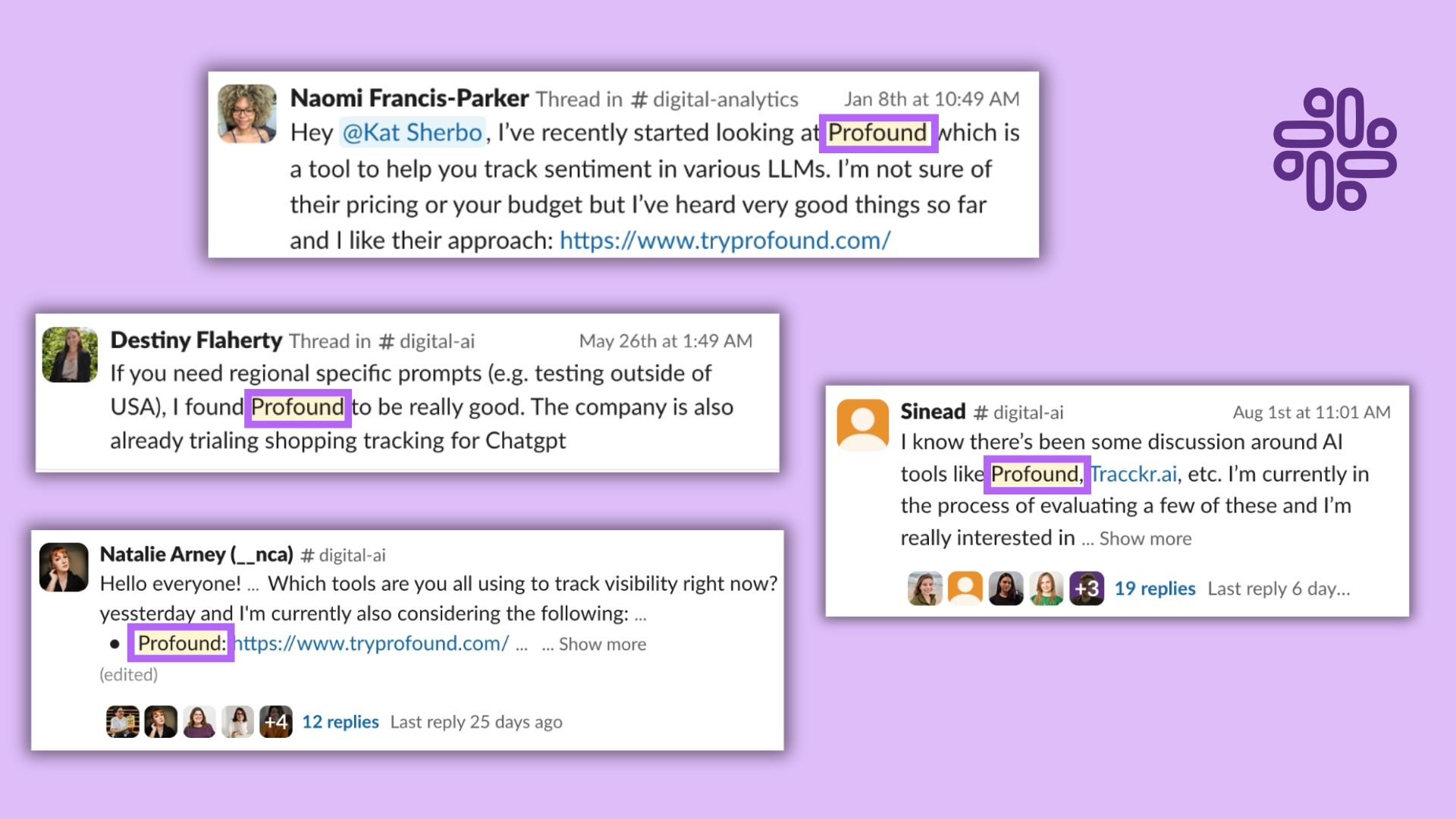
Profound is an AI visibility analytics tool and wonderful WTSPartner. They've been leaning into community marketing hard and they're great at it.
In our WTS Slack: members freely mention Profound as a tool they're using and testing.
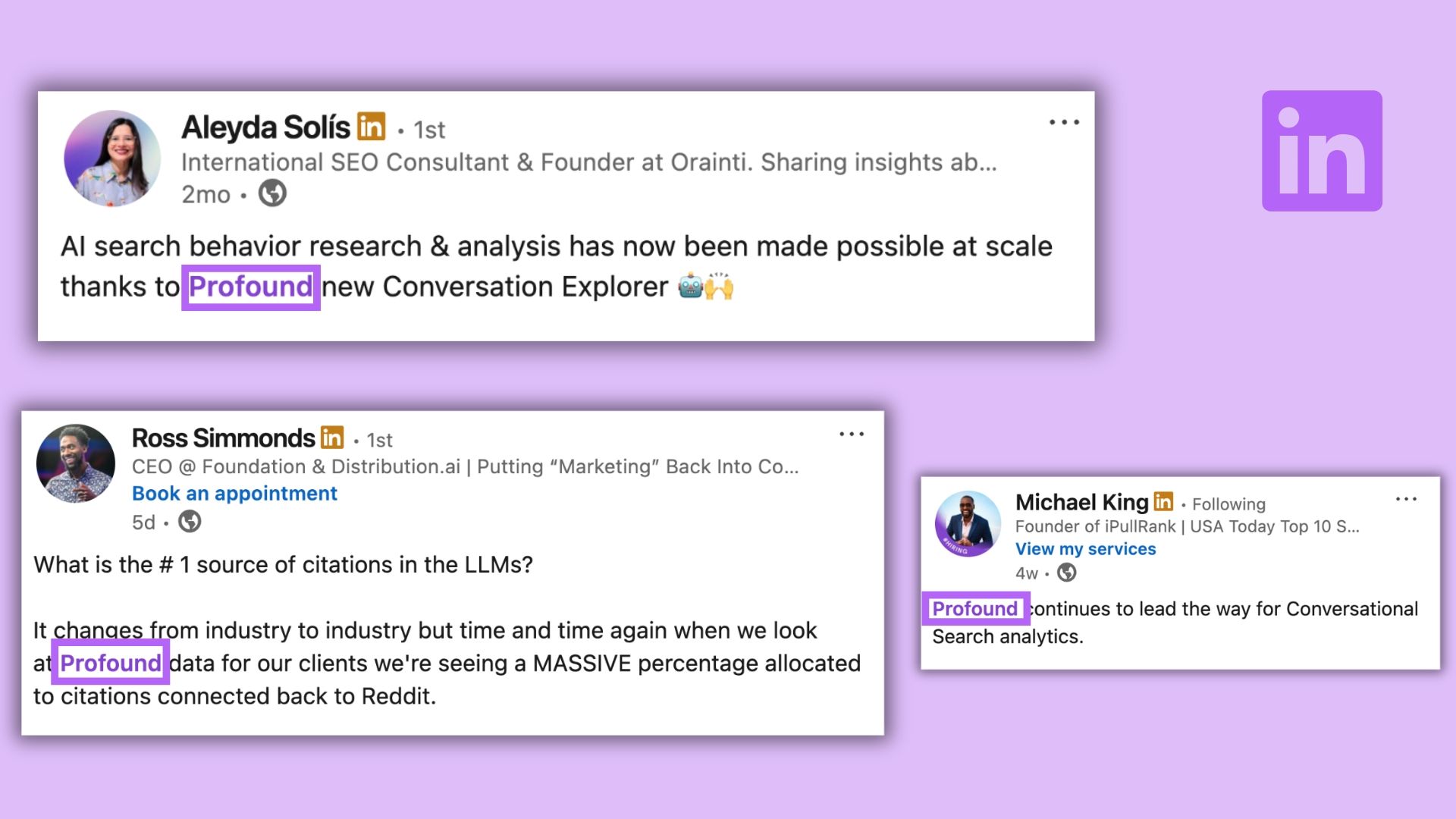
On LinkedIn: people are sharing how it's helping to scale analysis, they're using it with their clients, how Profound is leading the way for conversational analytics.
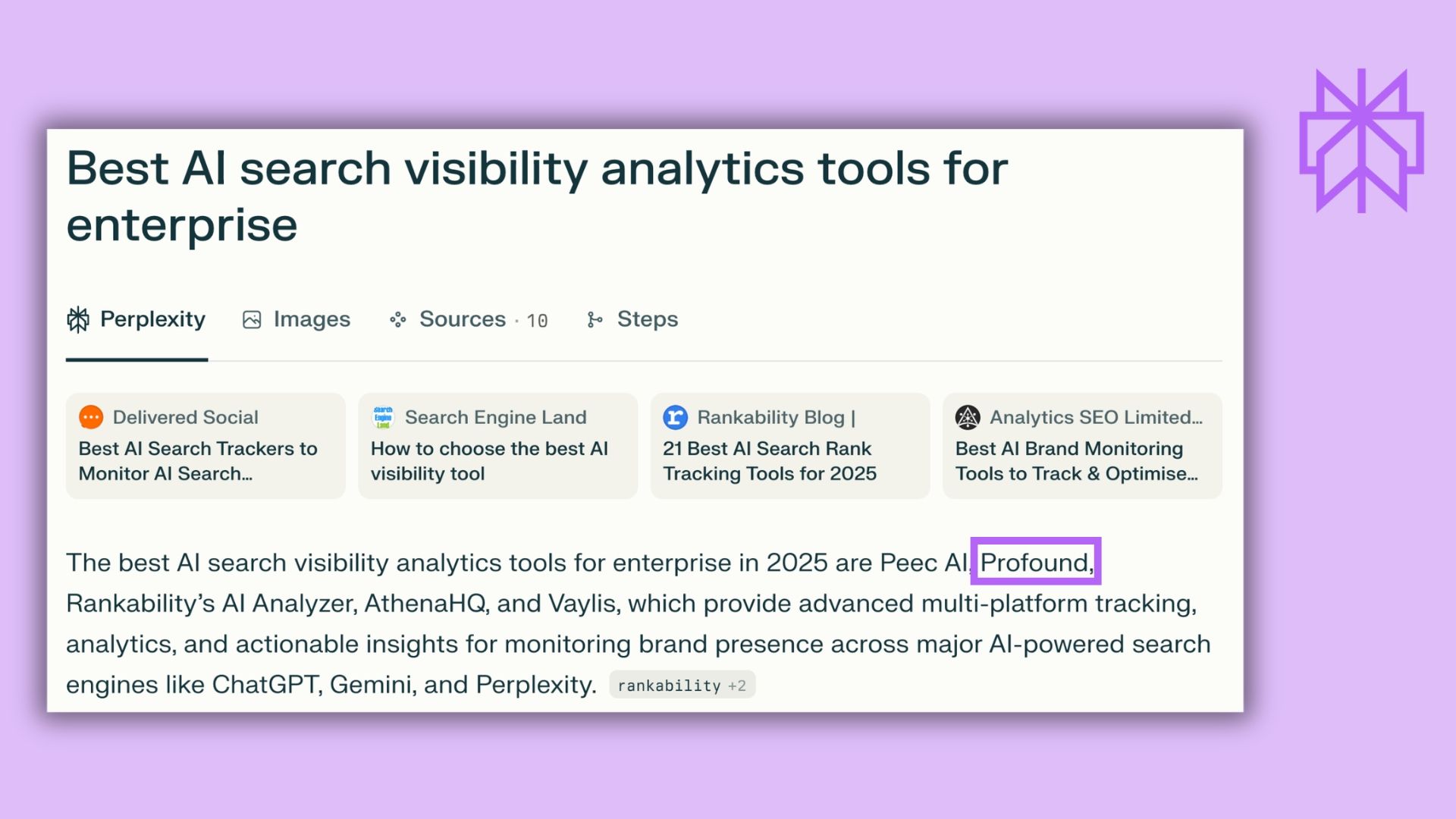
And back to the platforms, Perplexity is adding it to the mix for best AI search visibility tools.
This is the endgame. People vouching for you everywhere, because they genuinely want to.
And they're doing this because visibility is a byproduct of trust. So when you're working to build trust, you're not leaving visibility by the wayside. You're building trust-driven visibility. And there's a staying power to that type of visibility.
Shifts happen in search platforms all the time.
Algorithm updates.
Platforms emerge driven by little robots.
New competitors enter your market.
And when those things happen - platform-driven visibility resets. You can fall down the list or off the list entirely.
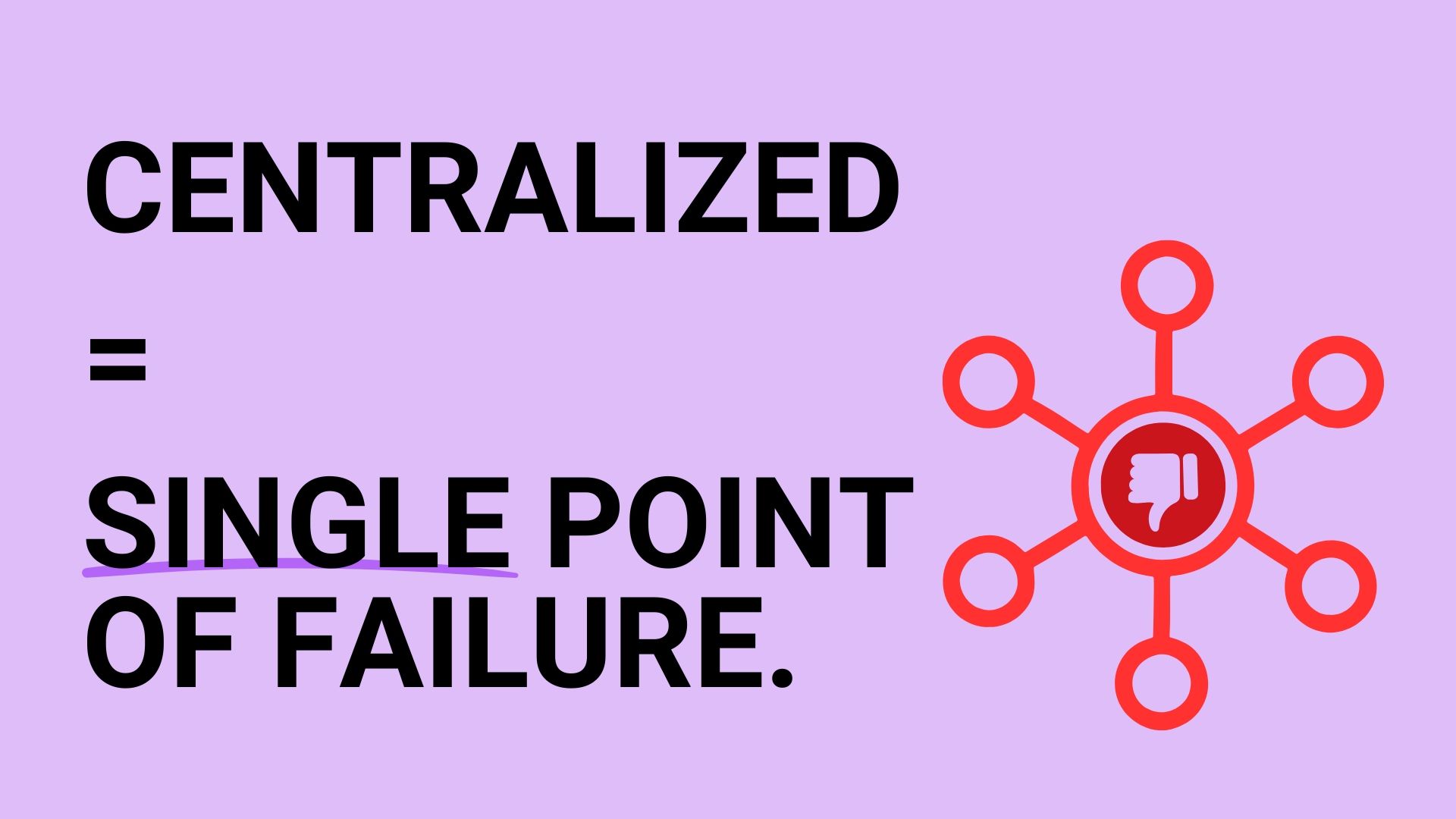
That's because this type of visibility flows from platforms to people - it's centralised.
A centralised system has a single-point of failure. If the platform decides to make a change - it affects your entire visibility on that platform.
Trust-driven visibility is durable.
That's because this type of visibility flows from people to people - it's decentralised.
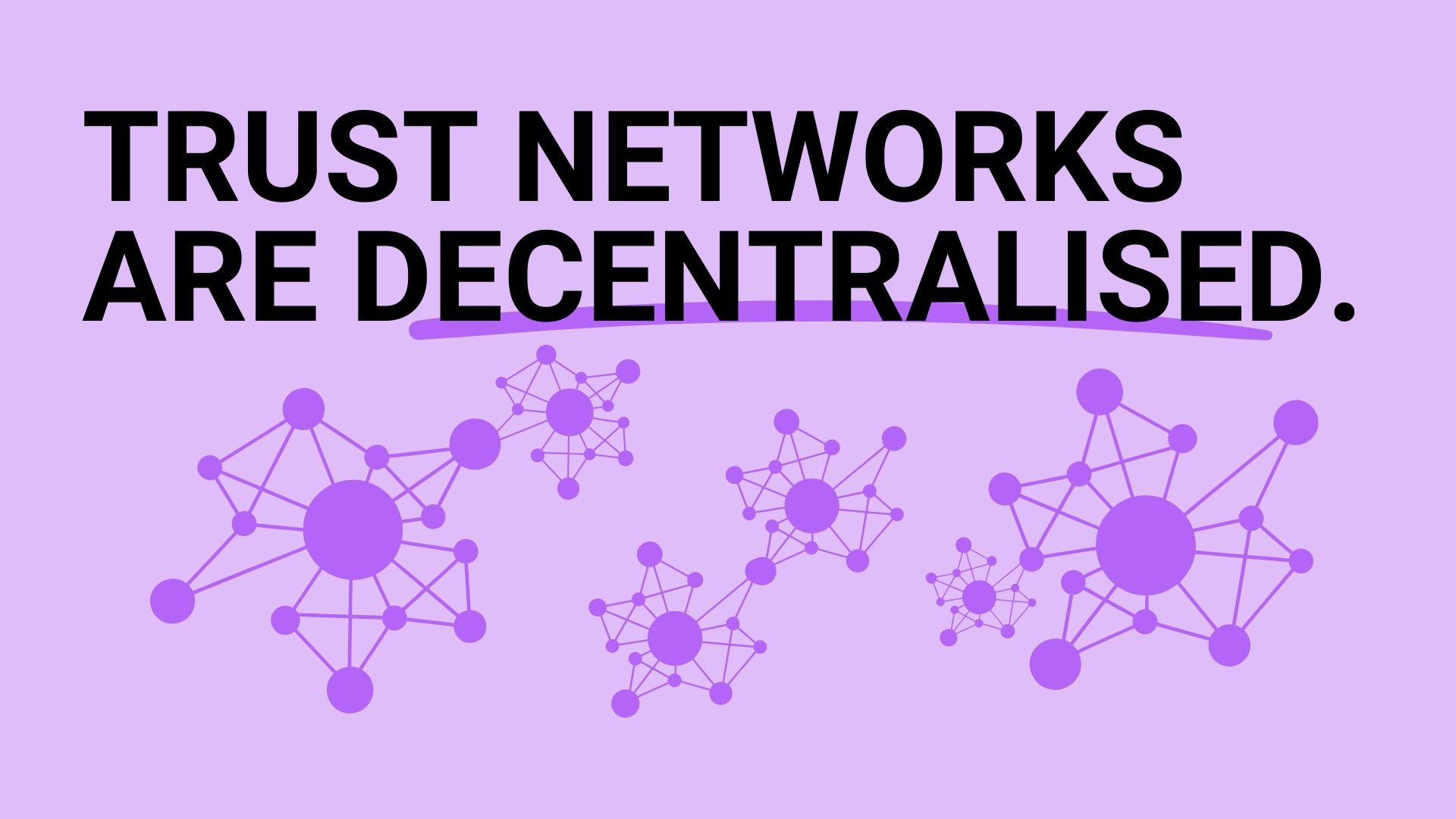
When something breaks in one place, it doesn't fracture the whole ecosystem. You have independent points of failure.
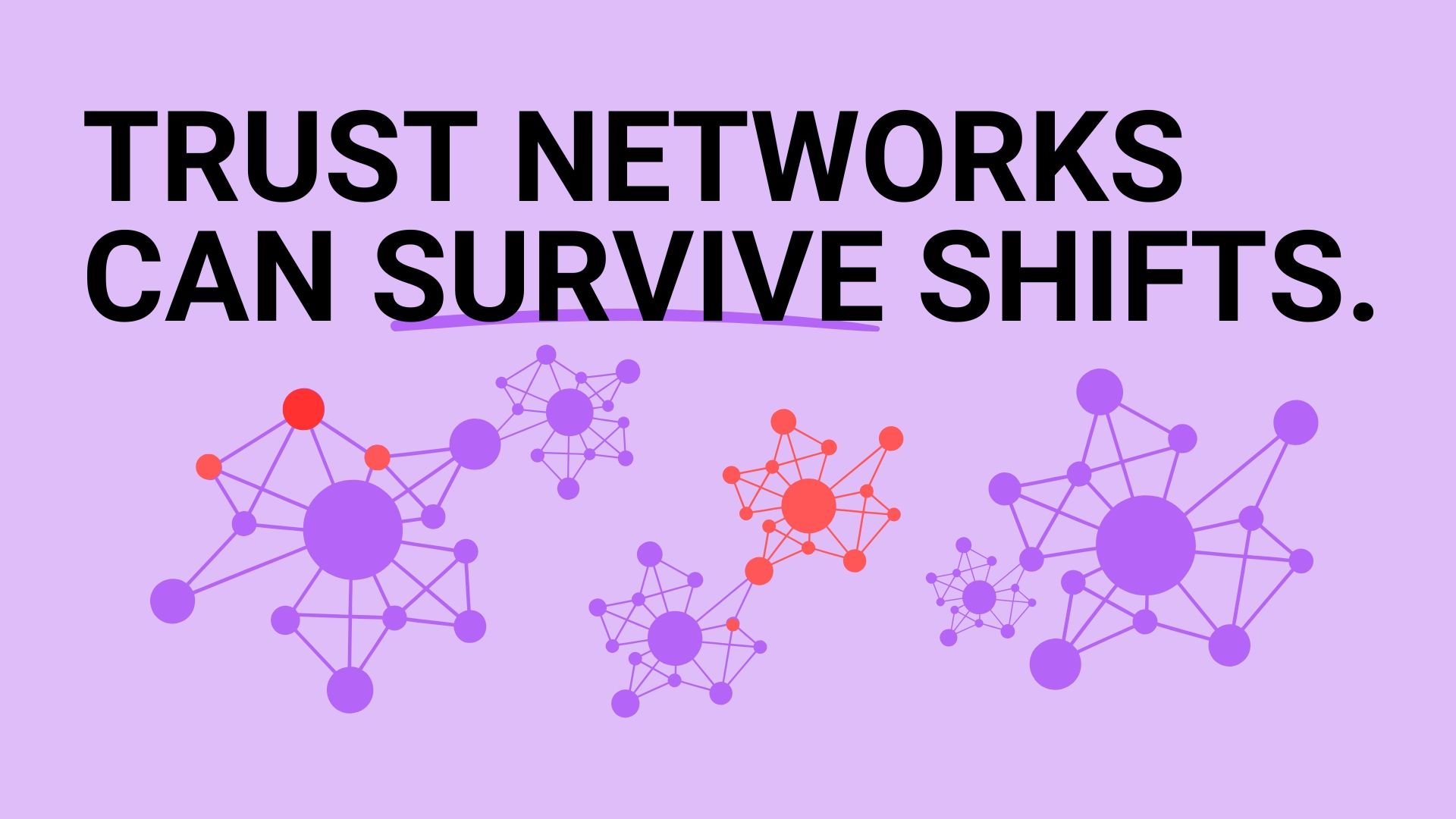
You don't own the pipes of a platform. But the beauty with trust networks is that you have some ownership of your relationships. You own those pipes and trust is something that can be repaired.
Join Erin & Areej for a 4 session training to help guide you through launching, growing, & scaling community as a marketing infrastructure.
Next cohort begins on June 4th.
Here's where I see this going.
Search has the right people - subject matter experts.
Search has the right goals - visibility via trust.
Not just search. Marketing has so much room to grow beyond the trust-driven visibility that community can provide.
The insights that community provides can benefit all the disciplines within marketing - SEO, Content, Paid, Offline, Email, Social, PR, and so on.
This happens through the Get-Give-Loop.
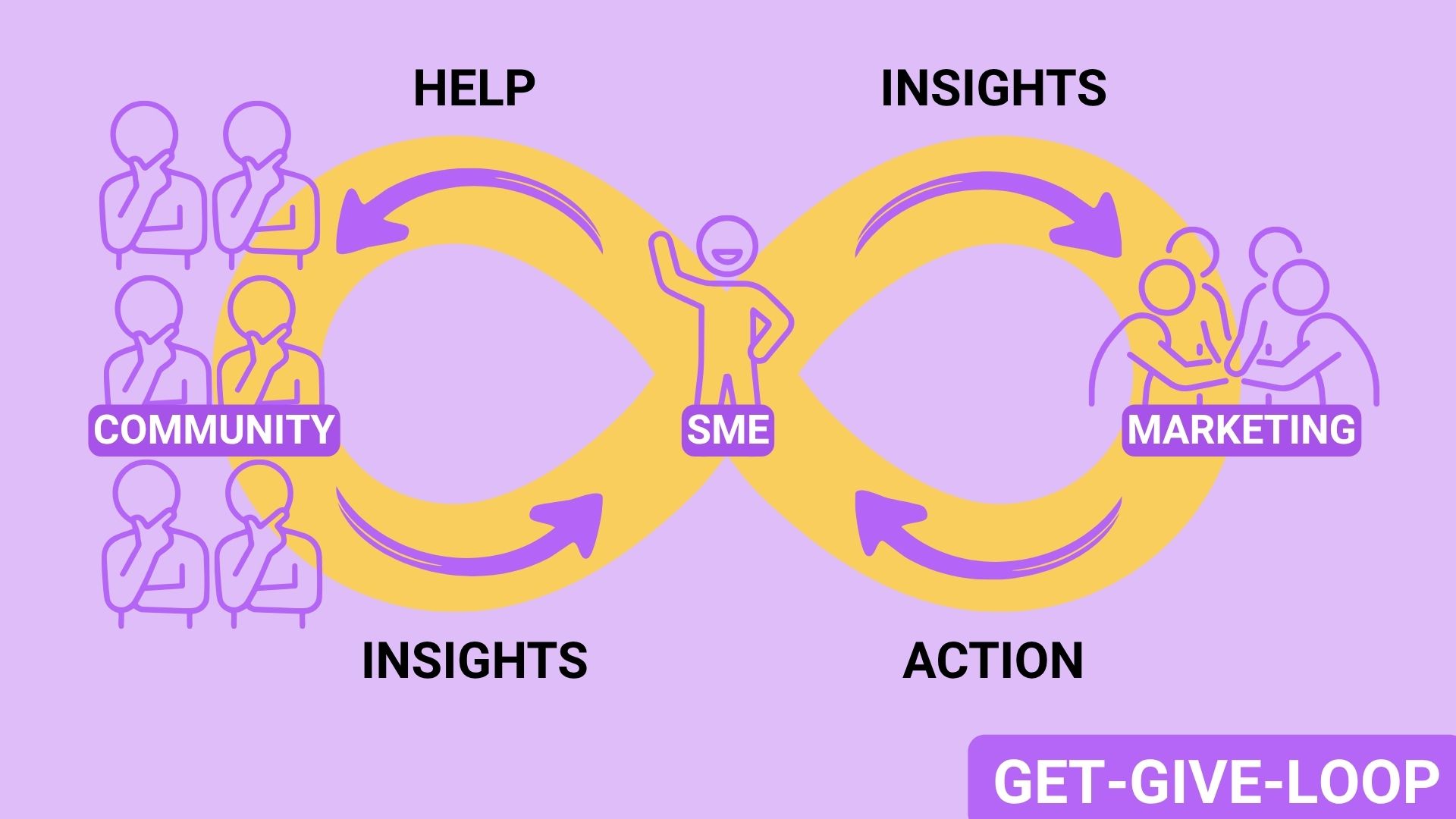
The Get-Give Loop: your SME helps the community, the community gives back insights, marketing takes action, and that action circles back to help the community again. What starts as a 1:1 conversation becomes value that reaches your entire audience.
Your subject matter expert is in the middle.
They help community members on a 1:1 or 1:few basis.
They get insights from those conversations with community members and pass those on to the marketing team.
The marketing team prioritises those amongst their actions and shares it back to the community through the subject matter expert.
And that action typical doesn't just help the community - it helps the wider audience.
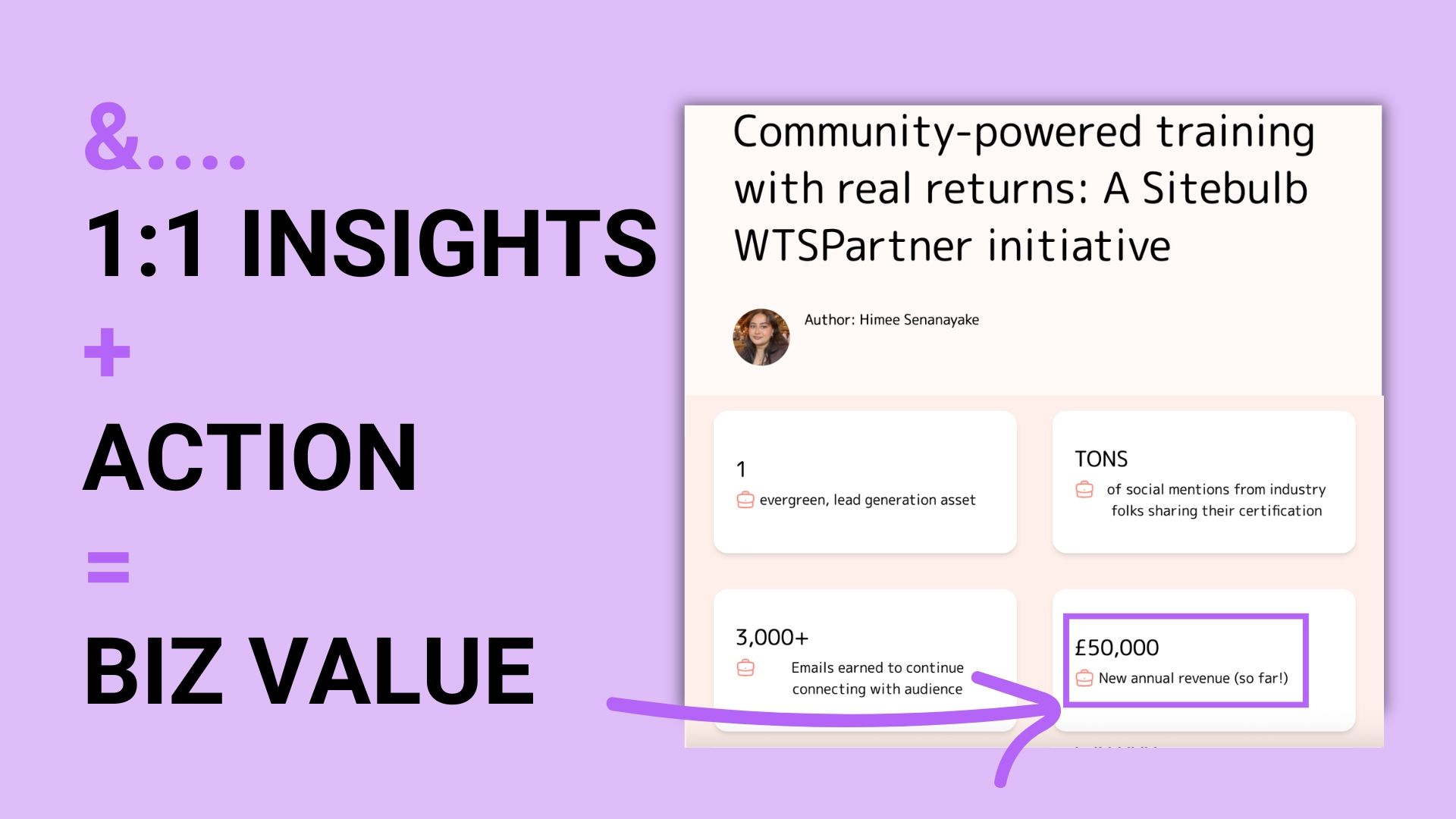
1:1 or 1:few insights + action = many:many value.
That value can show up through marketing teams as things like better content, targeting, training, and more.
We can see this in action with how Jojo Furnival of Sitebulb shows up in the WTS community.
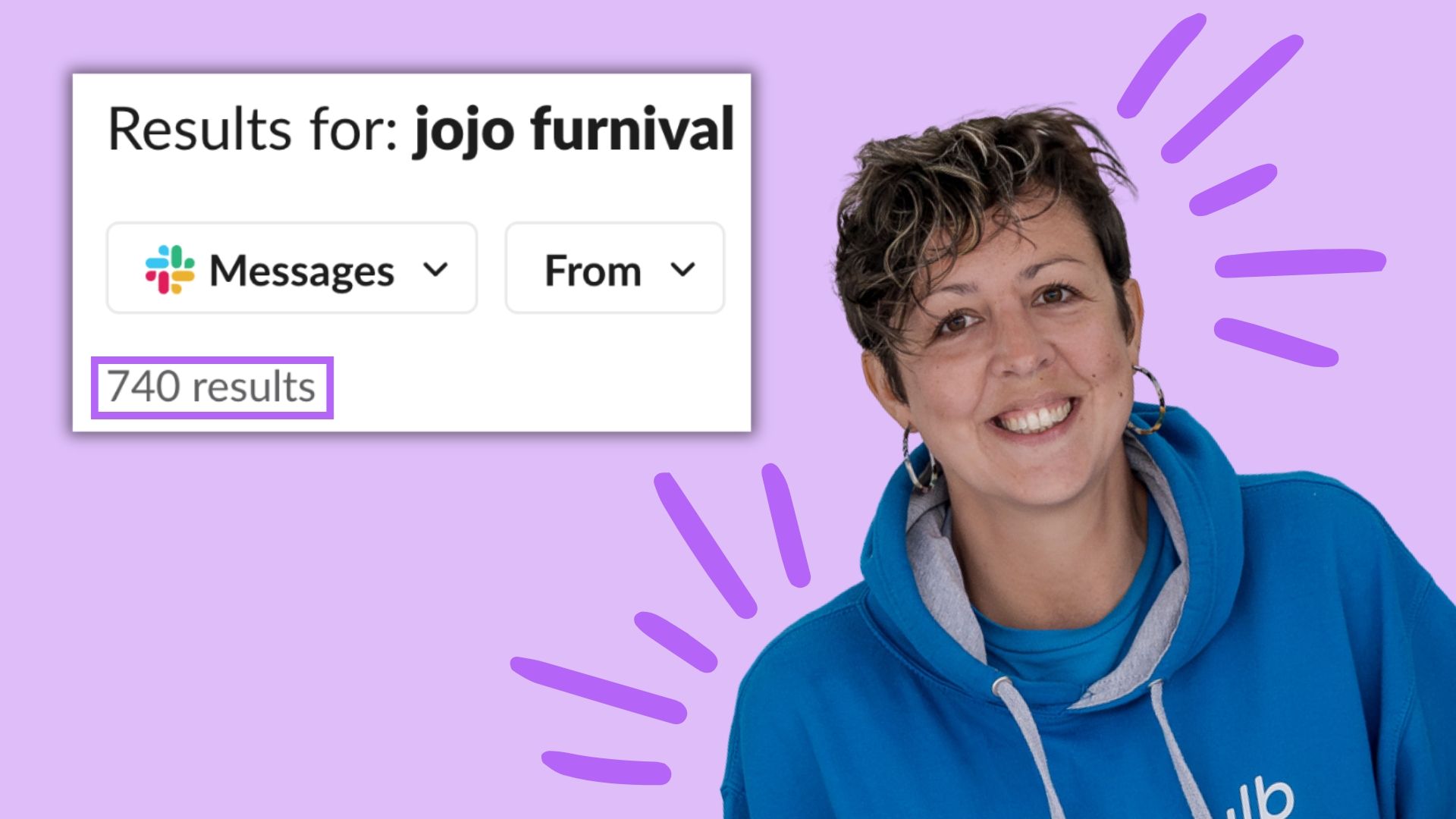
Showing up as "Jojo" - not the brand she's working for - with over 740 messages in our Slack community since joining. The authentic person and consistent person building blocks are in place.
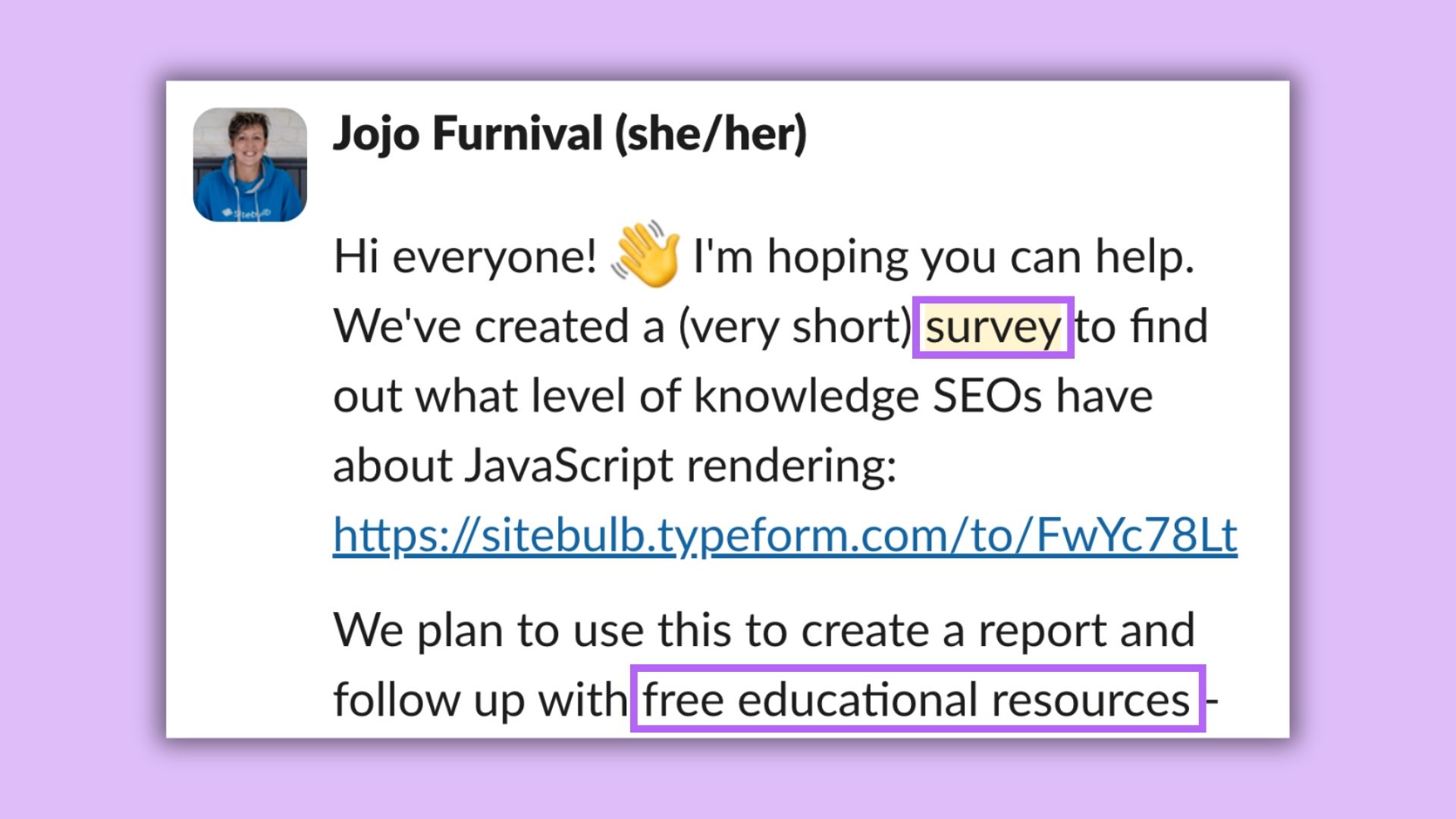
After seeing lots of community questions around JavaScript SEO, she wanted to get a better understanding of member's potential knowledge gaps through a short survey.
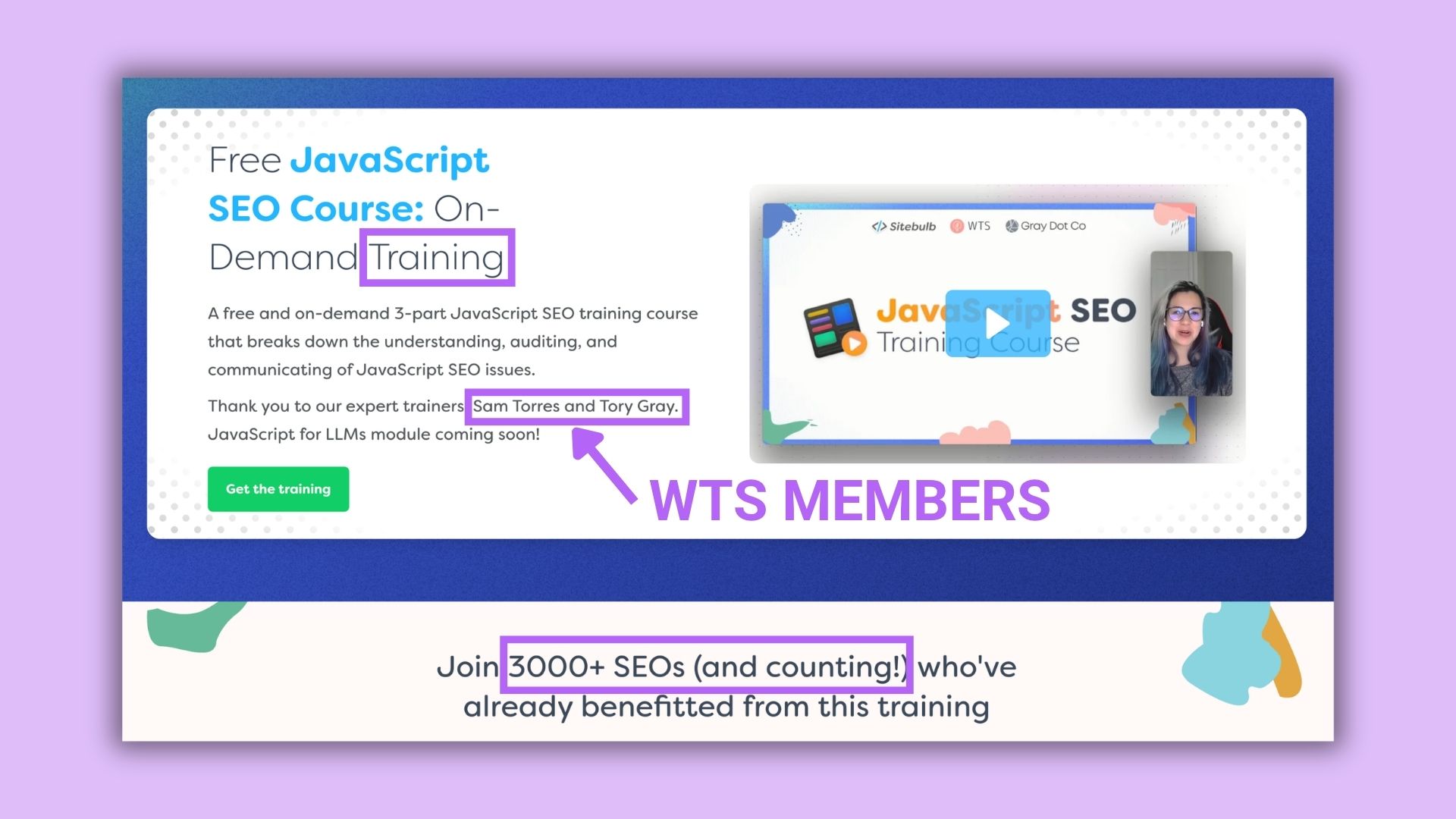
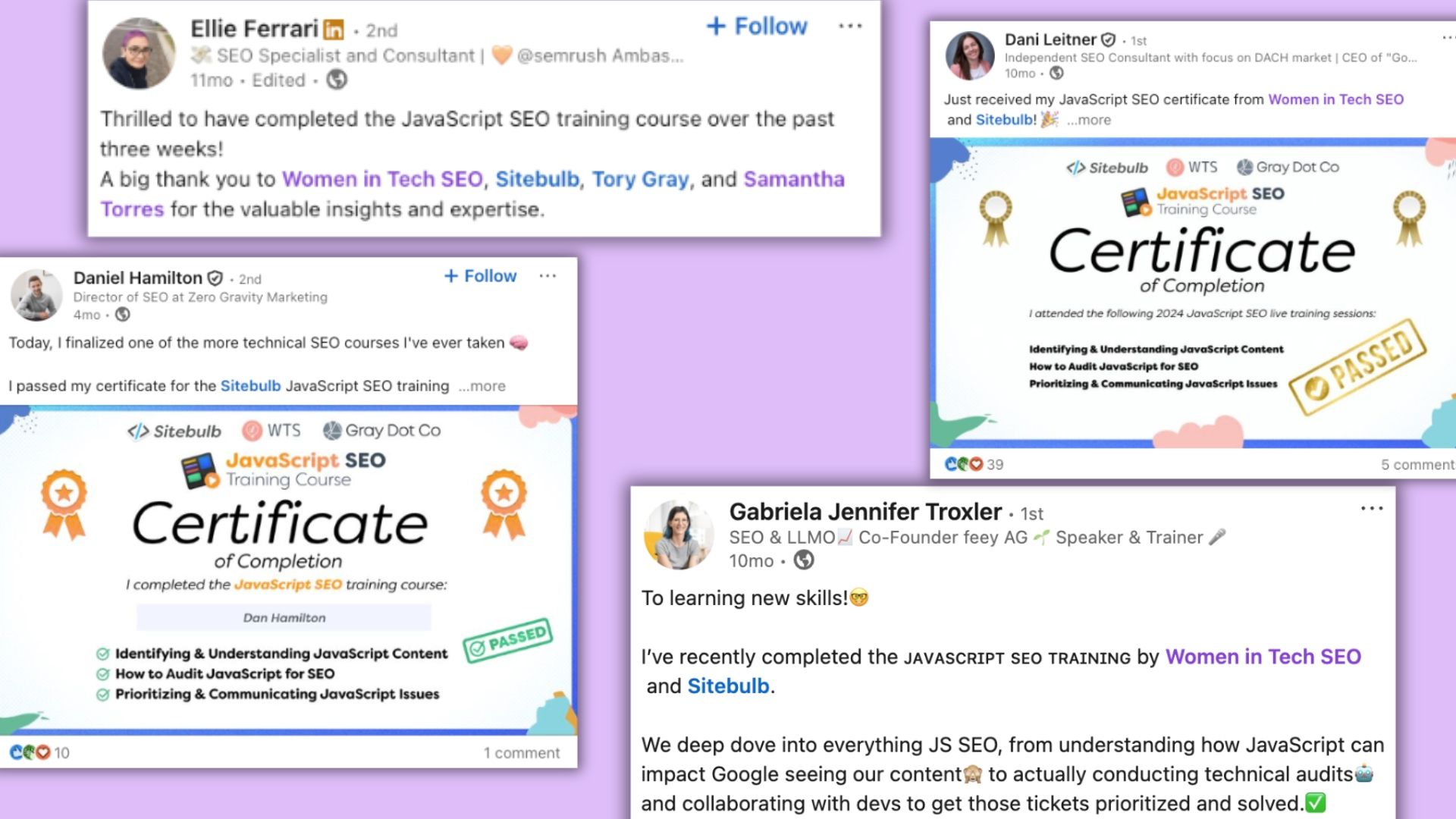
They found a handful of skill gaps and created a helpful training certification. They super charged it by amplifying two brilliant WTS members - Sam Torres and Tory Gray - as the experts. Helpful building block in place.
People shared the certification of completion in posts on social and I've seen folks add it to Certifications in their LinkedIn - visibility as a byproduct of trust built from genuine community investment.
The kicker is even thought I said don't focus on ROI earlier, it does come. It may not always be easily trackable - but it's there!
When you take those insights, action on them, and create that many-to-many values, it pays off.
Community is bigger than marketing.
Marketing, sales, customer success, product - all have the ability to be bettered by community participation and insights.
Better sales cycles. Better support. Better products.
We see this in action with how Navah Hopkins shows up in the WTS community.
Again, we see Navah showing up as "Navah" with over 853 messages in Slack. She's not the brand she's working for with a logo profile picture or "Microsoft Advertising," the brand she works for, in her Slack name - authentic and consistent building blocks are here!
Navah is answering questions - sometimes they deal with Microsoft Advertising, sometimes not - and offering connections. She shares what's actually helpful - not promotions for her company.
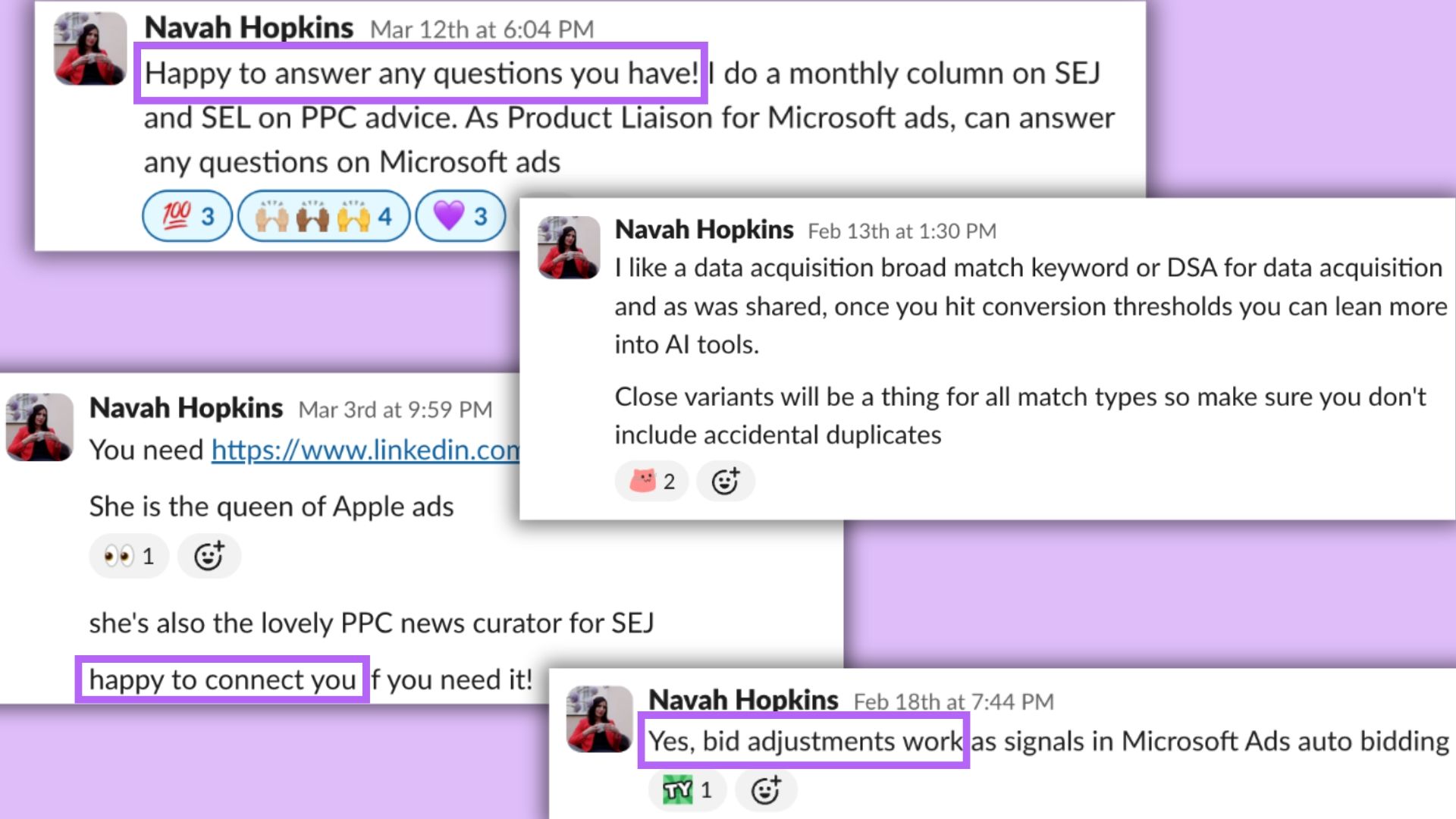
Navah belongs to lots of communities and packages up insights, audience details, direct human quotes and more every two weeks to send over to her marketing, sales, and product teams.
These teams take a look and action on the insights, sending the updates back to the community through Navah.
This is trust in action that scales beyond the community and adds value to Microsoft Ad's entire audience:
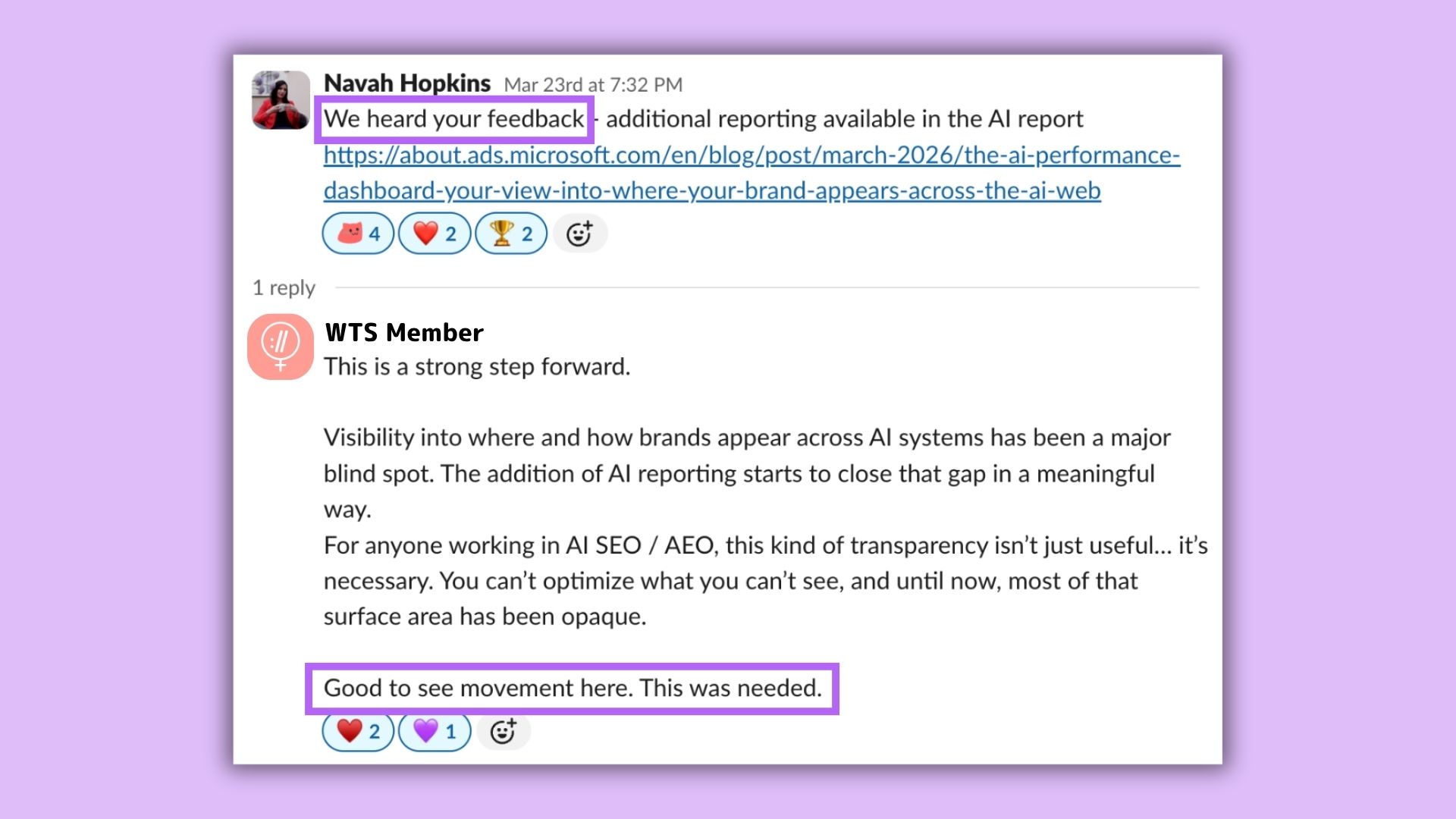
Navah heard the community's feedback and came back with action — and the community noticed. "We heard your feedback." "Good to see movement here. This was needed." That's trust in action.
This is how you build trust. You help. You listen. You action.
These insights scale. They will result in better decisions, better products, better communications, better teams, and more for the brands that lean in.
I'm still looking for an example of this in the wild - if you see one, please get it to me!
Community is a trust bridge between businesses and their audiences.
It goes both ways - the audience trusting the business, and the business trusting the audience enough to action on what they hear. The subject matter experts in community are the conduit for this exchange.
As community becomes a more prevalent part of businesses, our spaces will evolve alongside.
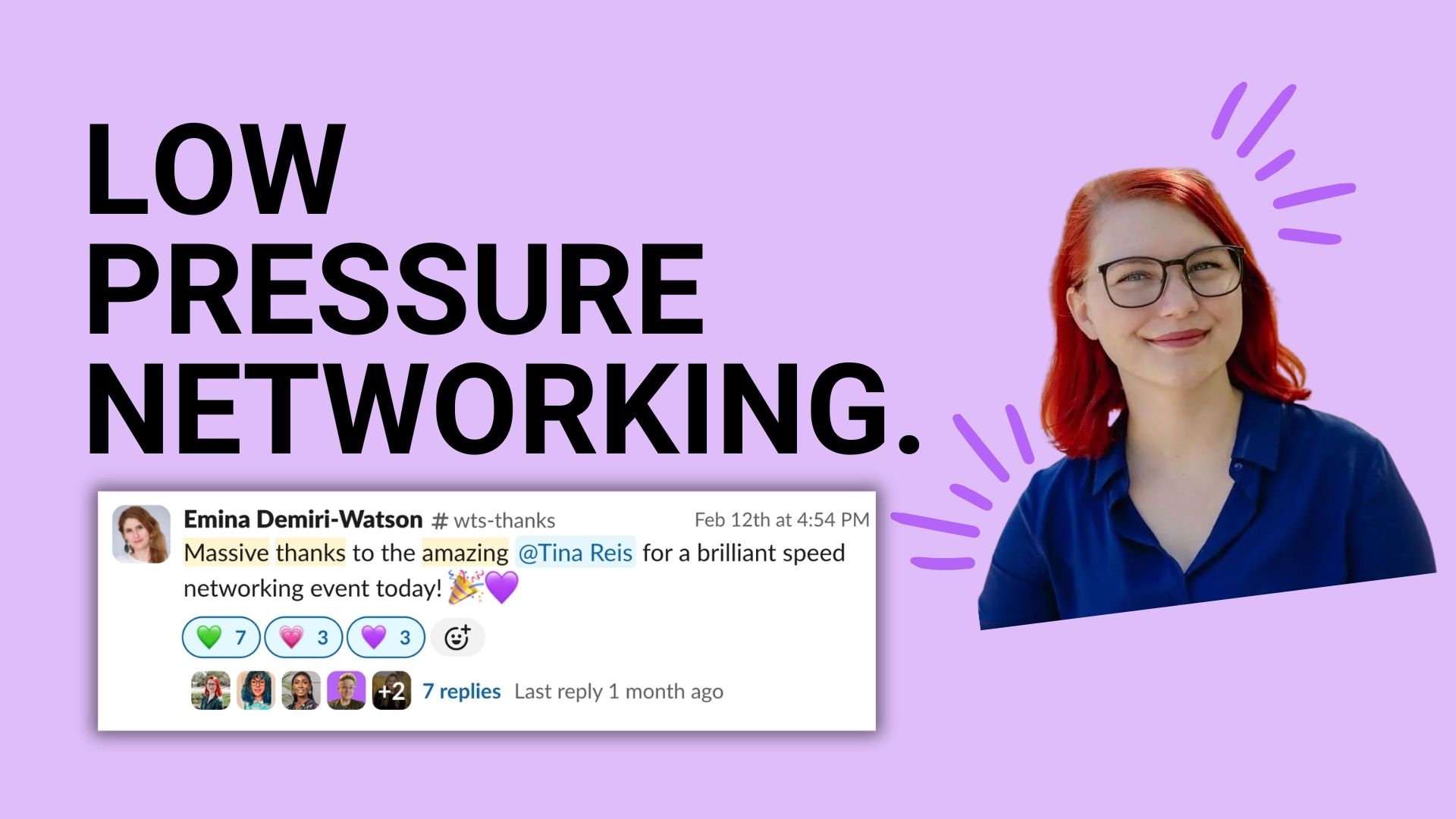
I see low-pressure networking spaces as something we'll see more of.
Tina Reis runs a monthly virtual speed networking meet up in WTS and it's a huge hit. They make it easy for folks to join, have quick connections with optional conversation starters, and keep coming back. No pressure, just people connecting.
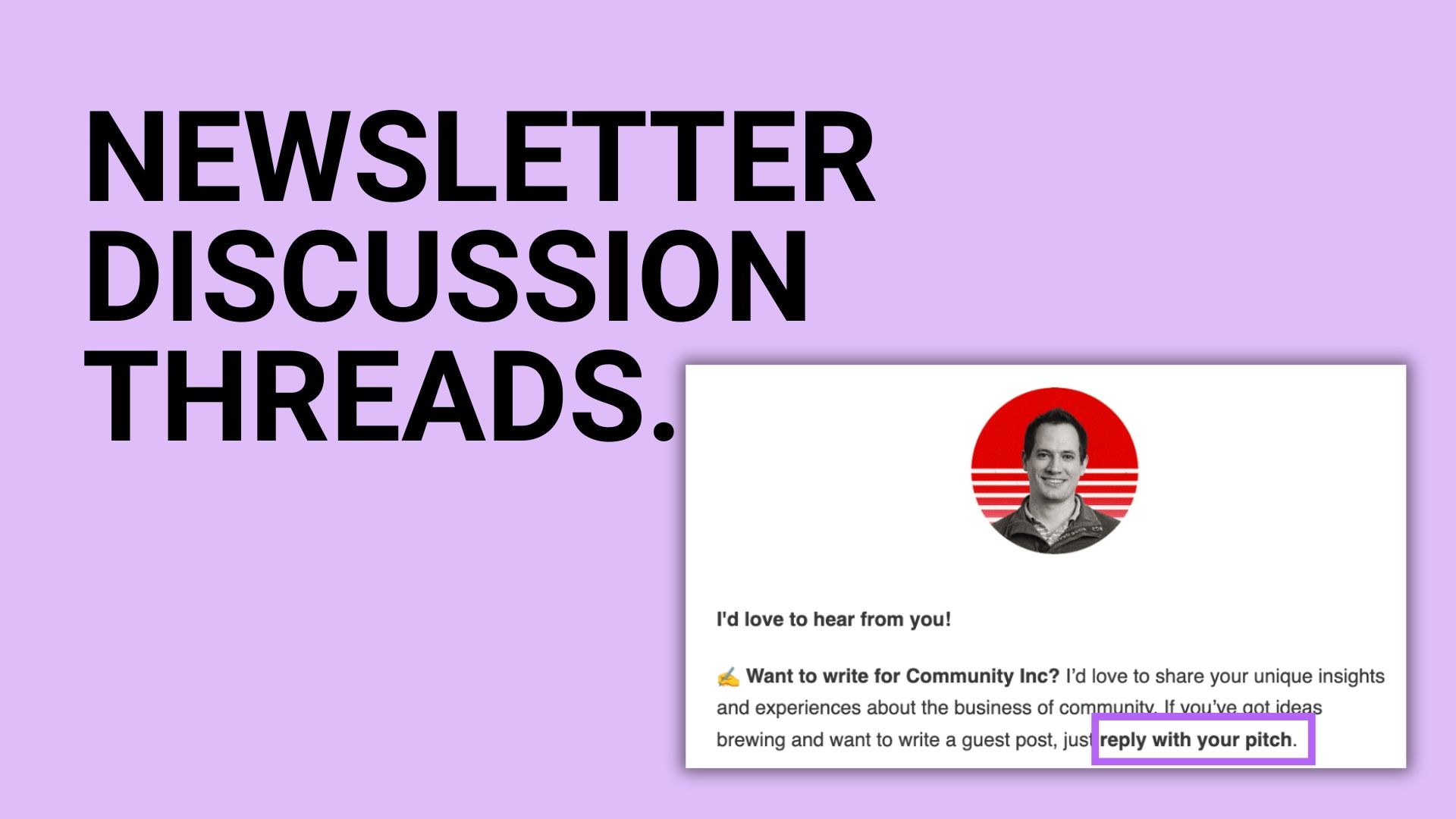
Newsletters as discussion spaces are starting to appear slowly. I'm seeing lots of prompts for replying like Gareth from Community Inc does here:
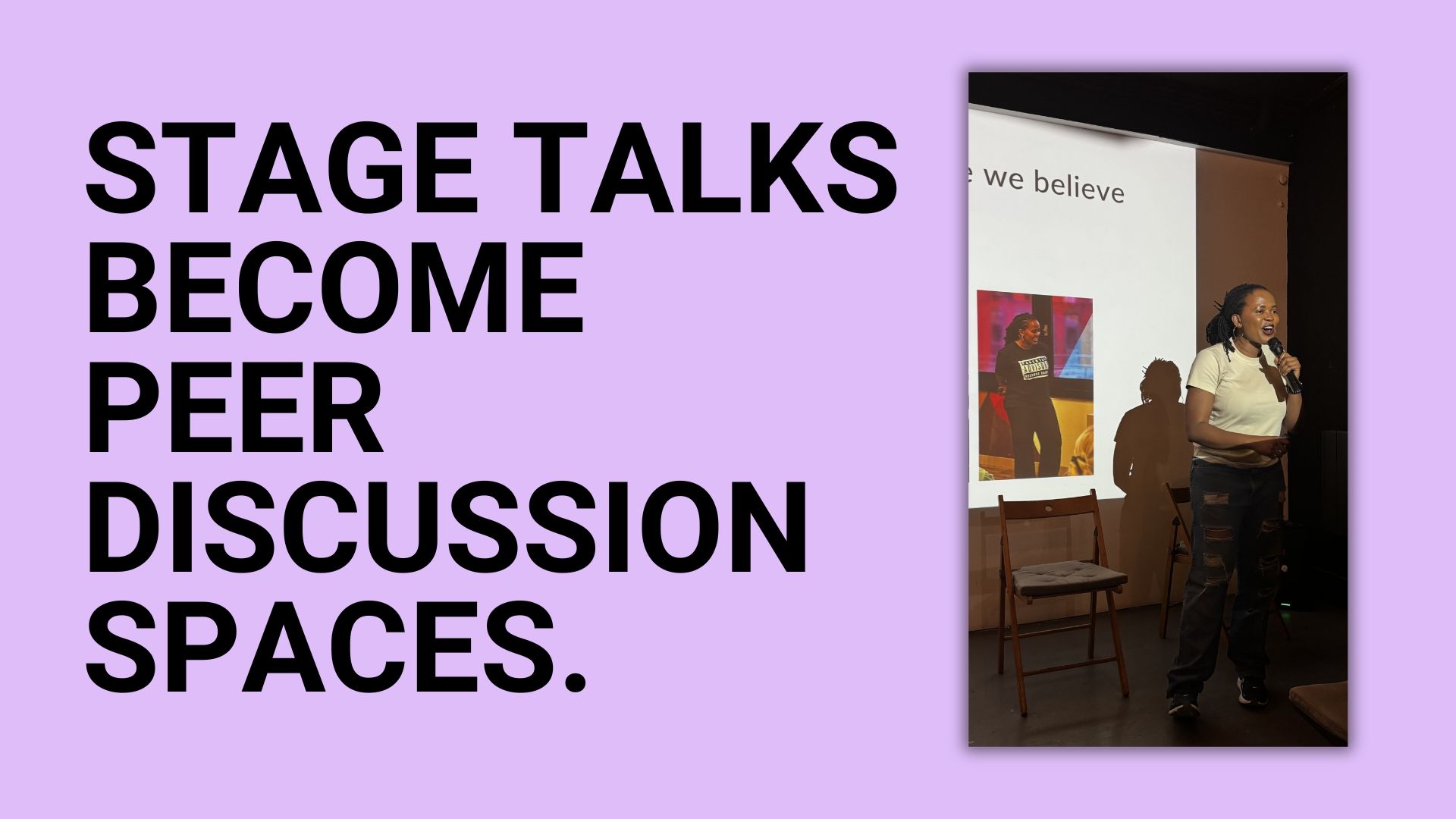
We'll see stage talks become peer discussions. At Chima Mmeje's recent Sip & Search event in London - I got to see this in action.
Chima hosted a panel, questions appearing for panelists on the screen. Then an "audience question" popped up. Chima made it comfortable for the audience members to get on the mic and a real, insight conversation followed.
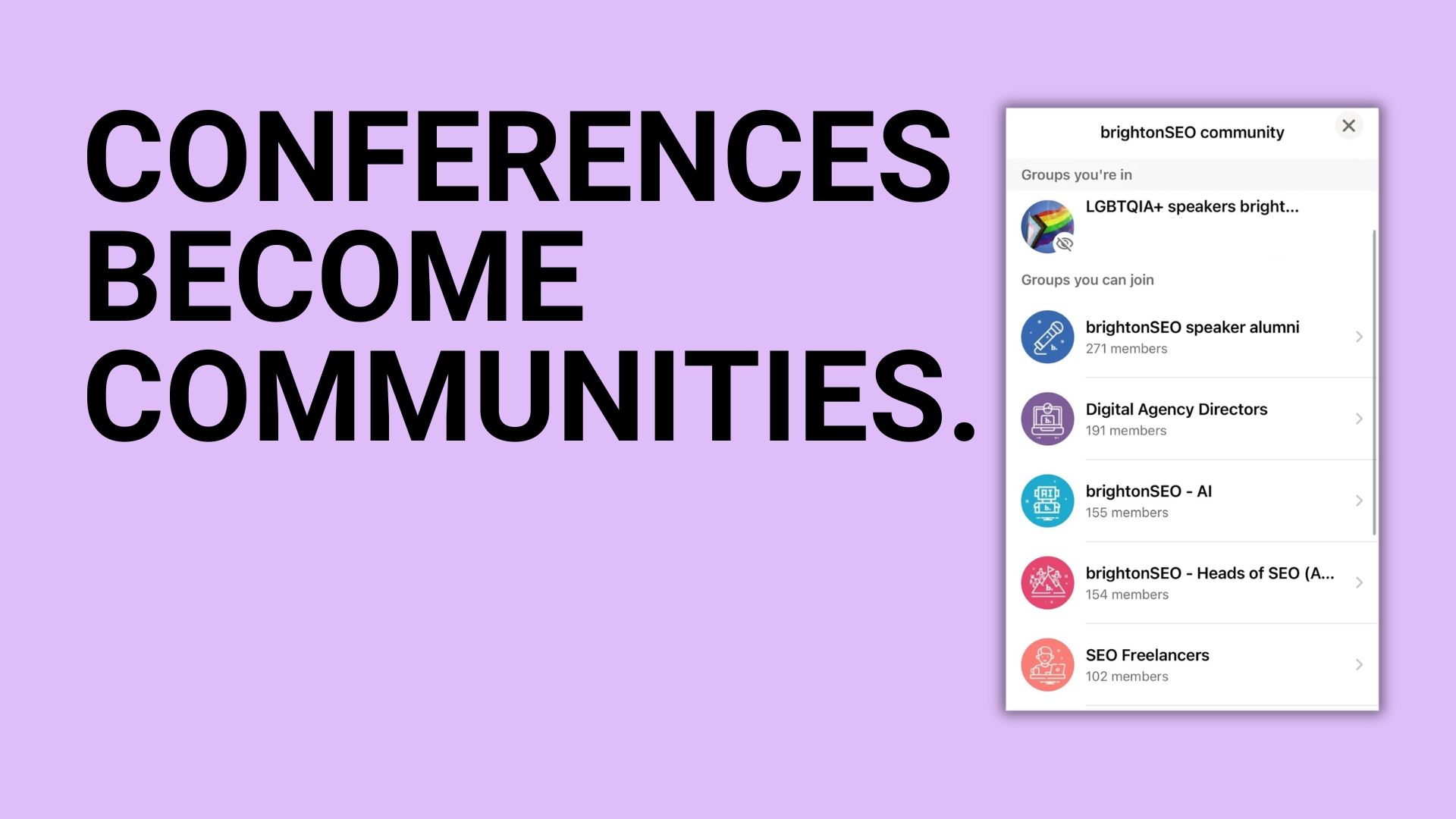
Conferences will become communities. brightonSEO is already doing this with their WhatsApp community - niching people into topics they care about most so they can find each other for more consistent conversations that matter to them.
My write-up from last October's talk at brightonSEO has the play-by-play on finding communities and how to engage in them - Visibility is a byproduct of trust.
And if you want to go deeper, I cannot recommend this enough:
Community Building for Marketers by Areej AbuAli, founder of Women in Tech SEO.
It's your roadmap for entering and building communities.
I need to say thank you to my community - the folks who helped me put this together, the groups who supported me through this trust leap.
And I hope you're edging towards your own trust leap into community - thank YOU for reading!
Visibility is a byproduct of trust - Women in Tech SEO's WTSKnowledge
Want to increase visibility? Start by building trust - Search Engine Land
Using Community to Build Trust (and Ignoring the Algorithms) with Erin Simmons - The SEO Mindset Podcast
How SEO Community Can Power Your SEO - SEOs Getting Coffee
A candid conversation on AI, community, & the growing need for real human connection - Prerender.io's 'Get Discovered' podcast
Ways community can help your SEO - Moz's Whiteboard Friday
Community Marketing is the Future: Building Connections = Growth - Analytics Playbook by Kick Point
Your best SEO edge is joining communities - Majestic's SEO in 2025
Find a community where you can start showing up for your audience - Majestic's SEO in 2026

Erin Simmons (they/them) - Managing Director, The WTS Community
Erin is Managing Director at the Women in Tech SEO community—focused on maintaining safe, inclusive, and helpful spaces. With 15+ years in marketing and analytics, they now focus on better understanding people and connecting them to the relationships and resources that support them most.
We pay our authors, speakers & team to bring you helpful content like this.
We aim to always keep our content and community free and accessible.
If you've found value in WTS, please consider supporting us through our Buy Me a Coffee initiative.