Author: Boluwa Olojo
Last updated: 15/07/2026
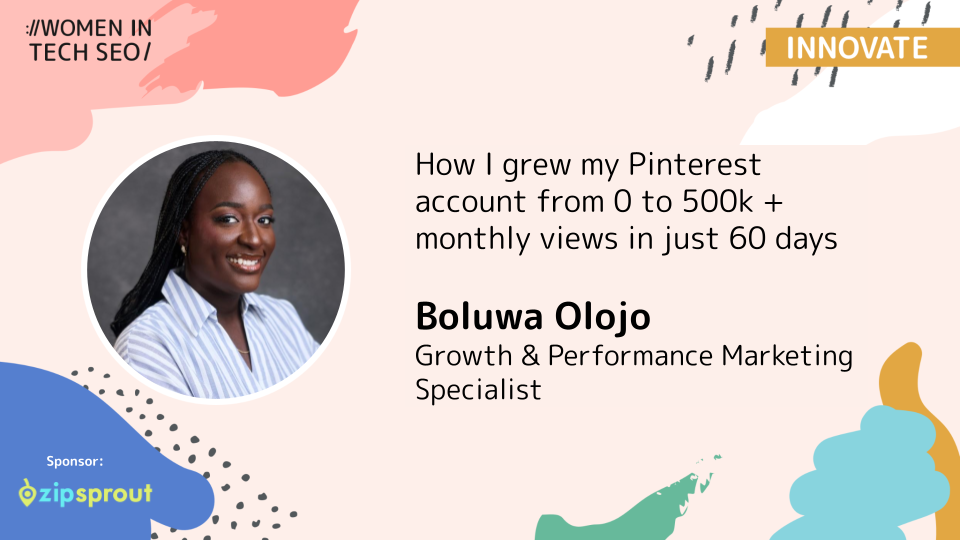
At BrightonSEO in April 2026, I stood on stage in front of 400+ marketers and said something that made a few people frown: "Stop treating Pinterest like Instagram."
I could feel the room shift. Some nodded. Others looked skeptical. A few were probably thinking, Wait, people still use Pinterest?
But here's the thing: six months before that talk, I'd launched a fashion Pinterest account with zero followers, no budget, and honestly, no idea if it would work.
Sixty days later, I hit 500K monthly views. Today, I have 1.6M monthly views.
How did I manage to hit those numbers?
I didn't treat Pinterest like a social platform. I treated it like a search engine.
Because that's what it is.
I use Pinterest every day; it’s the space I use to save my catalogue of ideas, but I never really thought about it from a brand perspective.
Then, on my thirtieth birthday, I needed to find the right shoes to wear with a specific dress. I went through every tag on various brands’ Instagram accounts but couldn’t find what I was looking for.
Instagram was a dead end, so I started searching Pinterest instead. I used long tail keywords, and found the perfect pair of shoes.
Based on this experience, I decided to create a Pinterest account to spotlight African fashion. The performance marketer in me saw an A/B test opportunity, I would create one set of pins using long tail keywords, and another using hashtags, and see what worked best.
By day 60, it was clear that the long tail keyword strategy was the clear winner – treating Pinterest like a search engine had me ranking for popular searches and seeing a high number of saves.
Most brands copy and paste their Instagram strategy to Pinterest (i.e. they lean heavily on hashtags); but Pinterest isn't really a social media channel, it's a visual search engine where people actively look for solutions.
I created and followed this four-part framework that treats Pinterest like the search engine it is:
Before I created a single pin, I spent two hours with the Pinterest search bar.
I typed seed keywords like "spring fashion" and "wedding outfit" and watched what autocomplete suggested.
Not what I thought people would search for. What Pinterest showed me they were searching for.
Here's what I learned:
I also used Pinterest Trends to see what was rising. I noticed that "Ghana" was spiking 1,500% month-over-month.
So I created content around that trend:
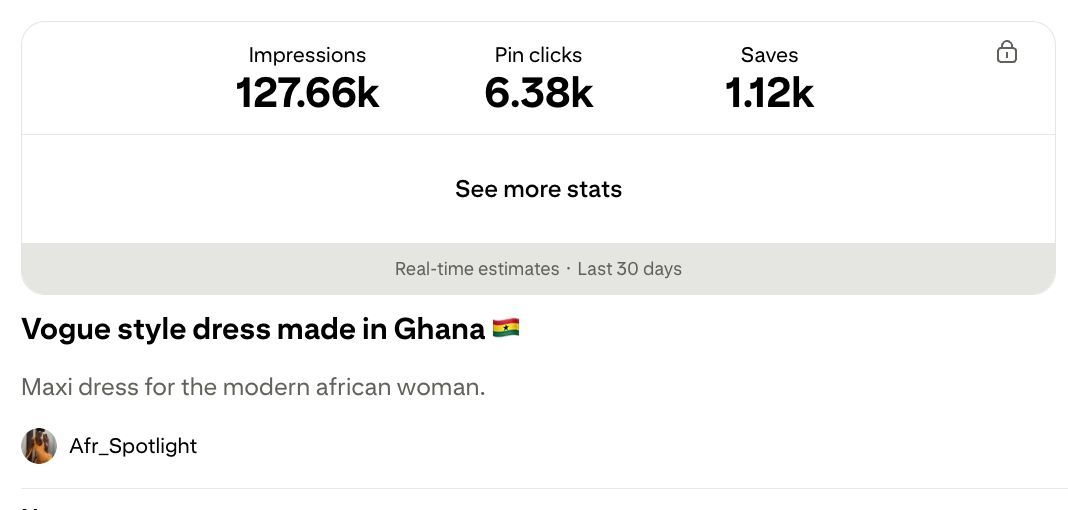
Impression, click, and save data for one of my pins titled “Vogue style dress made in Ghana”.
Here's the before/after that changed everything for me.
BEFORE (Instagram mindset):
I do the same on Pinterest as I do on Instagram:
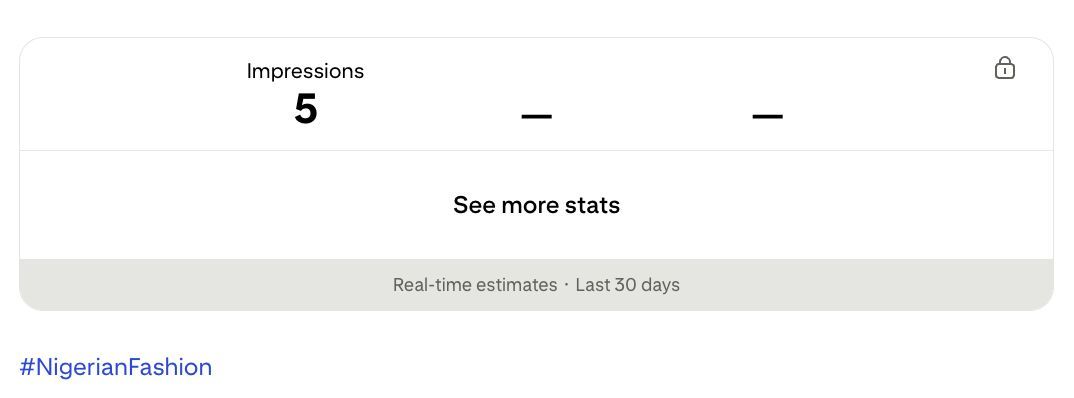
One of my pins with no title or description, just the hashtag #NigerianFashion.
AFTER (Pinterest SEO mindset):
I treated the pin description like a meta description, not an Instagram caption:
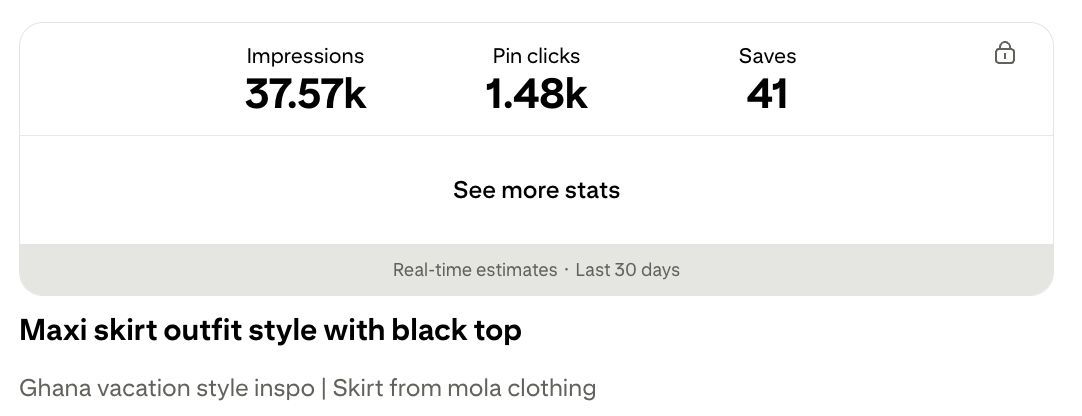
My optimised pin garnered more than 37k impressions, 1.45k clicks, and 41 saves.
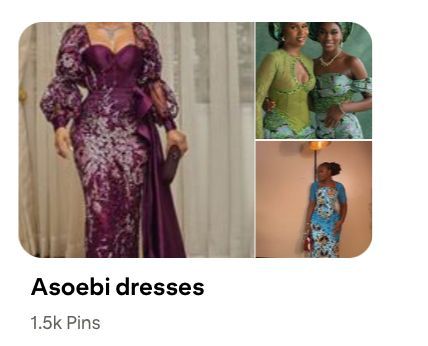
Pinterest has this under-rated feature where you can see which boards people save your pins to. When I noticed users were saving my pins to boards like "Spring Wedding Guest Outfits" and "Asoebi dresses" I knew exactly what content to create next.
This is free keyword research. Your audience is literally telling you what they want.
Every 30 days, I audit my top-performing pins:
Then I double down on what works.
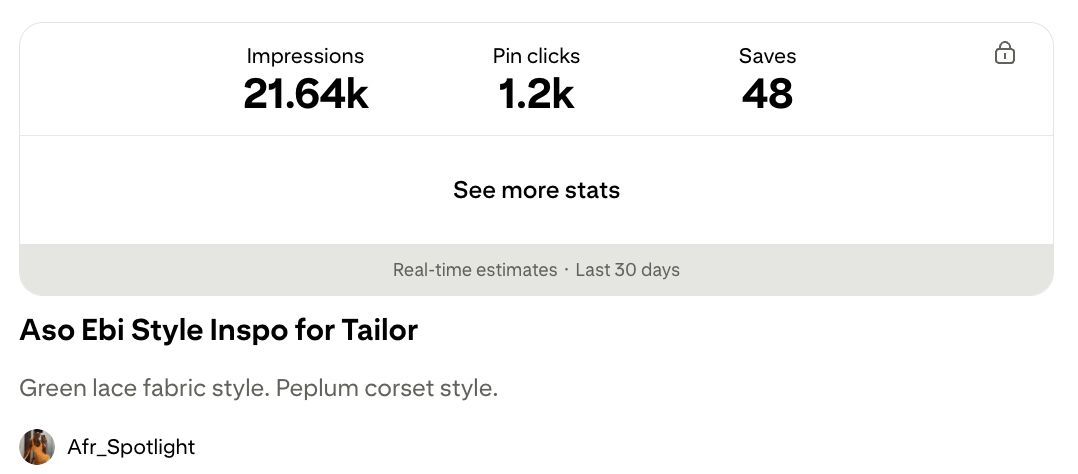
Impression, click, and save data for one of my pins titled “Aso Ebi Style Insp for Tailor”.
I didn't go viral. I didn't have a pin get 10 million views overnight.
I just posted 3-5 well-optimised pins per week. Every week. For six months.
Pinterest rewards consistency. The algorithm favors accounts that show up regularly with quality content. No 50-pin-a-day hustle. Just consistent, keyword-optimised content.
After my BrightonSEO talk, dozens of people came up and asked the same question: Why isn't my Pinterest working?
When I reviewed some of their pins, here's what I kept seeing:
Focus on keyword-rich descriptions instead. In my testing, pins with detailed, natural language descriptions outperformed hashtag-heavy pins every time.
"Fashion inspo ✨" won't rank. "Spring wedding guest dresses under £100" will.
Pinterest users plan ahead. They're searching for "summer travel" in April, not June. Post 45-60 days before seasonal spikes.
Pinterest isn't about followers or likes. It's about search ranking and sustained visibility.
Let me show you the actual numbers.
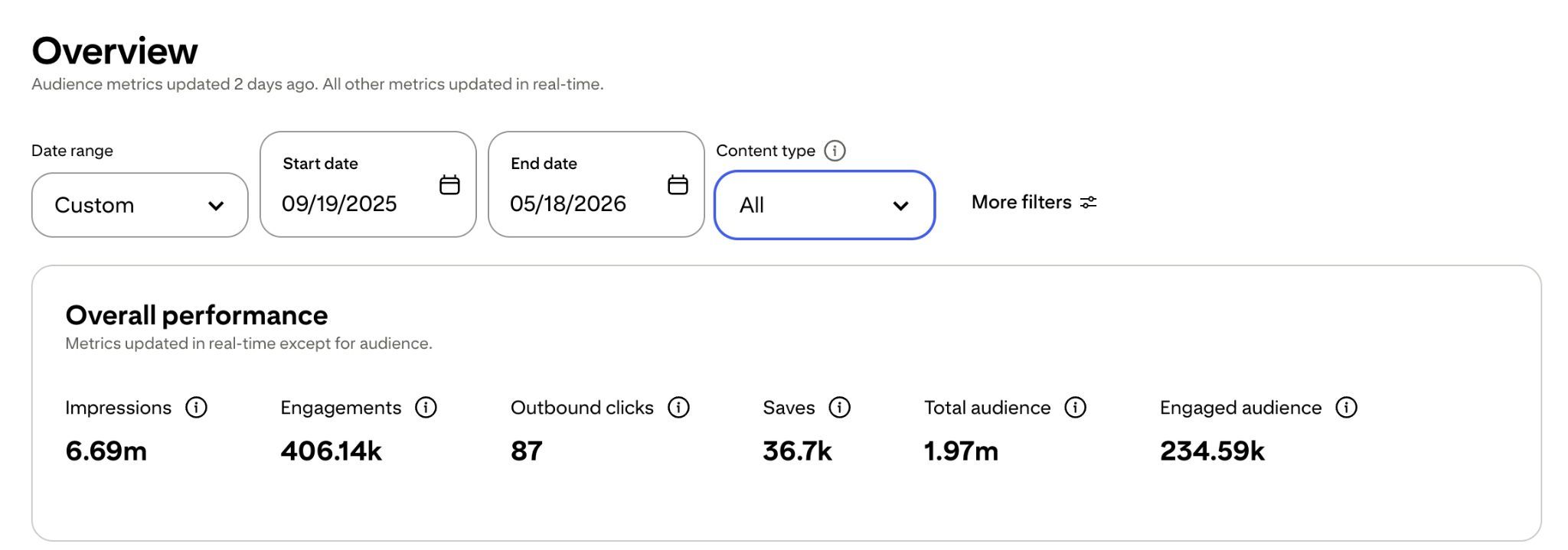
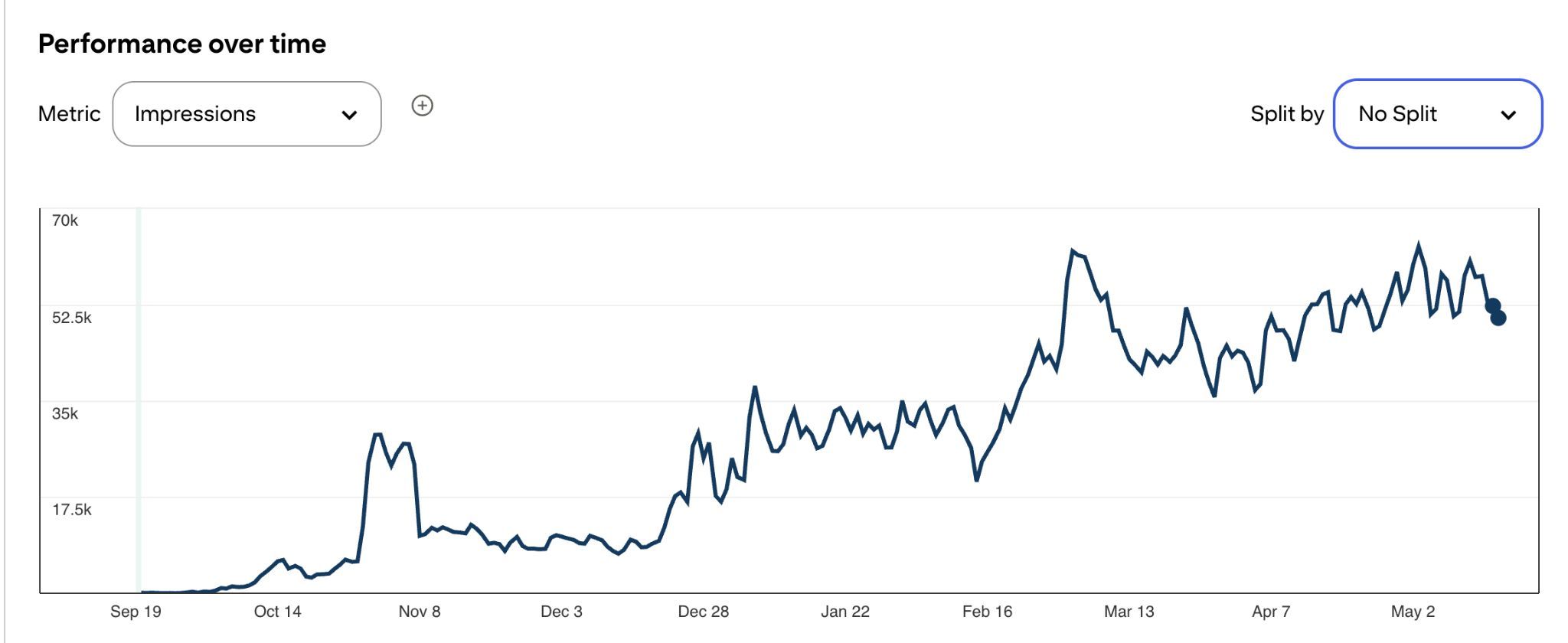
A screengrab of my Pinterest account performance
My performance to date:
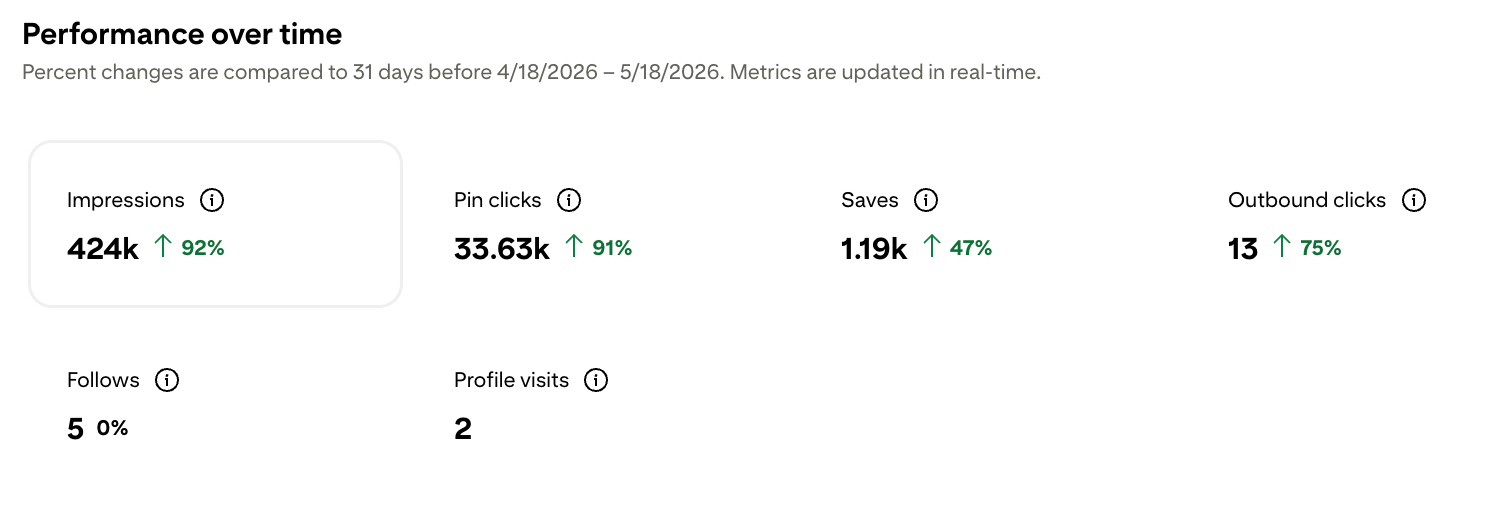
A screengrab of the stats of my best-performing pin
Key metrics on my best-performing pin:
This traffic is high-intent. These are people actively searching for specific products and ideas. They're not casual scrollers. They're planners. They're researchers. They're buyers.
And because Pinterest is a search engine, this traffic is evergreen. Pins I posted four months ago are still driving traffic today.
If you're a brand in fashion, travel, e-commerce, home decor, food, beauty, or anything visual, Pinterest should be part of your strategy.
Not because it's trendy, and not because your competitors are there. Because your customers are actively searching for what you offer, and if you're not showing up in those search results, you're invisible. Here's how to start:
That's it. No complicated tools. No massive budget. Just search-first thinking.
The biggest lesson from going from 0 to 1.4 million views in six months?
Pinterest is search.
And like any search engine, if you optimise for how people actually search, and give them what they're looking for, you win.
You don't need followers. You don't need to go viral. You don't need a big budget.
You just need to stop treating Pinterest like Instagram and start treating it like Google.
Because that's what it is.

Boluwa Olojo - Growth & Performance Marketing Specialist
Boluwa Olojo is a CIM-certified growth and performance marketing specialist, and has been recognised by Tech Nation as a UK Global Talent for her work in digital technology, using AI, and thoughtful storytelling to build products, grow brands, and empower communities.
Boluwa loves to share her knowledge with the wider community; she recently spoke at brightonSEO on the topic of Pinterest SEO strategy, and she also co-hosts: the “State of Marketing?” podcast with Ladi Fagbola.
ZipSprout connects brands with local nonprofits and events to build sponsorship links that drive local SEO and community impact.
Since 2016, they’ve facilitated 25,381 placements with community organizations across the US, raising over $9.2M in sponsorships.

We pay our authors, speakers & team to bring you helpful content like this.
We aim to always keep our content and community free and accessible.
If you've found value in WTS, please consider supporting us through our Buy Me a Coffee initiative.