
🎤 WTSFest London speakers & agenda are live 💙
🎤 WTSFest London speakers & agenda are live 💙
Author: WTS & Majestic teams
Last updated: 28/10/2026
What 7 years of Majestic backlink data taught us about the links that leaders should care about - & why the most valuable ones are rarely obvious from a score alone.
A link is a person choosing to send other people somewhere.
That sounds obvious. Yet, somewhere between crawling the web, exporting the data and adding scores to a report, the person behind the link can disappear.
We get caught in a cycle of talking about link equity, comparing referring domains, sorting links by authority and reporting the total at the top of a slide.
Steve Pitchford has spent more than 10 years helping to build Majestic, a company dedicated to understanding how the web connects.
When he looked at 7 years of links to Women in Tech SEO, the value he saw went far beyond what Google might make of those links.
“As a board member, I would jump for joy if somebody wrote a well-articulated piece about us, that then had some influencers pick up on it and say, ‘Look at this. This is amazing content.’
It is worth way more than hundred impressions on Google to have somebody read an influential blog, click through and discover you.”
— Steve Pitchford, Operations Director, Majestic
That is the story of this project.
It began as a visualisation of 7 years of backlink growth.
It became an investigation into what those links represented: interviews, career changes, lessons taken home from events, expertise reaching a bigger audience and people choosing to recommend a community that had helped them.
It also raised a bigger question:
What makes a link valuable when the most important part may be the person, relationship or outcome behind it?
For WTS’s 7th anniversary, Steve approached us with an idea.
Majestic would use its link intelligence to map the growth of links to womenintechseo.com from the website’s launch in August 2019.
He wanted to tell a story about links without making people’s eyes glaze over. The stories he sees when he looks at links - relationships, pride and wins that are not always captured by metrics such as link equity.
WTS made an interesting subject because the growth was organic - there was never a formal link-building strategy.
WTS created events, educational resources, interviews, mentorship, directories and opportunities for people working across SEO, marketing and tech. People chose to talk about those things on their own. Then the links followed.
Majestic is a specialist search engine for links. Its crawler maps how pages across the web connect, and Site Explorer turns that index into reports about the websites linking to a domain, the pages they point to and how that link profile changes over time.
Its Metrics and Link Context help people decide which links and patterns are worth investigating:
Those signals helped us work at a scale that would be impossible through manual review alone. But they alone did not decide which links mattered most.
Majestic began with more than 30,000 rows of backlink data exported from Site Explorer.
The Majestic team built and tested filters to reduce duplication and noise without losing the small, human-curated websites that might contain the most interesting stories. They accounted for syndicated articles, directory links, spam, repeated URLs and other patterns that could distort the picture.
That work reduced the dataset to approximately 3,000 links.
Majestic also built the interactive visualisation below that lets us see when links appeared and which parts of WTS they pointed to.
Then Hannah Smith reviewed the cleaned dataset manually.
This is where Hannah challenged the simplest version of the story. Majestic had made the dataset usable, but a tool could not automatically identify the links that best explained WTS.
The links with the strongest metrics were not always the most interesting. The meaningful examples depended on context.
Human context.
Hannah looked for editorially given links that marked a first, showed something WTS had made possible or captured how another person experienced the community. She selected a small number across the seven-year period to create our timeline.
That manual work is not a weakness in the analysis. It is one of its most useful findings:
Use data to find the signal. Use people to understand what it means.
This project does not prove that a specific link caused a ranking, conversion or AI citation. It uses Majestic’s data to find the public references, then adds the human context needed to understand why selected links matter and how they impacted the business.
The streamgraph below shows the growth of links to womenintechseo.com since its launch in August 2019.
The coloured areas represent links to different parts of WTS: the homepage, WTSFest, WTSKnowledge, WTSInterviews, the Speaker and Founder Hubs, and initiatives including WTSMentorship, the podcast and newsletter.
The graph has been smoothed to make the longer-term pattern easier to see. The featured links are examples chosen from the cleaned dataset, not a ranking of WTS’s “best” backlinks or a complete list of every link received.
Scroll through the visual to explore selected moments.
Prefer to read the data as a list? Jump to the full timeline of featured links.
The visual can show when the links were published, where those links pointed and how the mix of destination pages changed over time.
It cannot show every way WTS created value.
Recommendations made in Slack, private messages, meetings and conversations do not leave public backlinks. Neither does the context that often surrounds a link before and after it goes live. Those are holes in our data that we aimed to attempt to fill in this analysis.
The destination URL does not always reveal what caused the link. An article about WTSFest may link to the main WTS homepage. A sponsor discussing a specific conference and year may choose a general city page because it is easier to find or more likely to remain live.
The visual shows a pattern worth investigating. The selected articles and the context held by the people behind them help us interpret it.
The first link in the project captures that idea perfectly.
Jo Turnbull messaged Areej AbuAli to ask if she could interview her.
Areej remembers this moment distinctly: she was in the car when the message arrived. The WTS website was nearly ready, so she asked Jo to wait. If they could get the site live first, the interview could link to it.
They worked to finish the site and Jo published the interview on 16 August 2019, the day the website launched.
The data gives us a date and a URL. Areej’s memory tells us what the link meant.
The value is in the human context:
There is tangible business value in that relationship, but there is also value in the trust, support and participation that grew around it.
From a purely technical SEO perspective, this may not be the strongest link in the dataset.
It is still the link we would choose to begin this story.
It captures the launch of WTS, a relationship between two people and one person using their platform to help another person’s work reach an audience.
No authority score can contain that context.
This does not make link metrics unimportant. Majestic’s metrics and link context help people examine a backlink profile at a scale that manual review alone could never handle. They help us identify patterns, investigate sources and decide where to look more closely.
The problem begins when a score is treated as the conclusion.
Areej was in the car when Jo asked to interview her.
With the WTS website almost ready, she asked Jo to wait so the interview could link to it.
WTS got the site live, and Jo’s launch-day interview became the first link in this project.
A programme name tells us what WTS launched. The stories tell us what it changed.
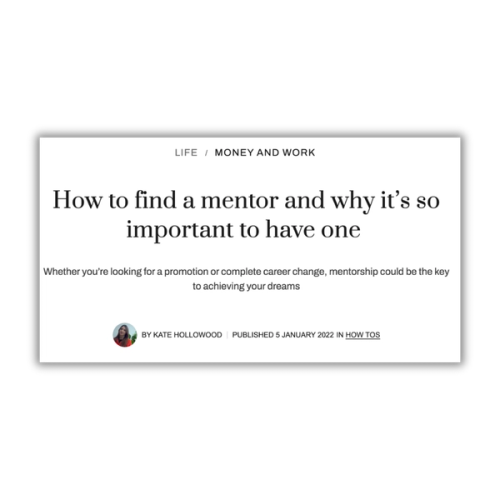
In January 2022, Marie Claire published an article about finding a mentor. It included Hollie Thornton’s experience of WTSMentorship.
Hollie had been working in PR and wanted to move into SEO. Through WTSMentorship, she had a weekly call with an SEO specialist. She told Marie Claire that the programme broadened her SEO knowledge, gave her the confidence to apply for SEO roles and helped her secure a position at boohooMAN.
The backlink points to WTS. The reason it exists is Hollie’s career change.
That distinction matters for businesses and community teams trying to show impact. Counting links tells us that other websites referenced an initiative. Reading those references can reveal the outcome people thought was worth sharing and what initiatives really matter to the people you serve.
Hollie said the programme expanded her SEO knowledge, gave her the confidence to apply for specialist roles and connected her with a mentor she admired.
— Hollie Thornton, speaking to Marie Claire about WTSMentorship
WTSKnowledge launched to give community members a place to share their expertise.
Ebere Jonathan wrote its first article - a detailed guide to duplicate content and canonicalisation.
Search Engine Roundtable included it in its daily recap the following day. That first pickup became the beginning of a pattern: the publication (and many others) continued to feature more work from WTS contributors.
The value sits at several levels:
Ebere Jonathan published the first WTSKnowledge article on 16 August 2023.
Search Engine Roundtable featured it the next day, introducing both Ebere’s work and the new platform to a wider audience.
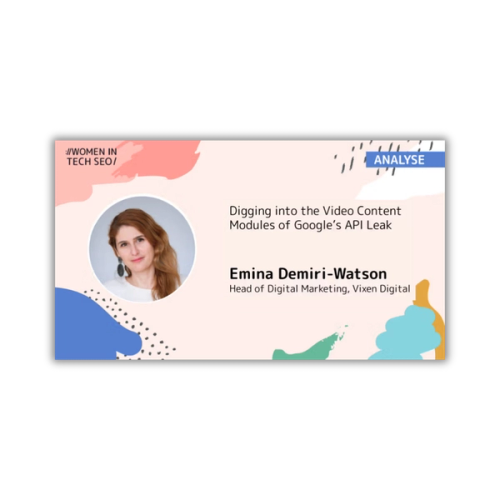
Emina Demiri-Watson’s analysis of the leaked Google API documentation shows the chain moving again.
Emina examined the video content modules and published her findings through WTSKnowledge.
Rand Fishkin later called it a “superb analysis” in his SparkToro article and directed readers to it.
That is an exceptionally valuable link, but “high-authority domain” is still an incomplete explanation.
The link placed Emina’s specialist analysis in front of qualified readers at the moment they were actively trying to understand the leak.
It added evidence to Rand’s article, amplified Emina and helped establish WTSKnowledge as a place where serious, timely industry analysis is published.
WTS saw a jump in not only traffic, but in their WTSNewsletter subscriptions as folks reached for a way to get more timely WTS news in front of them.
Rand Fishkin used those words when he linked to Emina Demiri-Watson’s WTSKnowledge article.
The value came from the fit between the work, the person recommending it and the audience seeking that exact expertise.
WTSFest conference recaps appear throughout the timeline.
These articles are useful because they show what survived after the event ended.
Attendees did not link because WTS asked them to. They wrote because they had lessons, reactions and experiences they wanted to process or share.
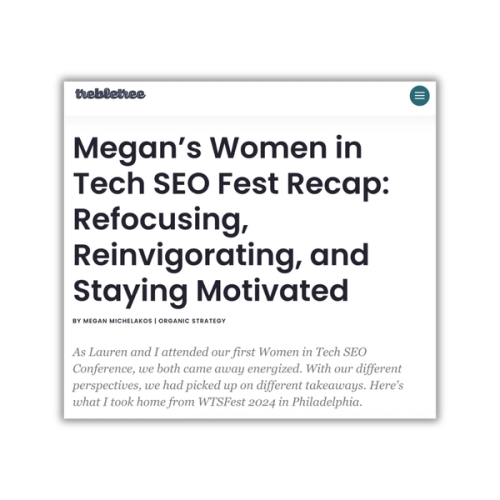
Megan Michelakos’s recap of WTSFest Philadelphia 2024 is a particularly clear example. She documented practical ideas from ten sessions.
After Natasha Burtenshaw-deVries spoke about teaching the next generation how to think rather than simply perform SEO tasks, Megan wrote that their company Trebletree was introducing micro-coaching into its daily work.
That is a stronger outcome than “an attendee wrote a recap:”
After WTSFest Philadelphia 2024, Megan Michelakos wrote that Trebletree was bringing micro-coaching into its day-to-day work.
The link records more than event awareness: it shows an idea leaving the stage and entering someone’s working practice.
The visual groups links according to the WTS page they point to. Most lead to the homepage.
At first glance, that could suggest that the homepage and general news about the community drove the majority of WTS’s links.
Reading the source pages and talking to the people behind them tells us something more complicated.
Many links to the homepage are clearly about WTSFest or another specific initiative.
Steve identified this as an issue Majestic has across the many WTSFests they’ve sponsored: WTS has used general location pages for its conferences.
If Majestic writes about being the Headline Sponsor for WTSFest London 2027, they may hesitate to link to a page that will soon be updated for 2028.
The homepage feels safer.
The activity created the recommendation, but the destination URL alone hides some of that attribution.
This is a valuable technical lesson:
If somebody wants to recommend something you have created, give them a page that will still make sense when the next person follows the link years later.
Steve’s point changes the reporting question.
The first question is often, “How strong is this domain?”
A founder or board also needs to know:
The report should still include the technical signals. It should also show the human and business outcome those signals helped us find.
This study does not show that backlinks to WTS caused its content to appear in AI answers. We did not analyse AI citations, and the data should not be used to make that claim.
The useful connection is measurement. Search and AI platforms can tell us that a reference exists. As with backlink data, a count cannot explain the credibility, meaning or outcome behind that reference on its own.
The lesson is not “build community to get links” or “earn links to appear in AI.” It is to create things people find useful enough to reference, then use the available data to understand how those references travel.
WTS did not start with a link target. It started with people. And it maintains and grows with people at the helm.
WTS gave someone a mentor.
WTS created a platform for someone’s expertise.
WTS organised an event that changed how an attendee approached their work.
WTS built directories designed to help more people find speakers and founders.
WTS created a community that people want to recommend.
Brands trying to earn that kind of visibility can act on six things:
The links are not the reason WTS exists.
The selected editorial links are public records of what people found worth passing on.
The question for every organisation is:
What are you creating that helps people enough that they want to send someone else to it?
This project began with backlink data exported from Majestic Site Explorer. The Majestic team, including Brandon & Steve, developed the filtering and interactive visualisation needed to turn more than 30,000 rows into a workable dataset of approximately 3,000 links.
Hannah Smith reviewed that cleaned dataset manually, selected the featured links, developed the chronology and kept the project focused on editorially given references with a story to tell.
Erin Simmons and Areej AbuAli helped bring the story together with additional context - adding the memories, outcomes and wider community context behind those links.
The project was created jointly by Women in Tech SEO and Majestic to celebrate 7 years of WTS and explore what links can tell us when we put the people back into the data.
Thanks for reading and for being a part of our journey.
2019 August - Jo Turnbull interviews Areej AbuAli. Published on the day womenintechseo.com launched, Jo’s interview was the first link recorded in the project.
2019 October - Lumar’s Open Dialog podcast. Areej discusses her SEO career and the launch of the first WTSFest London.
2020 April - ROAST’s WTSFest London recap. The ROAST team shares its takeaways from the first WTSFest.
2020 August - Search with Candour podcast. Areej joins Mark Williams-Cook to discuss WTS after its first year.
2021 July - HubSpot’s guide to a career in SEO. Jo Caren recommends WTS as a place to find opportunities and connect with the industry.
2021 November - BuzzSumo on using communities to develop a content career. Christina Pashialis includes WTS in her advice on learning and growing through communities.
2022 January - Marie Claire on finding a mentor. Kate Hollowood shares how WTSMentorship helped Hollie Thornton move from PR into an SEO role.
2022 March - Screaming Frog’s lessons from WTSFest 2022. Ellie Brett reflects on what she learned at the London conference.
2022 August - Areej AbuAli’s Tech SEO story for the FCDC. Areej shares her journey to the UK with an organisation providing mentorship and training for BIPOC freelancers in developing countries.
2023 March - Kayleigh Toyra’s WTSFest recap. Kayleigh shares her experience of WTSFest London and the lessons she took from it.
2023 August - Search Engine Roundtable’s daily recap. The publication features the first WTSKnowledge article, written by Ebere Jonathan the previous day.
2023 December - The Marketing Meetup on organic search in an AI world. Areej joins Crystal Carter for a live discussion about AI and SEO.
2024 February - Content Marketing Institute on turning community members into community leaders. Ann Gynn uses examples from Intuit, CMI and WTS to explore how communities can help members lead.
2024 May - SparkToro’s analysis of the Google API leak. Rand Fishkin’s article now directs readers to Emina Demiri-Watson’s WTSKnowledge analysis of the leaked video content modules.
2024 August - Sitebulb’s free JavaScript SEO training. WTSPartner Sitebulb and The Gray Dot Company created a course led by WTS community members Tory Gray and Sam Torres.
2024 September - Trebletree’s WTSFest Philadelphia recap. Megan Michelakos shares the ideas and practical lessons she took from the conference.
2025 February - Oncrawl’s WTSFest London recap. Danielle Escaro shares what she learned at the fifth WTSFest London.
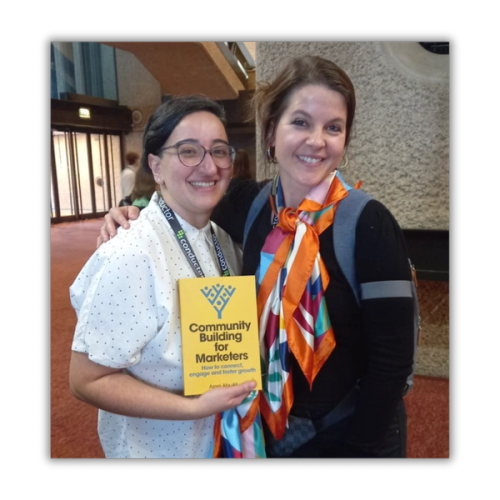
2025 March - Areej on finding your reason for building a community. Search Engine Journal publishes an extract from Areej’s book, Community Building for Marketers.
2025 July - Authority Magazine on creating connection online. Karen Mangia interviews Erin Simmons about building digital communities.
2025 December - StudioHawk’s lessons from WTSFest Melbourne. Sian Caton shares the team’s takeaways from the first WTSFest held in Australia.
2025 December - SEOs Getting Coffee on how community can power SEO. Erin joins Emina Demiri-Watson to discuss WTS and the role communities can play in SEO.
2026 May - Enterprise Nation on turning a brand into sales. Areej joins Freddie Chatt to discuss founder-led marketing.
2026 July - Moz Whiteboard Friday on community and SEO. Erin explains how meaningful participation in online communities can support SEO.
2026 July - Digital Marketing Institute on trust and belonging. Areej shares practical ways small businesses can build stronger customer relationships through community.
2026 September - UK Social Enterprise Awards shortlist. Areej is named a Social Enterprise Women’s Champion of the Year finalist for her work with WTS.